- HOME
- /
- RD Classics
- /
Through The Healing Meadows Of Memory
Remembrances are the seeds of the past, ready to spring into instant and beneficial bloom. An RD Classic from 1985
 Photo: © Getty Images/ Marco Bottigelli
Our home was a lovely, private place, encircled by forests. The huge meadow in front was a favourite meeting ground for wildlife—everything from deer to fox cubs. Then suddenly, after 17 years, our lease was not renewed, and we had to move.
We thought we’d mourn forever. But one day my wife asked me, “Remember that time we saw a deer deliver twin fawns in the meadow?”
And I added, “Remember those skunks dancing in the moonlight?”
Without any plan, that became our magic meadow of memories. Recalling those scenes made us appreciate the opportunity we’d had to witness them, providing us with a sure way to defeat our despair over our loss. We discovered the truth that Cicero had written: “Memory is the treasury and guardian of all things.”
Those accessible meadows that all of us store in the amazing repository called the memory can even help us cope with problems. My wife and I learnt a trouble-lifting technique from a friend who used memories to make his twice-weekly dialysis bearable. His doctor had advised: “Take a memory break. It’s like a coffee break that brings peace of the mind.”
So our friend would close his eyes during his treatment and once again walk the streets of Paris with the mists of a spring rain in his hair. He would gleefully rediscover a valuable antique in a shop, the object’s shop not realized by the shopkeeper. He’d hear again the opera Aida, its soaring music carrying him away from the antiseptic hospital room.
No one is certain how memory works or exactly where in the brain memories are stored. No matter how mysterious memory is, we all know it isn’t just a visual recording machine. It involves smell, hearing—even taste and touch.
Do you remember how the first polliwog you snatched from a pond felt? “Like alive jelly,” my younger brother recalled. And what memories does the nose conjure from the smells of popcorn, burning leaves, circus sawdust!
Memory can be a passport to the pleasant past, for most experts agree that we remember more good situations than bad. When Irina Skariatina was a political prisoner in St. Petersburg after the Russian Revolution, she made frequent ‘escapes’, closing her eyes and thinking about a long-ago trip to Naples.
“In my mind,” she said later, “I’d gradually see streets long forgotten and shop windows, signs, faces, little street scenes—and instead of being still, as in a photograph, the town would actually live, full of colour and movement and sound. The more I concentrated, the clearer the pictures became, until at last those hours were full of pleasure.”
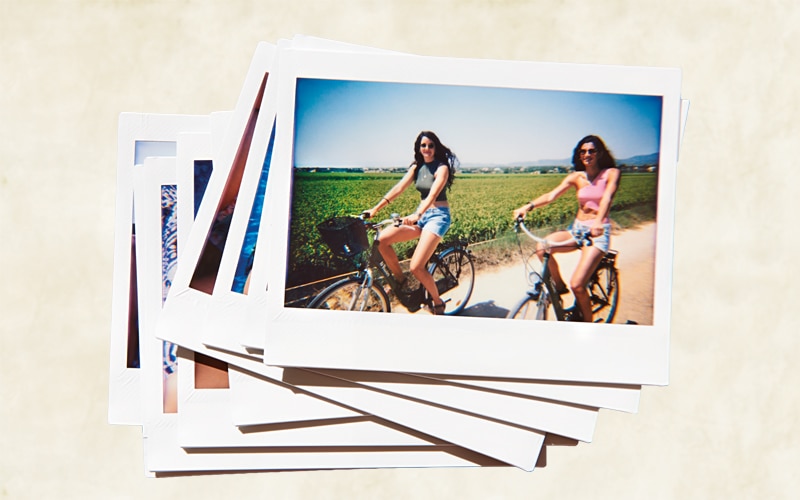
Memories can transport us from the pressure of today’s supermarket age and take us back to savour an earlier time. Parisian chef Georges Masraff claims, “When people are troubled, they long for the food of their childhood. The most successful dishes recall the arms of the mother who protected us.”
This is certainly true for my wife. When she prepares a robust soup, a recipe of her mother´s called pasta e fagioli (pasta and beans), she sits again at her parents’ table in upstate New York, and just remembering those joyful growing-up days helps sweep away the blues that visit us all.
Memory can also be enhanced by a camera. Former Life editor Loudon Wainwright was delighted to see home movies of himself “in child’s packaging” ice skating. Then he suddenly sensed—and recalled—the special love of the photographer, his father. “The child fell, the camera lurched as its holder moved in to help, then steadied when the boy rose smiling. The camera came in for a close-up, then drew back and held as the child skated, bent-ankled, in one crude circle after another. Decades later, the photographer’s tenderness quite overwhelmed his subject.”
My friend Richard also has photo-clear recall of his father, especially during the Christmas season. Richard remembers that during the Depression of 1929, was he was eight years old, he received only apples, oranges, and a single candy bar in his Christmas stocking. He was filled with self-pity.
Later, on Christmas morning, his father told him his present was in the yard. Richard ran outdoors and saw a nine-meter-high mountain of snow, fashioned into a giant slide. His father had asked the town’s snow-removal crew to pile up some of the heavy snowfall of three days in his side yards. Richard remembers that with his own snow mountain he was the envy of every kid in the neighbourhood.
“To this day,” he says, “whenever it snows I have a tender feeling for that very special father.”
Memories shared by families are some of the best of all. “Remember?” one will say, and off they’ll go, gathering peace from the past. British author James Barrie summed up the worth of these assets filed in our minds this way: “God gives us memory so that we may have roses in December.”
From Reader's Digest, June 1985
For more stories from our archives, click here