- HOME
- /
- Features
- /
- Cover Story
- /
Extraordinary Indians: Sonam Wangchuk's Mission to Reimagine Schools, Water, and Work in the Himalayas
Through SECMOL and the Himalayan Institute of Alternatives, he is creating self-sustaining models for education and climate resilience.
 Sonam Wangchuk’s life inspired one of the most popular characters in recent Bollywood history.
If you look up the name Phunsukh Wangdu on Google, the problem-solving Ladakhi teacher from 3 Idiots, played by Aamir Khan, the first search result that pops up is the page of Sonam Wangchuk. The character was inspired by, not based on, Wangchuk’s life, as he’s quick to remind, not without a bit of irritation in his voice.
Who is Sonam Wangchuk? He is an engineer, innovator and education reformist who won the Magsaysay award last year for his contribution towards the progress of the Ladakhi community by harnessing nature, culture and education. There’s a long list of awards and honours, including recognition from the Jammu and Kashmir government and an Ashoka fellowship, among others.
Wangchuk founded Students’ Educational and Cultural Movement of Ladakh (SECMOL) with a group of Ladakhi students in 1988, at the age of 22. The non-profit was born out of a desire to improve primary education for Ladakhi children, 95 per cent of whom were ‘failing’ in school. Or rather the state school system was failing them, with unfamiliar languages as a medium of instruction, and untrained teachers who emphasized learning through rote, which led to Ladakhi children dropping out of school.
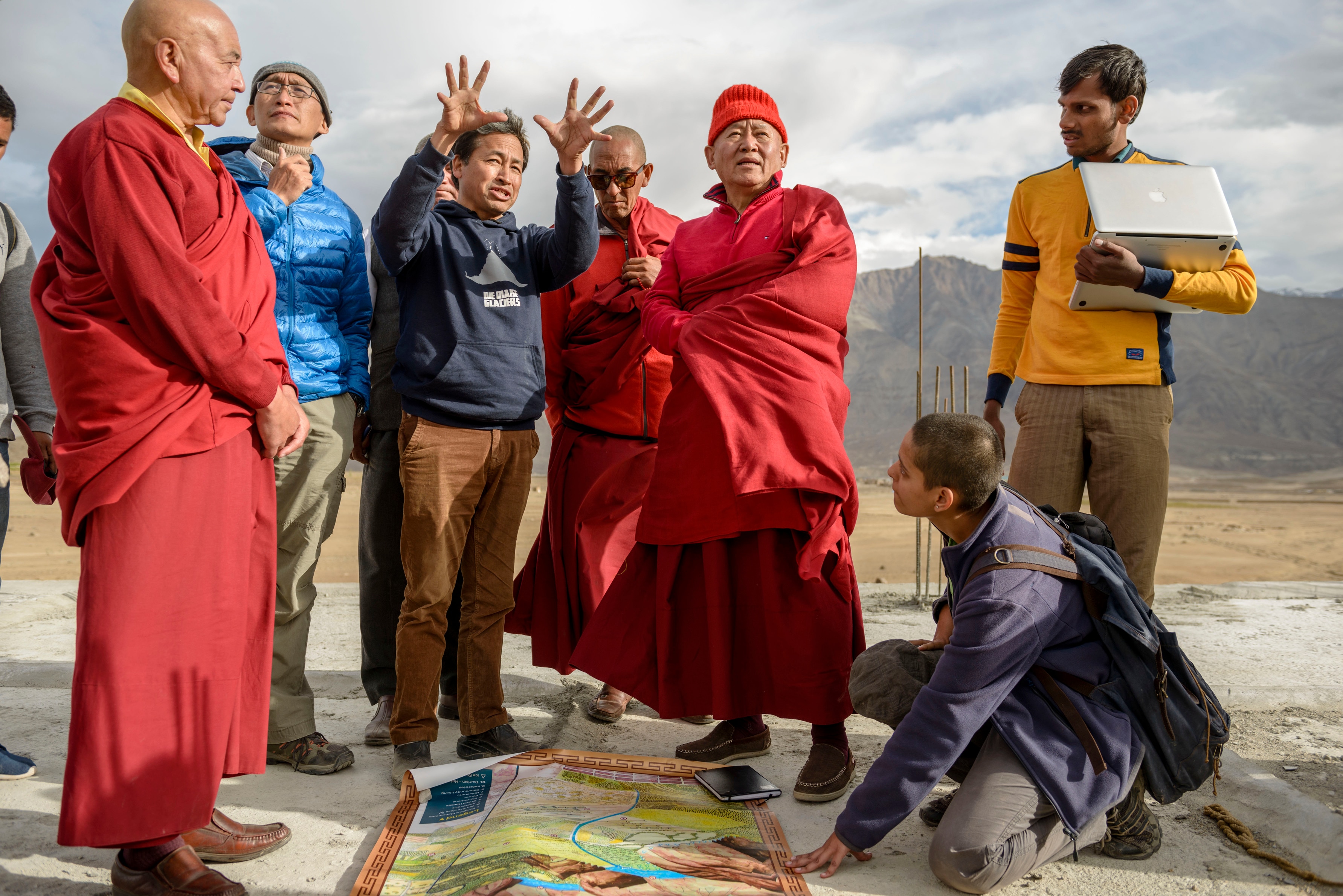
Witnessing this, Wangchuk asked an important question: “The system would still be creating broken products for us to repair 50 years down the line. Why create products that were bound to break?” SECMOL launched Operation New Hope in 1994 to overhaul primary education in Ladakh. The intervention proved a success; their initiative was adopted as Ladakh’s education policy and the local administration made primary education their top priority. This resulted in a marked rise in matriculation, from 50 per cent in 2006 to almost two thirds today.
For those who were still failing, an alternative learning centre was set up in Changthang where students learnt from one another, with teachers only as guides, solving real-life problems. With help from Wangchuk, they built ‘ice stupas’, or artificial glaciers, as a green solution to the water shortage in the region. They ran the school on their own too, with an elected body that changed every two months, learning about governance in the process. They picked up design and innovation by setting up solar-heated mud buildings ideal for sub-zero temperatures. The campus has since grown into an eco-village that uses only renewable sources of energy.
How did Wangchuk get here? To answer this, we go back to his childhood spent in the tiny Ladakhi village of Uletokpo, which only had five households back then. Since there were no schools, his formative years were spent learning through observation and from his mother, who was “never schooled but highly educated”. His little mind expanded as a result: “Bad schooling is much worse than not having any. I could see the seeds sprout before my eyes, which children only read about.”
He enrolled in a conventional school at age nine in Srinagar—but hated it. He ran away from the terrible teachers who hit him and made him feel small for not being able to follow Urdu. It was at a Kendriya Vidyalaya in Delhi, where tribal children from the border areas came to learn, that he discovered the power of a good education. “My teachers in Delhi made me a star out of nothing,” he reminisces.
After school he wanted to take up mechanical engineering, much to the dismay of his father who wanted Sonam to be a civil engineer so he could build infrastructure in the isolated Ladakh region. “When he threatened to cut me off if I didn’t follow his wishes, I simply walked out and financed my own education.”
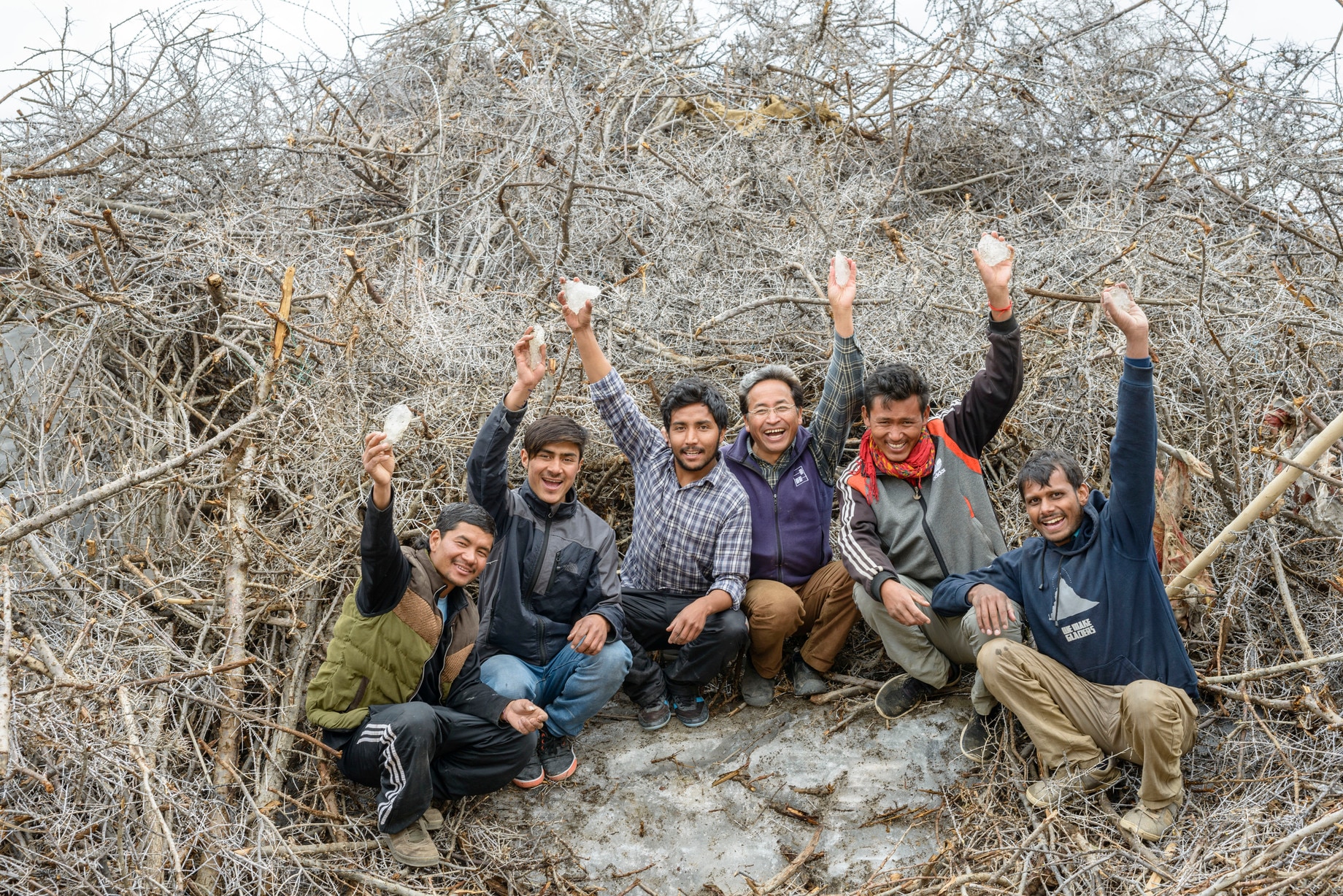
One summer break, Wangchuk opened a tuition centre in Ladakh, which had about 100 enrolments by the end of it. At 19, Wangchuk was able to raise enough money to put himself through three years of engineering college in just two months!
“You haven’t really learnt something until you have taught someone else.” This teaching experience also laid the seeds of SECMOL. After graduating, he had no desire to become another engineer in the city, so he decided go back to his roots to explore the idea of teaching. The rest, of course, is history.
Wangchuk is now working towards making higher education accessible. The prize money from the 2016 Rolex Award for Enterprise was invested in the Himalayan Institute of Alternatives, a higher-education facility. Offering courses at a subsidized fee, this hands-on institution has schools of business, tourism and hospitality that run innovative and self-financing programmes. Revenues from the schools sustain the university while students get free higher education and experience. No wonder they are staying back to work here.
A committed green activist, whose only religion is the environment, Sonam Wangchuk has built a tight-knit and self-sustaining local community that could become the model for the rest of India.