India's Open-Water Swimmers Are Conquering the World's Toughest Seas
From the Cook Strait to the English Channel, a new generation of Indian endurance swimmers is pushing the limits of human stamina—and making waves on the global stage.
 Getty Images
For four tormenting hours, Prabhat Koli battled the stormy water of the Kaiwi Channel between the Molokai and Oahu islands in Hawaii. It was past midnight, the sky pitch black, and the chop swollen and wild. Every wave was a gamble.
One moment, Koli crested high enough to see the boat bobbing far below; the next, it towered above him. Even the most sea-hardened members of his team were shaken. The kayak pilot shadowing him overturned twice. On the boat, Koli’s father—once a fisherman—retched from the motion. Koli’s progress was down to a trickle, the uncertainty of finishing the swim a constant companion through those increasingly trying hours.
“I had never seen waves as big as those, or such rough water. I considered abandoning the attempt. Then I thought of all the effort and resources that went in for me to get there. It gave me strength to wait it out until first light,” recalls Koli, reflecting on the gruelling swim he finished in 17 hours 22 minutes, at just 17 years old.
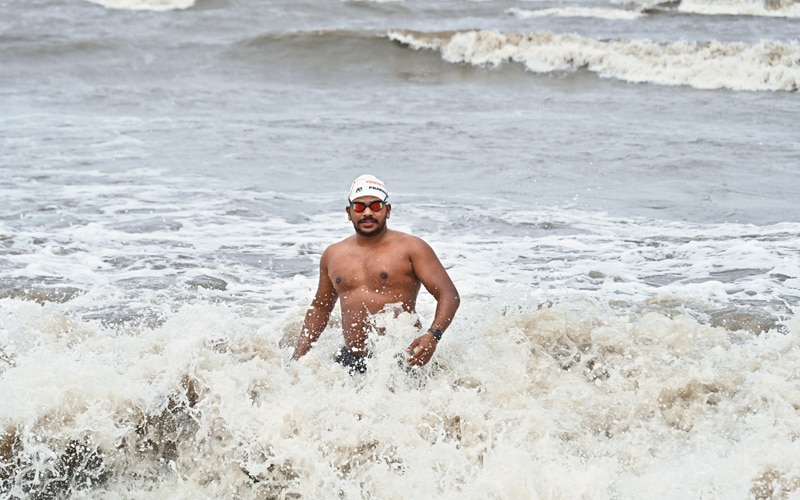 At 23, Prabhat Koli became the youngest swimmer to complete the Oceans 7 trials. Photo by Mandar Deodhar
Koli’s successful crossing of the Kaiwi Channel was just one notch in the series of tests that make up the Oceans Seven Challenge, the Grand Slam or World Cup of open-water swimming. Completing it requires athletes to cross seven of the most demanding stretches of open water in the world, such as the 14.4-km-wide Strait of Gibraltar and the 45-km Molokai Channel. According to longswims.com, only 34 swimmers in the world have accomplished the feat so far. By 2023, Koli had swum across the 22.5-km Cook Strait in New Zealand, becoming, at age 23, the youngest in the world to join this elite group of world-class athletes.
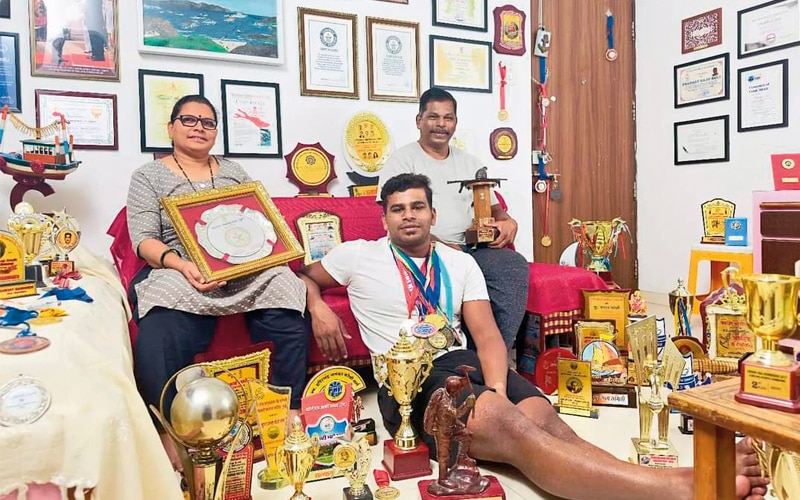 “They told me that if I had the ability and dream to accomplish it, they would back me all the way,” says Koli about his parents. Photo Courtesy of Prabhat Koli
That feat felt like the culmination of a journey that began while Koli was still in school. Back then, he chose swimming over hockey, and the direction of his life changed forever. “My parents left the decision to me, but once I made it, we knew there would be many changes in our lives. They had to be comfortable with the idea of investing a lot of resources for my swims. There still isn’t much institutional support for the sport. Even so, they told me that if I had the ability and dream to accomplish it, they would back me all the way,” Koli, now 26, says. After finishing various routes in the Arabian Sea, he set off to attempt the English Channel in 2015. That was when he first heard of, and set his sights on, the Oceans Seven.
Training space was hard to come by, but at least Koli managed to find a pool. For Sayani Das, the road was even longer. In her hometown of Kalna, 100 km north of Kolkata, she had to travel 65 km daily to train in a pond at the Rishra Swimming Club. After dominating state meets with six gold medals, she struggled to find funding at the national level—and decided to test the open waters. From training a couple of hours each day, she started investing as many as 13 hours in the Ganges near her home, even in the dead of winter.
“Transitioning from short races to open water was tougher than crossing the English Channel,” says Das, now 27. “I had to change everything—from diet to mindset. In freezing water, you fight not just fatigue but hypothermia.”
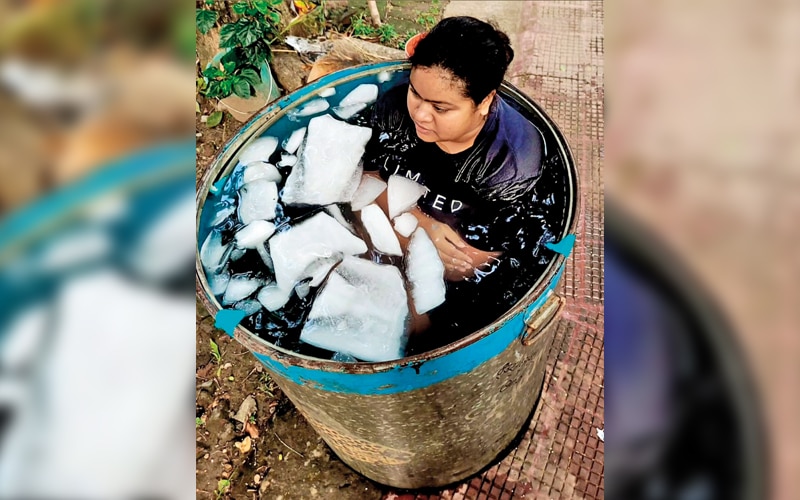 Sayani Das trained in the powerful currents of the Bhagirathi river and acclimated her body to frigid ocean conditions by submerging herself in ice baths. Photo Courtesy of Sayani Das
Back home, her commitment raised eyebrows. “People would walk up to my parents and ask, ‘Is your girl mad?’ In our town, it wasn’t normal for a girl to wear a swimming costume and enter the river. Even the local media questioned my pursuit. So yes, I had to face a lot during those early days. And the only way to respond was to continue doing what I was doing,” says Das who crossed the Strait of Gibraltar in April to become the first Asian woman to finish six of the seven Oceans 7 trials.
It’s important to understand the gruelling demands of these swimming challenges. For instance, the Molokai Channel is as long as a full marathon—but with waves, tides and currents. The Asian record is 14 hours and 21 minutes, held by Navi Mumbai’s Anshuman Jhingran. His secret? A single-minded obsession.
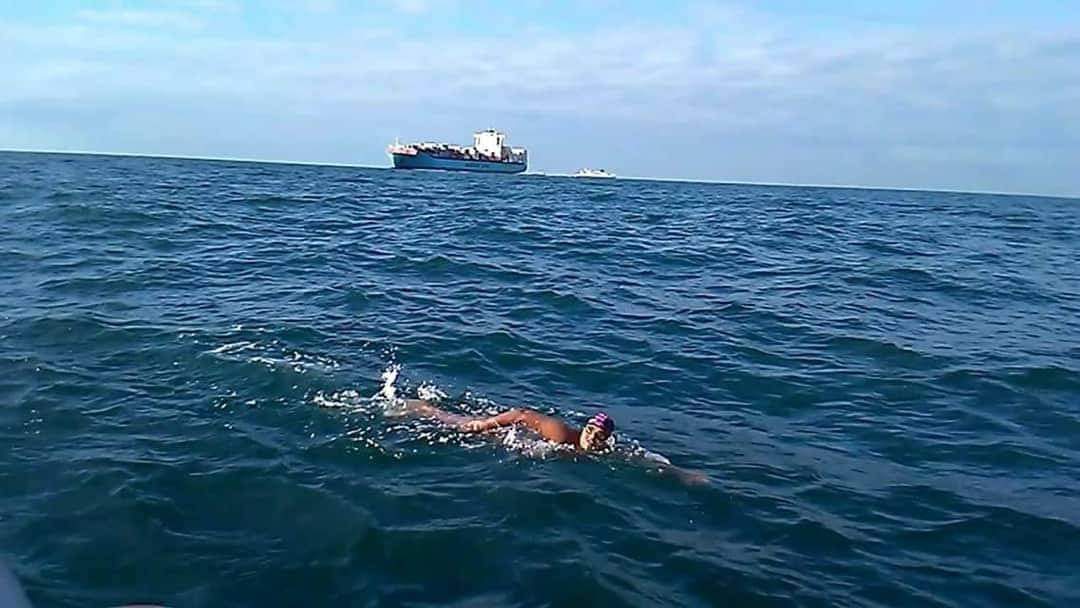 "In freezing water, you fight not just fatigue but hypothermia,” says Sayani Das, pictured here mid-swim of an open-ocean challenge.
“I don’t think I’ve had a holiday in years,” says 20-year-old Jhingran. “Right now, everything is about finishing these channel swims. I don’t have many friends outside of swimming—it helps to avoid distractions.” He recalls 12-hour pool sessions that began before sunrise and ended after sunset. “I’ve never counted how many hours I train each week. If I did, I might start questioning my choices. You have to train your mind to endure it, so you don’t have to repeat it,” he adds. Jhingran successfully crossed the English Channel in August last year, the sixth of his seven swims.
Training for these massive distances is as mental as it is physical. It needs gradual build up and the acceptance that there will be times you’ll simply hit a wall. “I didn’t achieve my training goals every time I jumped in the pool. At first, even two hours felt like 10. I would go back and meditate, try to visualize the frame of mind I needed to be in to swim for all those hours. I thought about it before going to sleep and from the moment I woke up, until I successfully completed the distance. If you can do it once, you know you can do it again,” Koli says.
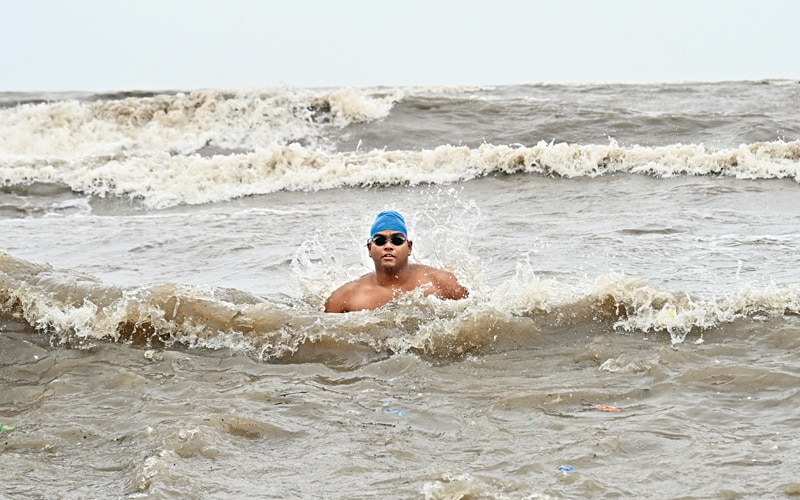 20 -year-old Anshuman Jhingran holds the Asian record for fastest crossing of the 42-km Molokai Channel in Hawaii. Photo by Mandar Deodhar
To stay present and build endurance, swimmers train their minds as fiercely as their bodies. During long swims, Jhingran distracts himself by focussing on the support boat, sometimes envying someone sipping cola on board. Koli replays moments from his life, imagines future scenarios, scripts conversations. “If you focus on the aches and pains, doubts creep in,” says Koli. “So I have to plan what to think about, hour by hour. Even that is part of training.”
Swimming in the pool is one thing; but nothing quite prepares you for the heavy swell and the strong currents of the open water. The idea is to keep every minute detail of the swim under control however possible. For instance, the water of the North Channel is known to be freezing and young swimmers are often advised to attempt it after getting some experience under their belt. In the run-up to his swim, Koli spent time in the hills of Nainital to put in a few sessions in the frigid Naini Lake in order to acclimate his body to the cold. Das would immerse herself for an hour and a half in a drum filled with about 60 kg of ice sourced from the local ice-cream factory, then sleep in a room where the air conditioner was set below 20°C. Jhingran utilized the Wim Hof breathing technique to warm up his body before taking on the swim.
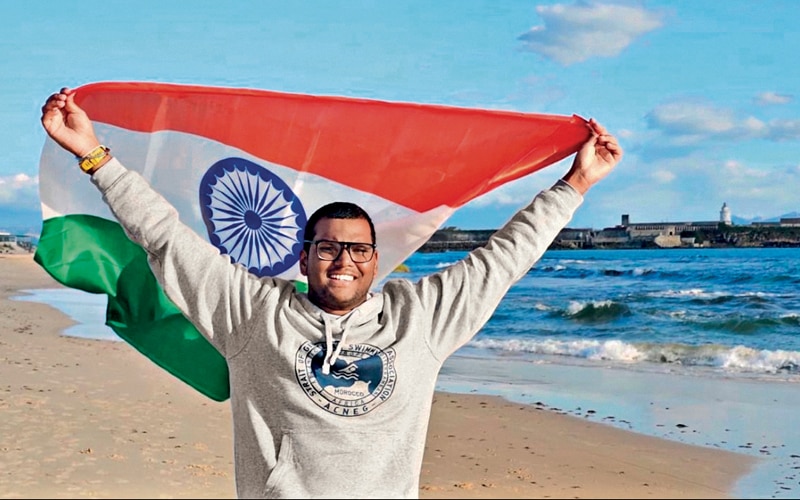 Jhingran celebrates after his successful swim across the Strait of Gibraltar. Photo Courtesy of Anshuman Jhingran
Then, of course, there’s everything else that nature has in store. Das once saw a helicopter hovering, distracting a nearby shark during one swim. Jhingran has endured multiple jellyfish stings—“like getting electrocuted over and over,” he says. Koli learnt to sip five litres of water before swims—so his body could flush out toxins, including jellyfish venom.
“The ocean belongs to the marine life; we are the outsiders. You just have to focus,” Das says.
Other things are impossible to control, such as landing a swim date or fundraising. Support has been hard to find for a sport is largely invisible and not exactly spectator-friendly. Koli’s parents had to sell two homes and take personal loans to raise funds, which he continues to pay back even today. Though Das found support in a family friend since her English Channel swim, her father, Radhashyam, still had to mortgage their home while her mother, Rupali, recently sold a piece of land.
“Each time I jump in, I have just one option—to finish the swim. It’s do or die. That’s probably why in six swims, I’ve never failed,” Das says.
But failure isn’t always about effort. In 2020, Koli was just 10 km from completing the Cook Strait when he was pulled out of the water because of deteriorating weather and an injured shoulder. Then the pandemic delayed his return for three years. “The injury was quite nasty and I thought it was the end of my swimming career. But the break helped me recover and come back stronger,” Koli says.
Das remembers a spine injury during her Molokai Channel swim that forced her to take on a lighter training load for a few months. “It’s not just injuries that make this sport difficult. I lose around 15,000 calories during a swim. The salt water causes rashes and infections. The physical and mental stress can take months to recover from,” Das says.
The discipline and training transforms them in more ways than one. No task feels impossible, and a belief that with persistence, the rewards get closer.
“I’m certainly more patient now. “Earlier, I’d get anxious if I didn’t see results. Now, I know how to wait things out—just like I’ve learnt in the water,” Jhingran says.
“Nobody asks you to do this,” adds Koli. “It’s your choice, your own adventure. The sea is real, the risks are real, as are the marine life, both wonderful and dangerous. But that’s the beauty of it: you learn to deal with whatever comes your way.”