How One Non-Profit is Turning The Tide On Marine Pollution
Can marine pollution be solved for good? The Ocean Cleanup believes the answer lies in stopping plastic before it reaches the sea—and its latest effort targets Mumbai’s trash-clogged waterways
 The Ocean Cleanup deploys barriers that prevent plastic pollution from reaching the ocean. Photo Courtesy: The Ocean Cleanup
Monsoons in Mumbai evoke mixed emotions. There is relief as cool south-westerly winds sweep through the city, washing away the weariness of a long, humid summer. But there is also dread. Along with rains come floods, clogged drains, and mountains of trash hurled back onto the shore by the Arabian Sea—an enduring reminder of a problem the city has struggled with for decades.
For Boyan Slat and his team at The Ocean Cleanup, however, that challenge represents an opportunity. This year, the Netherlands-based environmental organization takes its 30 Cities Programme to Mumbai. The goal is simple: gradually remove plastic waste from the creeks and nullahs that thread through the city before it reaches the sea. Yet the team is under no illusion about the scale of the task. Mumbai could prove to be one of their most demanding projects yet.
“About two to five per cent of global plastic pollution comes just from Mumbai, so it’s a significant amount. Once we have our systems in place across the 30 cities, we would have reduced about a third of the pollution flowing into the oceans. So, this is high impact through relatively low effort,” says the 32-year-old founder.
The success of the project will be a significant milestone in achieving their goal of cleaning up 90 per cent of ocean plastic pollution by 2040. According to World Population Review, Mumbai has the fourth highest population in the world at 21.7 million. Its plastic consumption is staggering—the Ocean Cleanups’s Smart Survey, conducted in collaboration with The Energy and Resources Institute (TERI), revealed that the metropolis discharges around 5,000 tonnes of plastic in the Arabian Sea each year. To put it in perspective, that’s the amount of plastic The Ocean Cleanup collected across the world in 2025.
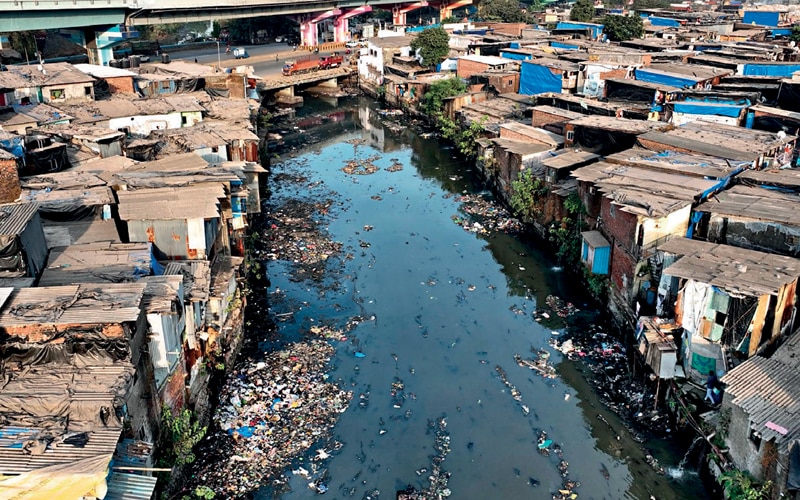 Mumbai discharges around 5,000 tonnes of plastic into the Arabian Sea each year. Photo Courtesy: The Ocean Cleanup
Slat’s team first arrived in Mumbai four years ago. They mapped rivers, studied flow speeds and tidal patterns, measured pollution levels, and identified the kinds of waste entering the waterways. The findings helped determine where to deploy Interceptors—barrier systems designed to trap floating plastic before it reaches the ocean. As part of the pilot phase, two Interceptors will be installed in Malad Creek and Trombay Creek.
“Per our current estimate, we are looking to place Interceptors in around 40 to 50 locations in Mumbai. Most other cities have required just 8 to 10 on average. That’s the kind of intervention needed. These are permanent structures that will be in operation until they are not required anymore,” Slat says.
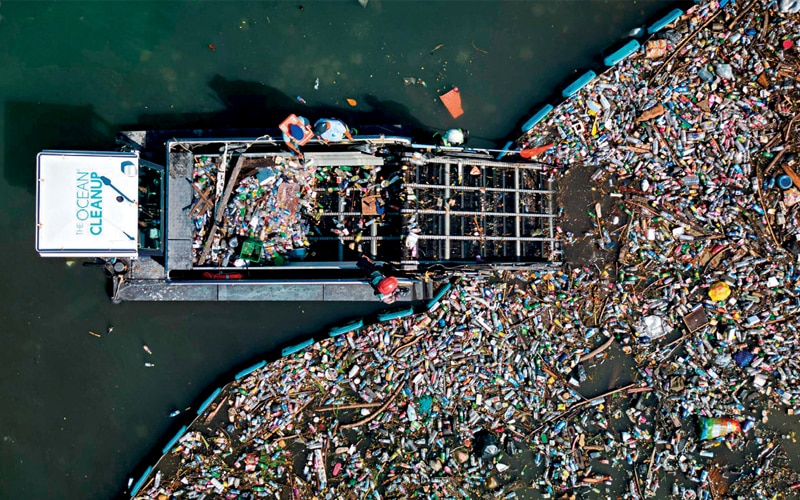 An Ocean Cleanup barge extracting intercepted trash in Jamaica. Photo Courtesy: The Ocean Cleanup
The Ocean Cleanup will work alongside Plastic Fischer, also an ocean-plastic prevention organization, and has signed a Memorandum of Understanding with the Maharashtra Pollution Control Board, while also securing permits from the Brihanmumbai Municipal Corporation (BMC). The project is funded by AT Capital and Optiver Foundation, with United Way supporting community engagement and job creation.
“In Mumbai, we are pioneering a zero-waste-to-landfill approach, the gold standard of waste management. The collected trash will be sorted based on what can be recycled. The rest will be used for co-processing, which is where it replaces coal as fuel in cement production. It’s an opportunity to not just clean waterbodies but also provide employment through interceptor deployment, extraction operations and waste management,” Slat explains.
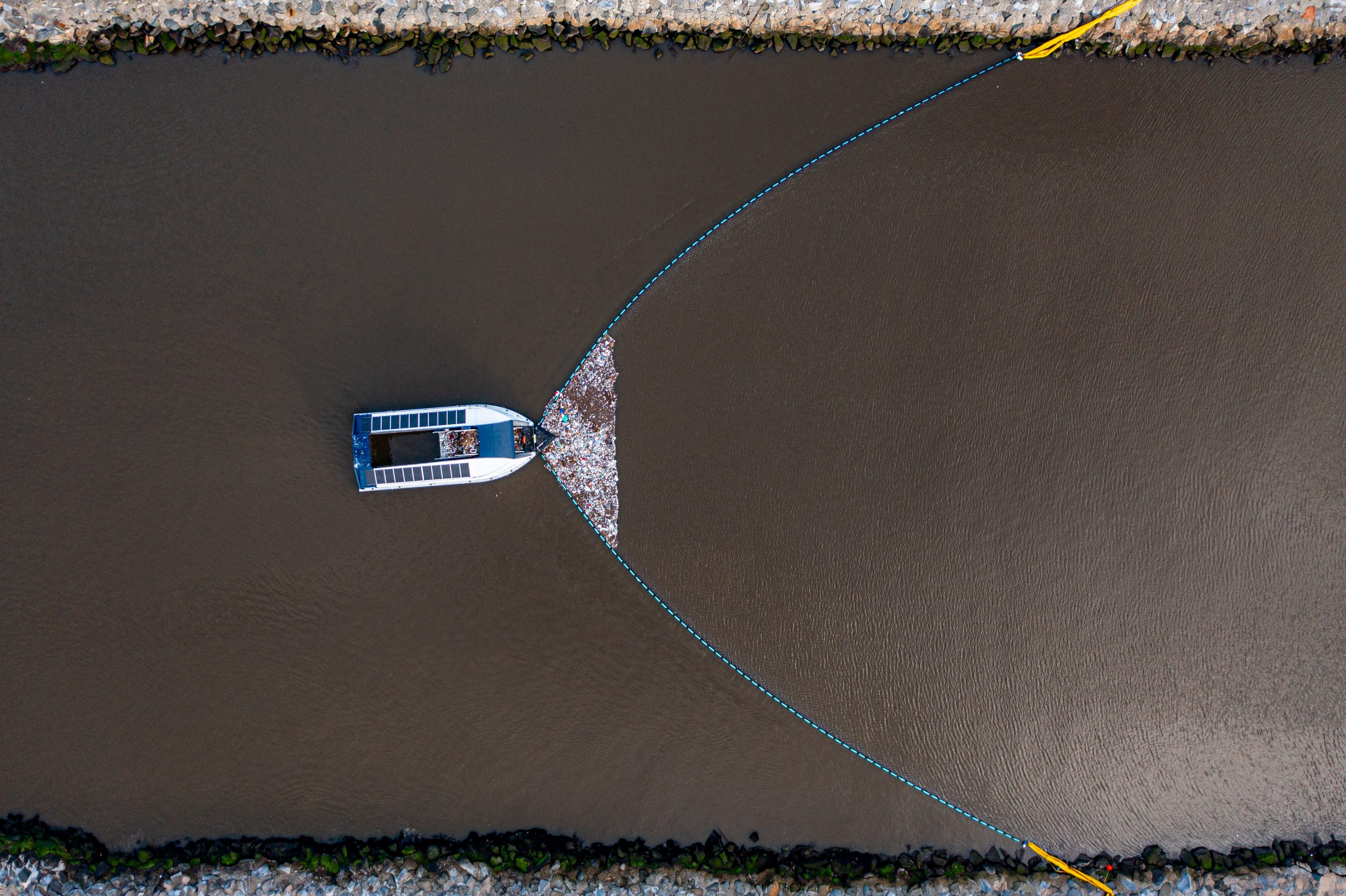 The Ocean Cleanup deploys barriers that prevent plastic pollution from reaching the ocean
One challenge he anticipates is the lack of space around waterways that pass through densely populated neighbourhoods. Much will depend on the success of the pilot phase. If effective, the model can be replicated across the city with the aim of reducing the flow of plastic into the sea to a mere trickle. In time, similar interventions could be rolled out in other Indian cities as well.
“Priorities are different across communities. What if there’s no garbage truck coming to pick up your trash? You are either going to burn it or toss it into the nearest waterbody. So, infrastructure needs to be made both accessible and affordable,” Slat says. “The more people are aware of the problem, the better it is. Through our work, we are able to do that,” he adds.
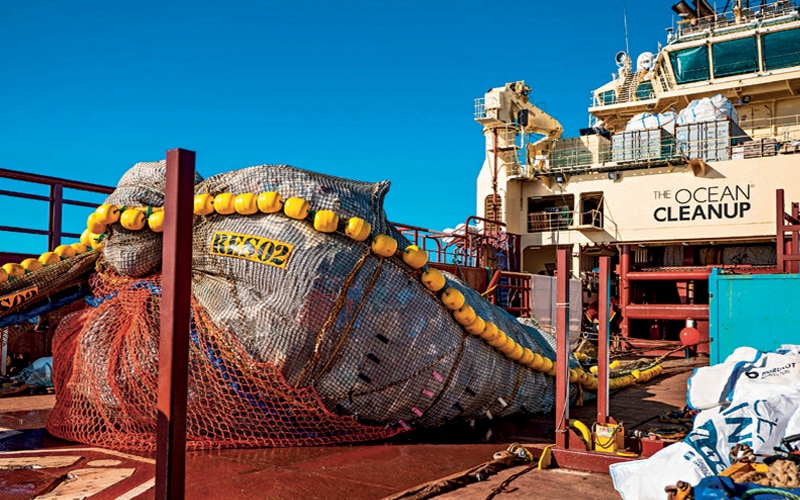 Waste collected from the Great Pacific Garbage Patch aboard a towing vessel. Photo Courtesy: The Ocean Cleanup
While plastic often finds itself cast as the villain in environmental debates, Slat takes a more nuanced view. He calls it a miracle material—immensely useful, but one whose benefits come with serious consequences when poorly managed. Rather than bans, he believes the solution lies in better systems. He points to some of the world’s wealthiest nations, which consume nearly a third of global plastic production while contributing less than half a per cent of plastic pollution.
“Waste management is costing the world almost USD 500 billion each year. It’s the number one budget item for many municipalities. But with rising economies, the amount of waste generated is rapidly increasing and the systems aren’t able to cope up,” he says. “In the countries where we’ve worked, legislation and waste management systems have certainly improved. So it just needs a bigger effort.”
For Slat, the mission began with a moment of clarity. In 2010, during a diving trip in the crystal-clear waters of the Mediterranean Sea, he was struck by the sight of plastic drifting alongside marine life. It got him thinking: What if the oceans could be freed of plastic altogether?
He was still only 16 and on holiday in Greece. Once home in the Netherlands, the idea continued to grow. Eventually, he dropped out of aerospace engineering and founded The Ocean Cleanup, determined to help shape a cleaner future.
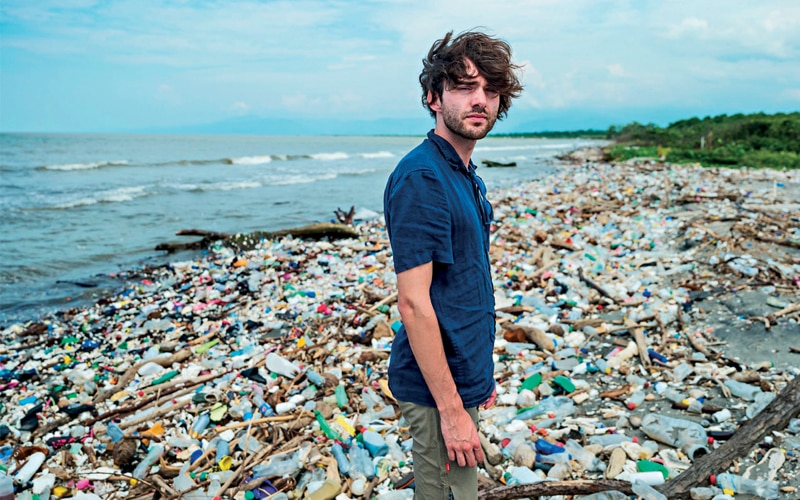 Boyan Slat, founder and CEO of The Ocean Cleanup, in Hounduras, 2022. Photo Courtesy: The Ocean Cleanup
Over the past decade, that vision has translated into real action. His team has removed more than 53,000 tonnes of trash from waterways around the world. The journey hasn’t been smooth—there have been flawed concepts, complicated designs, criticism from the scientific community, and costly expeditions that collapsed unexpectedly. Yet setbacks have never deterred him. Slat prefers to think of failures as unscheduled learning opportunities.
He draws inspiration from turn-of-the-century innovators such as the Wright brothers, Henry Ford, and Henry Kaiser—people who transformed ambitious ideas into reality through persistence and hard work.
“The key is to focus on the solutions rather than the problems. You won’t have all the answers, but if you are perseverant and open to change, you’ll end up in a place where you’d have never imagined,” he says.
Those days of experimentation have resulted in proven solutions. It’s now down to execution and scaling up. And there is satisfaction in knowing that they are making a difference every moment, even as they gear up for the next big challenge.
“There’s a certain joy in knowing that we are collecting a kilogram of garbage every second. That’s 600 kilograms of garbage the next time you spend 10 minutes on social media!” he says, laughing.