Listen to the Rush: How a Fisherman who Lost his Sight Found Freedom and Joy in the Wild Rivers of New Zealand
When Toni Marks casts his fishing line out into the moving waters of the remote rivers of New Zealand in search of wild trout, his attention is fixed firmly on the sounds of nature
 PHOTOS: shutterstock
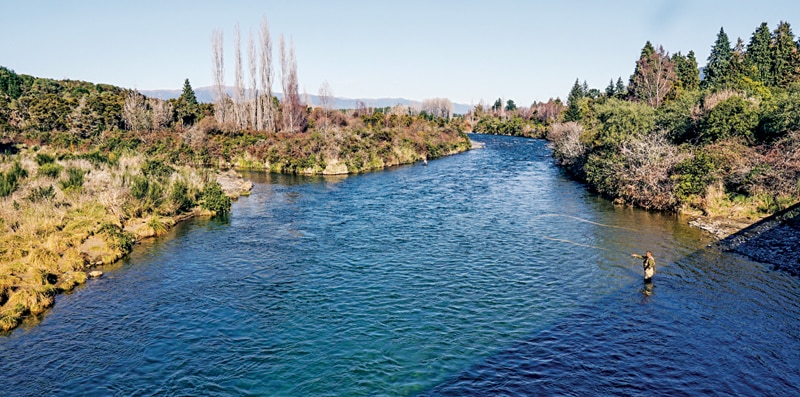
Early evening is Toni Marks’s favourite time to stand, chest-deep, in the wintry Tongariro River with a fishing rod.
Plummeting temperatures deliver the scent of woodsmoke from neighbouring chimneys and dispatch all but the hardiest anglers from New Zealand’s world-renowned trout catchment, in the central North Island. Nightfall quietens birdsong and amplifies the rush of whitewater as Toni uses his tongue to thread nylon through the eye of a hook. Then the retired psychiatrist stiffens his wrist, casts and waits for that telltale tug on his line. His strike rate is remarkably good for a man who learnt to fly fish while blind.
Mind you, he also honed his home handyman skills after losing the last vestiges of sight in his early 30s. By the time he built his first paling fence, Toni was a qualified psychiatrist living near Wellington with a busy hospital job, a wife, a young family and a knack for playing the piano by ear. Other unseen carpentry efforts include a couple of garden sheds, a brick-columned carport and a home renovation. All required careful handling of a circular saw and a swinging nail contraption in place of a spirit level.
Music, fishing and woodwork were welcome distractions from the intensity of a profession that revolved around people who were often seriously mentally unwell. The blind psychiatrist faced patients in prison cells, in his own private practice rooms and on busy hospital wards, and was often called on to give mental health evidence in court.
Toni was nearing the end of his medical studies when he discovered his world would turn dark. The shy sixth-year student was working a little too hard on his social life when an eye surgeon brusquely broke the news. “Look old boy, pull yourself together,” the specialist admonished him. “You need to finish your studies. You’ll be going blind pretty soon.”
Despite growing up with obvious night blindness and tunnel vision, the diagnosis was a shock. These were the days when doctors decided what was best for patients and none of the medics who regularly examined him had ever mentioned the grim outlook.
His parents, on the other hand, had long known what lay ahead. Toni was five years old when a specialist uttered the words “retinitis pigmentosa”, explaining the disease was attacking the light-sensitive tissue at the back of their son’s eyes and that it would eventually steal his sight. There was no known timeline or cure and no family history despite its usually genetic origins.
The Markses chose not to tell their son he was destined for disability, preferring that he grow up believing he could tackle anything. So he did, from schoolboy athletics to academics, from bike riding and illegally learning to drive his grandfather’s Austin 7 car, to working as a council rubbish collector during university holidays. His mother steered him towards music—she reasoned professional pianists did not need vision. And stamina overrode poor stride and flat feet; he ran himself into the top spot at his school’s mile-long running race.
Rugby was less successful. Young Toni had plenty of height but frequently failed to see or catch the ball. He discovered early how best to read the moods and behaviour of others. It was a matter of survival in the school yard, where bad eyesight made him clumsy and a target for teasing. As a still-sighted teenager, he would surreptitiously study fellow bus passengers, searching their bearing and facial expressions for clues to their lives and personalities.
Dating was tricky, though. The young woman he met at close quarters could be difficult to recognise in a hospital corridor the following day. Dim lighting and stairs made cinema visits difficult, while fumbling for a door handle could lead to unfortunate bodily collisions. He was always willing to hold hands and have his date lead the way.
Well before graduating from medical school at age 23, Toni developed a raft of coping mechanisms to manage life with poor sight. At university parties in overcrowded houses, he tended to loiter near the beer keg in the kitchen, where lighting was better. Staggering away afterwards, he would rely on friends and the silhouettes of power poles to lead him home. Housemates—the same ones who later taught him to fly fish—periodically pulled him out of hedges or steered him away from trouble.
In darkened hospital wards, he would hug hallway walls and head towards the glow of a nurse’s station, trying to steer around stands of flowers. At medical school, some tasks took longer. Reading text books was slow going, ditto the labels on bottles of chemicals in the biochemistry laboratory and it was abundantly clear that surgical work would never be his forte. However, psychiatry was something he could literally manage with his eyes shut.
Sightlessness proved no great nuisance in a consulting room. Subtle changes in manner and the way a patient was speaking told him when the person opposite him was hunched over or upset, hesitant or staring out a window. Patients frequently relaxed once they realised they were not being watched, or understood that the doctor had issues of his own.
Toni claims mastering a fly rod while blind has been no trouble, either, and likes to tell people it’s the fish that do the work because they have to grab the hook. If the terrain is tricky, friends guide him down steep inclines or steer him away from tripping hazards on forest tracks leading to his favourite river near Turangi township. His fishing mates will describe the angle of an overhanging branch or the river’s span, with distances measured in car lengths. Locals tell him what the fish are currently feeding on and how a favourite trout pool might have changed since his last visit. Then, he will step in and carefully feel his way along the stony river bottom, wearing waders.
The fly-fishing obsession was sparked by a lakeside family holiday when his children were young. Father, son and daughter found fishing gear in their rented holiday home and set off to try their luck after dinner. A two-kilo rainbow trout, caught around midnight, had Toni hooked. Annual pilgrimages began in earnest in the mid-1980s, when he joined a small group of angling friends for a weekend away.
Today, at age 80, Toni continues to travel four hours’ north to his favourite fishing ground, even if it means frustrating hours catching nothing and untangling lines. Or nerve-wracking moments trying to maintain exactly the right line tension after a strike. Or keeping the fish hooked as he navigates around invisible boulders and logs to reach the shore and land his catch. Usually, the fish are released, though a few are retained to be salted and sugared and cooked in a portable smoker back home.
He returns to the same spot each year for the camaraderie and storytelling and the promise that a seemingly hopeless standing-for-hours morning could turn to a feverish rush of adrenaline with the pull of a fish. He welcomes the way life’s demands dissolve amidst intense focus on casting technique and staying upright against the current, river water lapping armpits.
Toni shrugs off any parallels between his angler’s determination and the persistence required to navigate life without sight. For him, fishing is excellent medicine and a great pleasure. It’s a perfect example of one of the most important things in life, the former doctor says. “Get out and do what you love.”
Daughter Lucy regularly joins her father and his friends on their fishing trips, braving drizzle and bracing winds to work on her casting technique. However, she has also learnt to stand quietly near her father and listen for the treetop solo of a thrush as he teaches her the songs of the river.