The Man Who Helped Put Made-in-India Medicines on the World Map
From humble beginnings to founding Lupin, the Indian pharmaceutical giant behind billions of affordable medicines worldwide, Desh Bandhu Gupta's story is one of resilience, vision and entrepreneurship. This excerpt reveals how his journey became inseparable from India's rise as a global pharmaceutical powerhouse
 Desh Bandhu Gupta, fondly known as 'DBG', founded Lupin in 1968.
In 1948, a father from the Rajasthani village of Rajgarh carried his injured son on his shoulders for three hours to reach the nearest hospital, about 20 km away. For the 10-year-old boy who had broken his ankle, the treatment was too late and too costly to prevent a lifelong limp. Forty years later, that boy, Desh Bandhu Gupta (DBG), now founder of the pharmaceutical company Lupin, took three-and-a-half hours to cover the 5,800 km from London to New York on the Concorde. He then travelled by helicopter from JFK Airport for a three-hour meeting with Abbey Butler, the chairman of the major pharmaceutical firm FoxMeyer, after which he immediately returned to Mumbai for another important meeting.
These two trips capture three intertwined journeys. The first is that of Indian pharma: the luck, skill and choices that enabled a few Indian companies to make medicines affordable worldwide. The average American takes five made-in-India pills every day. The second is that of Lupin, a company started under India’s Licence Raj, whose revenues have increased a hundredfold since 1991 and that now sends 20 billion pills to America every year. The third is the journey of DBG, a village boy who grew up without electricity or a toilet and went on to become a teacher, professor and pharmaceutical employee before founding a company worth $10 billion. These three journeys fuelled each other, defied India’s economic stagnation after Independence and demonstrated the impact of entrepreneurship on public health and economic progress.
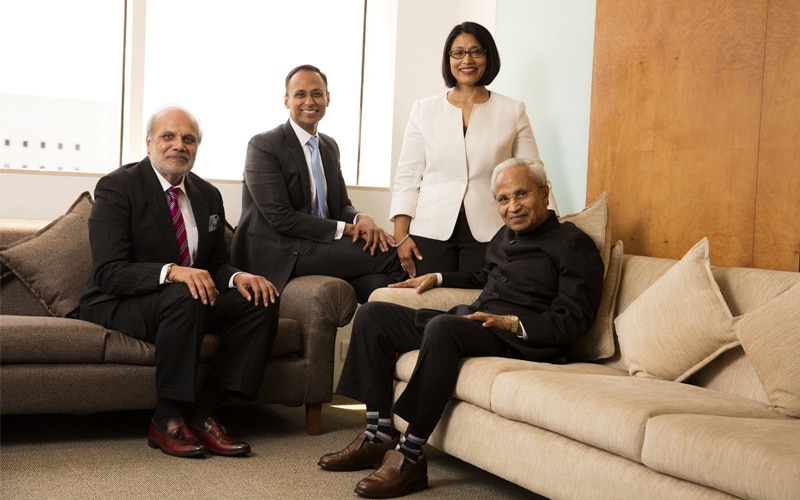 DBG and Lupin's executive management team, 2005.
When India Became the World's Pharmacy
The global pharmaceutical industry, a formidable force in extending human longevity, began with attempts to treat infections. Nathan Rothschild, once the world’s richest man, died in 1836 of an infected abscess that, today, could have been cured by an antibiotic costing ₹20. Antibiotic drugs were first developed in the West, but they were unaffordable for most of the world. India’s pharmaceutical industry made medicines affordable, tackled neglected diseases and extended lives. Their sales have grown from ₹10 crore in 1947 to over ₹5.2 lakh crore ($60 billion) today, while saving global consumers vast sums of money ($1.5 trillion in the last 10 years in the US alone). The massive global reduction of tuberculosis (TB) and HIV/AIDS mortality would have been impossible without Indian pharma companies Lupin and Cipla becoming the world’s largest producers of TB medicines and antiretrovirals. Of the 700 US Food and Drug Administration (FDA)-approved factories that sell medicines in the US, a third are located in India.
The philosopher Schopenhauer distinguished between talent and genius: Talent hits a target that no one else can hit; genius hits a target that no one else can see. The co-creators of Indian pharma—Yusuf Hamied (Cipla), Anji Reddy (Dr. Reddy’s), Parvinder Singh (Ranbaxy), Dilip Shanghvi (Sun), Ramanbhai Patel (Zydus-Cadila), Habil Khorakiwala (Wockhardt) and DBG (Lupin)—matter more to India than their companies’ revenues, exports or profits because they saw something no one else did. They raised India’s soft and hard power, demolished the myth that multinationals possessed unfair advantages over Indian companies, and ended pessimism about India’s ability to export goods. China and India had the same per capita income in 1990, but China’s is now five times higher, partly because it is the world’s factory. Yet India has become the world’s pharmacy: Nearly half of the 400 billion pills Americans consume every year are made in India, as are 60 percent of the world’s vaccines. This is valuable because a medicine must clear a high bar of trust in development and manufacturing before it is available for consumption.
A Company Forged in Crisis
The second journey is that of Lupin, the world’s largest maker of TB medicine, whose footprint across geographies, diseases and products has evolved over six decades. This adaptability stems from the successful navigation of multiple management transitions across professionals, families and generations; all of DBG’s four brothers were initially part of Lupin but established independent companies before Lupin’s initial public offering (IPO). Lupin also overcame business challenges to emerge stronger: falling profits in 1989, a near-death experience with diversification in 1993, and profit and quality challenges in the years following DBG’s death. While the specific solutions to each episode differed, the comeback strategy remained consistent: return to basics, confront the pain head-on and invest in the future.
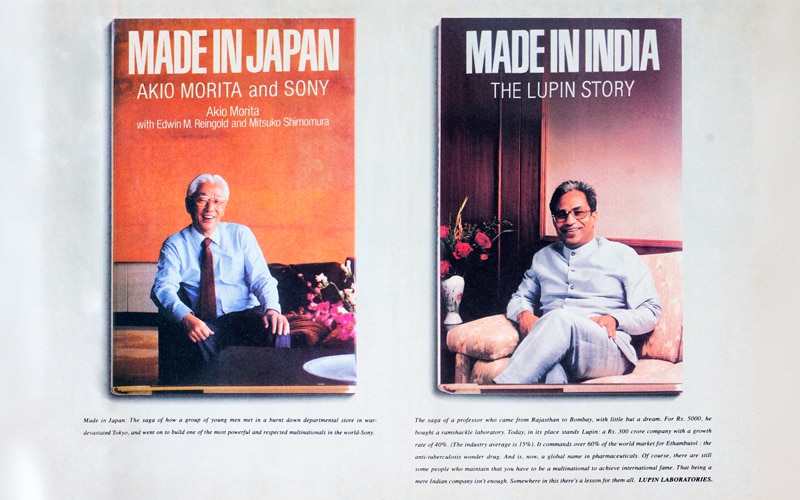 Lupin's pre-IPO advertisement in 1992.
The Village Boy Who Dreamed Big
The third journey is that of DBG: a classic hero’s journey where a man from humble beginnings, through grit, intelligence and luck, builds an empire. He confronts monsters in the form of the Licence Raj, financial ruin and personal tragedy. He finds strength within himself and in his family, mentors and loyal team. And ultimately, he creates a legacy that outlives him. His life is significant not because he was among the richest men in India when he passed away, but because of the distance he travelled from where he started. Primitive medical care in his village—plausibly potent fuel for his later ambitions in medicine—resulted in two siblings dying as infants, a friend dying of TB in school and his own lifelong health challenges.
DBG was an unlikely entrepreneur, given his inventory of role models, resources and timing. His father, grandfather and great-great-grandfather were teachers in village schools, government colleges and elite private institutions with a ‘security of salary’ mentality that led DBG to start his career in teaching. His father could not afford the fees for his son’s master’s degree at BITS Pilani. DBG became an entrepreneur under the Licence Raj when connections mattered more than courage or competence. However, he was an entrepreneur by temperament; childhood accounts identify curiosity, ambition, persistence, hard work, relationship building and challenging authority as early skills. DBG wandered widely before founding Lupin in 1968, when he was thirty; his five jobs included schoolteacher, college lecturer, university professor, Indian pharma company salesman and multinational pharma company manager. Many people wander, searching for their destiny and for themselves. But there is courage and purpose in the wandering of entrepreneurs like DBG captured by the poet Ghalib: Manzil to milegi bhatak kar hi sahi, ghumrah to woh hain jo ghar se nikle hi nahi (By wandering we find our destination, lost are those that don’t leave home).
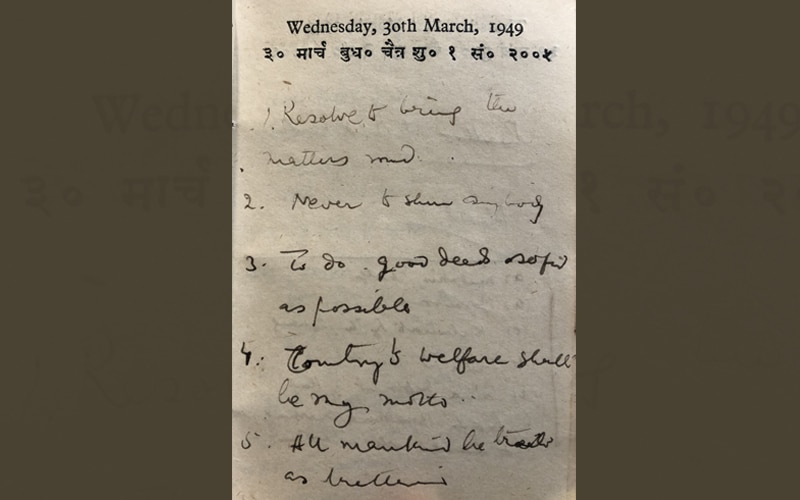 Instructions from DBG's father to him at age 11. It reads: 1. Resolve to bring the matters round; 2. Never to shun anybody; 3. To do good deeds as far as possible; 4. Country's welfare shall be my motto; 5. All mankind be treated as brethren
The Cost—and Power—of Persistence
DBG [also] had his share of personal challenges. His village childhood, marked by poor healthcare, led to lifelong struggles with tinnitus (a constant ringing in the ears) and hearing loss (that created stress for an extrovert who thrived on company)—the result of his eardrum being damaged by an amateur village ear cleaner. His broken ankle in childhood resulted in a lifelong limp caused by a two-inch shortening of one leg following delayed treatment. He also struggled with heart disease and periods of poor mental health, including bipolarity and depression. Ironically, despite a disciplined regime of diet, exercise, spirituality and meditation, this doyen of pharma spent his last few years taking ten pills a day. He had a complex relationship with his father that began with defying him over his college subject choice, continued with DBG disregarding his father’s early advice against moving to Mumbai, quitting his multinational pharma job, shutting down his startup and returning to a stable job. This defiance led to his father’s refusal to join Lupin’s board; DBG asked his businessman father-in-law to join instead. The father–son relationship healed in later years, and DBG was shattered when he lost his father (and youngest brother) in an Indian Airlines plane crash in 1993.
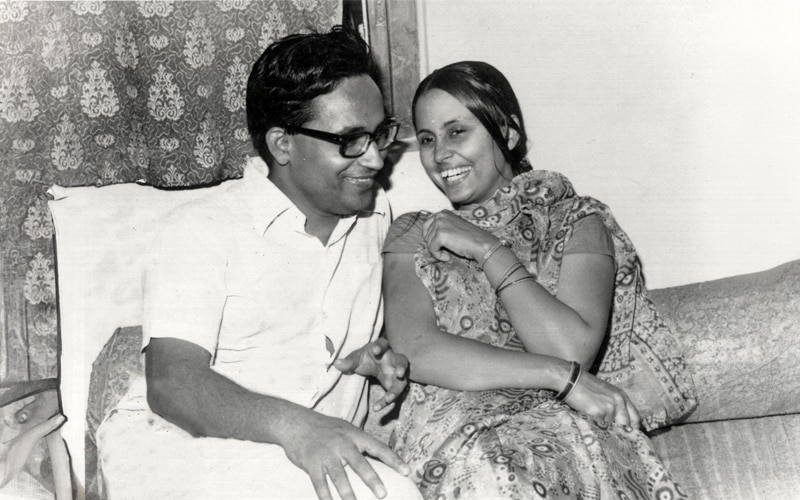 DGB and wife Manju at home in Happy Home Society, 1973.
These challenges did not stop him from building a great company and taking care of his family (he relocated all four of his brothers to Mumbai to work at Lupin, arranging their marriages before seeding them with independent businesses and buying their first homes) and empowering his children (two of his children are doctors, and the other three have master’s degrees). He was always in a rush; after multiple accidents while driving his car, his wife Manju banned him from driving and insisted on a driver. He refused to slow down; he would now jump out of the car in traffic jams, change into sneakers conveniently kept in the trunk and start walking.
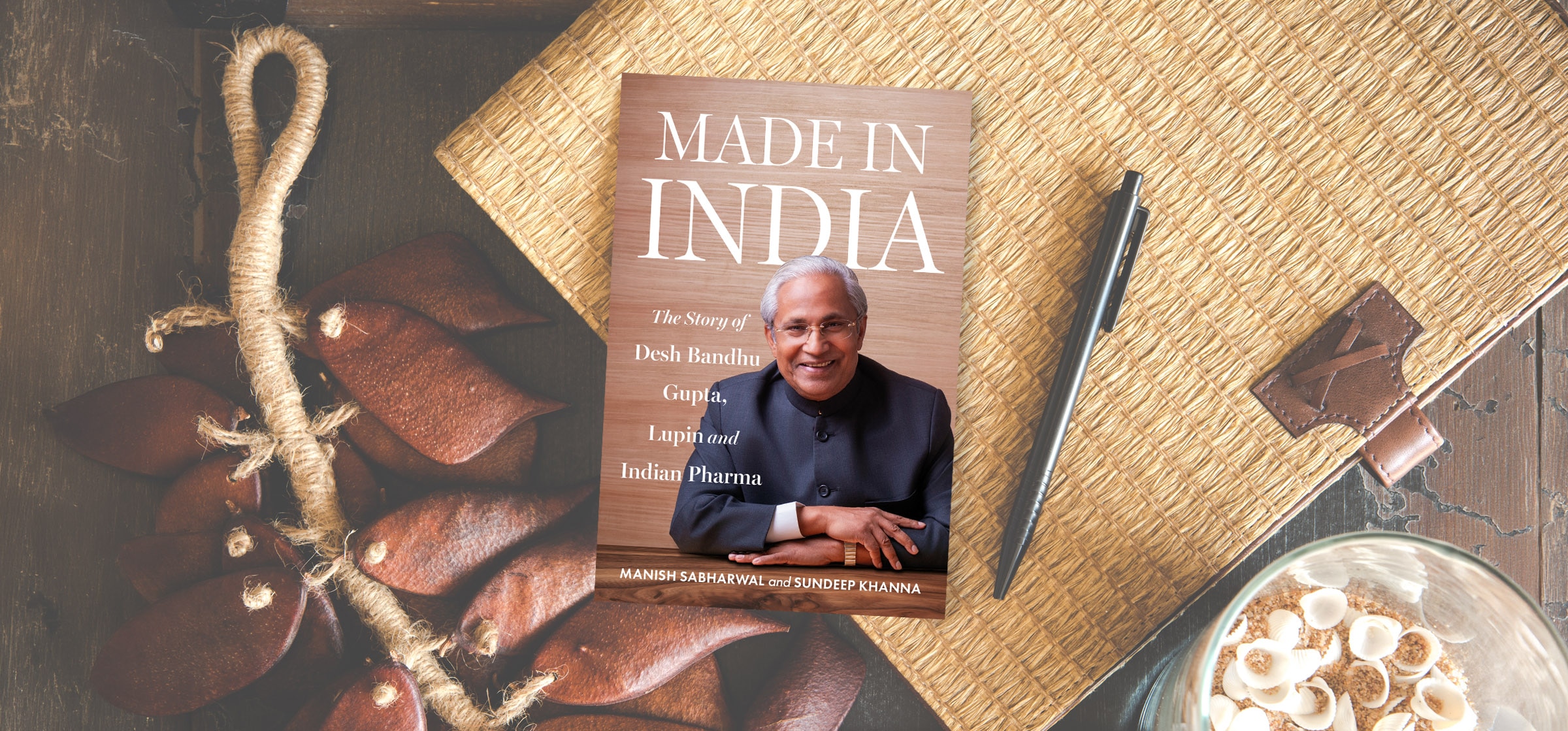
Edited excerpt from Made in India: The Story of Desh Bandhu Gupta, Lupin and Indian Pharma Manish Sabharwal and Sundeep Khanna, Juggernaut Books