- HOME
- /
- Features
- /
- Personalities
- /
Mário de Miranda: The Genius Who Drew a World
To mark the 100th birth anniversary of this uncommon genius, a family friend and fellow Goan remembers Mário, whose sharp humour and affectionate gaze captured the heart of a nation

In 2021, while working on a special Mário Miranda issue of Revista da Casa de Goa—an online magazine published from Portugal—and the script for the Goa Doordarshan documentary The World of Mário ... Seriously Funny, I experienced a full-circle moment. Surrounded by the work of the man I first encountered through my old pictorial Bal Bharati school textbooks, I recalled the time I met him in person at Lisbon’s Gulbenkian Art Gallery in 1987.
Here, I found him standing in front of one of his exhibited frames, surveying it closely. My mind raced back to Tim and Ram from the world of Bal Bharati and the goofy black-and-white dog from The Illustrated Weekly of India (IWI). When I approached him, he smiled as though he had always known me, and signed my catalogue: “For Óscar. Saudades. Mário.”
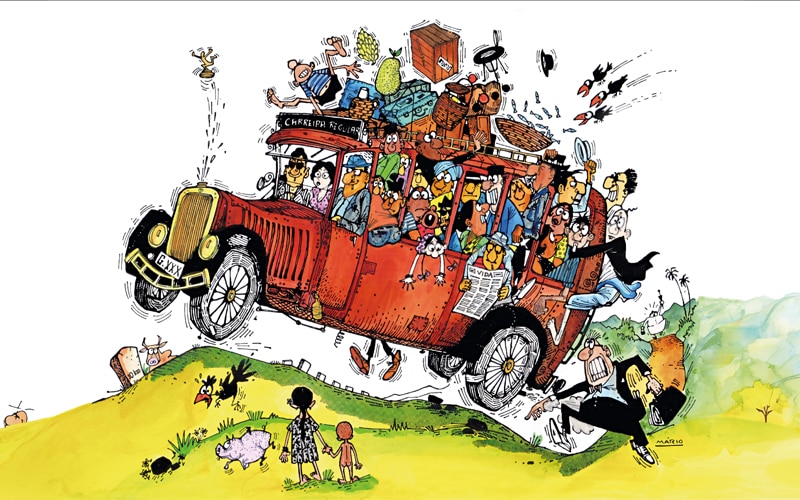 Mario's The Village Bus (1964), artwork: courtesy of Mario Gallery; Gerard da Cunha
Saudade is a word deeply rooted in the Portuguese consciousness. It describes a bittersweet nostalgia tinged with melancholy—a state of mind that Mário captured as only Mário could. ‘Longing’ or ‘yearning’ are just poor cousins. To me, saudade was homesickness, which my brief meeting with Mário quelled in no time. He felt like family, or at least like he knew my folks back in Goa. Sure enough, when I related this story to my father he said that they’d long known each other in Goa and then in Daman.
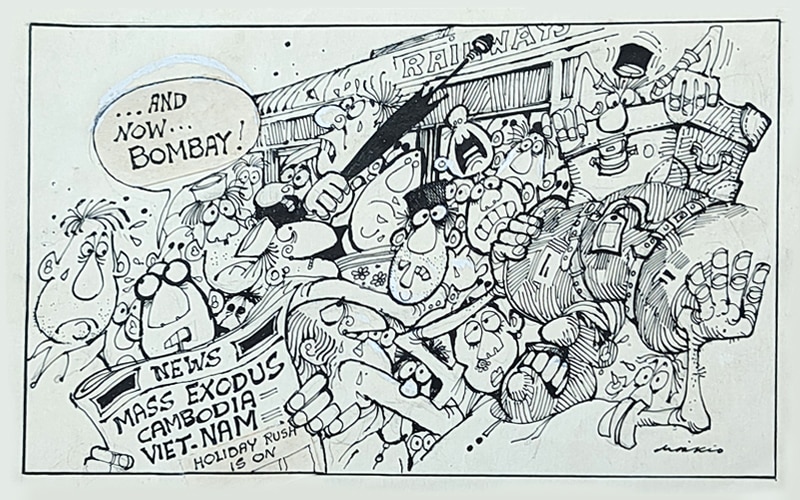
Artwork: From the collection of Aristides Alvares
Behind the Lines
To most Indians, he was simply Mário—the cartoonist whose crowded, joyous pen-and-ink worlds turned everyday life into tongue-in-cheek theatre. But he was more than a humorist. He was also a visual diarist, illustrator, muralist, chronicler, and above all, a profoundly humane observer who revealed the truth and tenderness of human nature.
Born in Daman in 1926, where his father Constâncio served as taluka administrator, Mário grew up in the Miranda manor in Loutulim, south Goa, amid old-world gentility, family lore, and a landscape that would nourish his imagination forever. He delighted in books, music, and sports, but most of all in drawing. He doodled village characters, celebrities, and family pets on walls, once joking, “In those days, I saw myself as another Michelangelo ... but it didn’t work out that way.”
He attended Mumbai’s JJ School for a day, but felt trapped rather than freed by formal art education, and so joined St. Xavier’s instead. In 1949, he graduated with a degree in English Literature and considered joining the civil service. It is amusing now to imagine Mário as a bureaucrat!
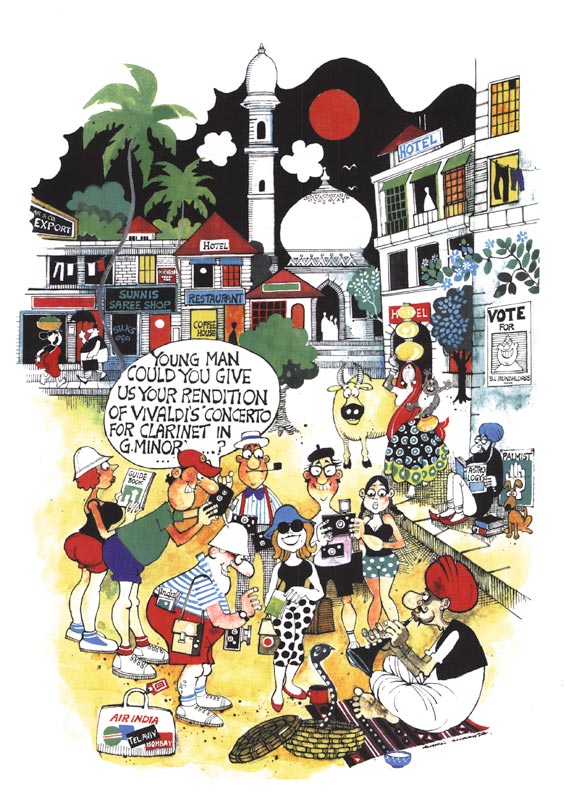
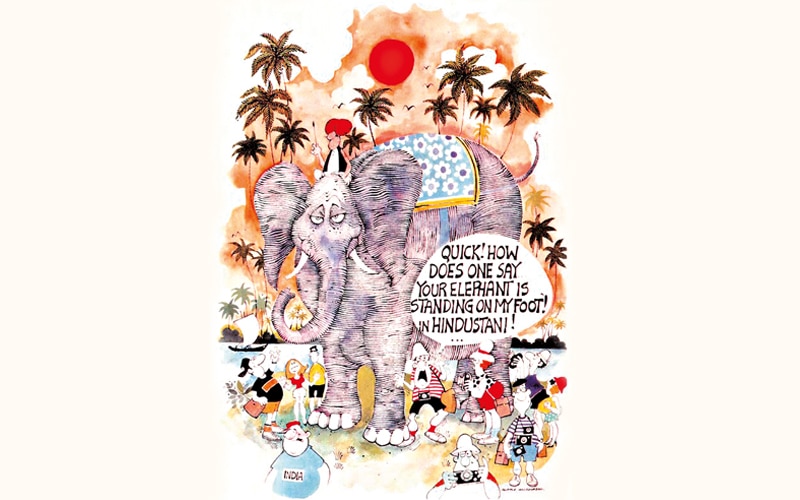 Foreign visitors were popular subjects in Mário’s work. Artwork: From the personal collection of Shaun Nicholas Lobo
His mother, Zulema, recognized something rare in her shy, introspective son. She gifted him blank notebooks and pencils for Christmas, and Mário filled them with sketches and little jottings in Portuguese. In those pages lay the beginnings of an artistic universe: village eccentrics, domestic rituals, bustling streets, and the quirks of ordinary people elevated into art.
Finding His Way
By the time he left college the world had changed. India’s independence was around the corner and the political future of Portuguese Goa shaky. His father had passed away, and Mário saw a question mark hanging over his future. In 1952, he moved to Mumbai carrying his diaries to newspaper offices and business firms. They impressed Current editor D. F. Karaka, who offered him a commission—a cartoon about a can-can dance at the Taj. Fascinated by what Mário came up with, he hired him as a regular. Dispatched next to the stock exchange, Mário recorded later in his diary with characteristic candour: “Didn’t understand a thing of what I saw.”
The Current helped him find his terrain, but the self-doubt of a rookie still lingered. At the suggestion of Polly, a fellow Goan hostelite, he began handcrafting picture postcards about Mumbai to earn extra money. One caught the attention of editor C. R. Mandy and art director Walter Langhammer of The Illustrated Weekly of India, and the 25-year-old jumped at their invitation to join the magazine.
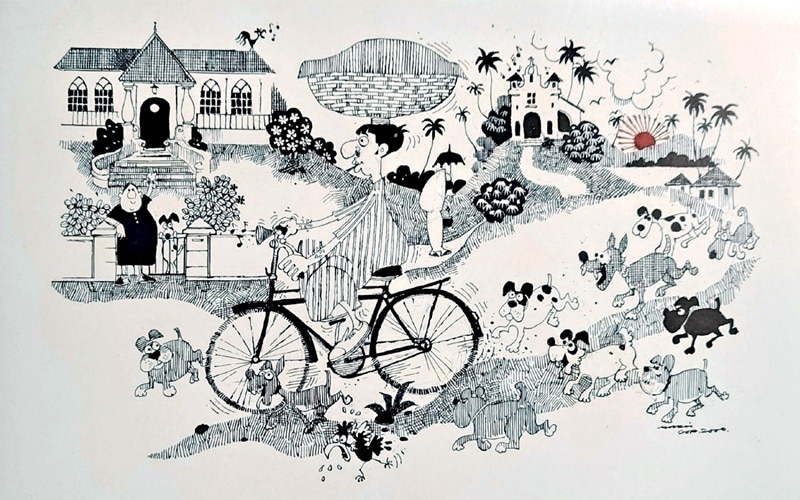 The Breadman—one of Mário’s snapshot of rural Goa. Artwork: From the collection of Aristides Alvares
Humour Finds Its Heart
IWI quickly became Mário’s creative home. There, he refined his voice, and learnt to tone down his humour, turning cartooning into a ‘serious business’. Lampooning political figures carried high risk, he quickly realised. An early instance of this was when Karaka asked him to create a cartoon that poked fun at Bombay Presidency’s Congress Home Minister Morarji Desai. The piece delighted the editor, but its publication drew sharp public criticism and Desai himself was furious. The episode proved instructive, and Mário gradually turned to social observation instead—the bureaucracy, business, fashion, domestic life, human habits, and urban absurdities. “I am not even a cartoonist; I draw … give me a pen and paper and I’ll draw,” he once said.
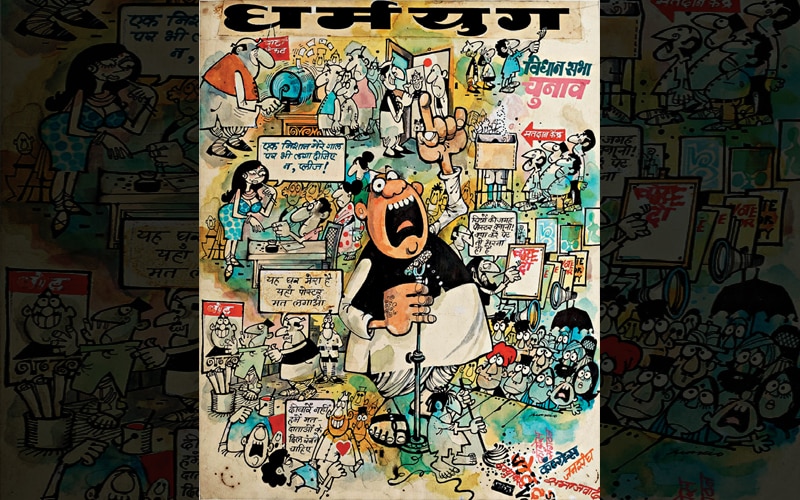 Mário’s cover for Dharmayug magazine, 1972. Artwork: From the personal collection of Shaun Nicholas Lobo
But finding humour is no mean task. Mário said, “There are times when you don’t feel funny, or may not feel like laughing, but still have to produce a funny cartoon.” He frowned when expected to come up with jokes and anecdotes to make others laugh. “I am not a naturally funny person; I may look funny, but I am not funny,” he quipped.
That distinction was important to him. Mário always resisted being a mere joke-maker. Humour, for him, was perception, not punchline. “It is equally important to laugh with, not at someone,” he said, capturing the moral centre of his work. That is why his cartoons, however satirical, were full of affectionate recognition—never cruel.
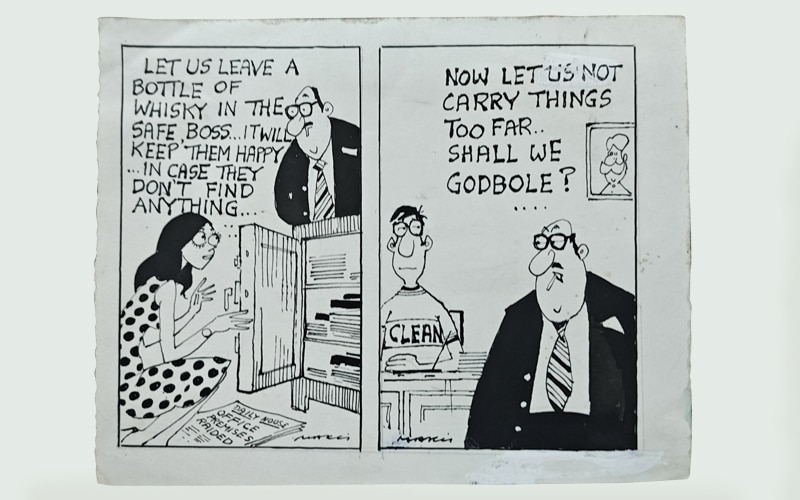
Artwork: From the collection of Aristides Alvares
Creatures and Creations
Millions grew up with his unforgettable characters—the glamorous and efficient secretary Ms. Fonseca, the office Boss and his obsequious underling Godbole; the pompous politician Bundaldass and his forelock-tugging aide Moonswamy; the buxom, larger-than-life film star Rajni Nimbupani and her co-star Balraj Balram.
Animals also played a recurring role in Mário’s cartoons, although it was his dogs who meant the most. Many of his sketches included as a character a canine spectator, a detail I noticed but never really grasped until my mother pointed out its significance. It was his way of immortalizing the many dogs he had known and loved, each with long, playful names that echoed Goan appellations.
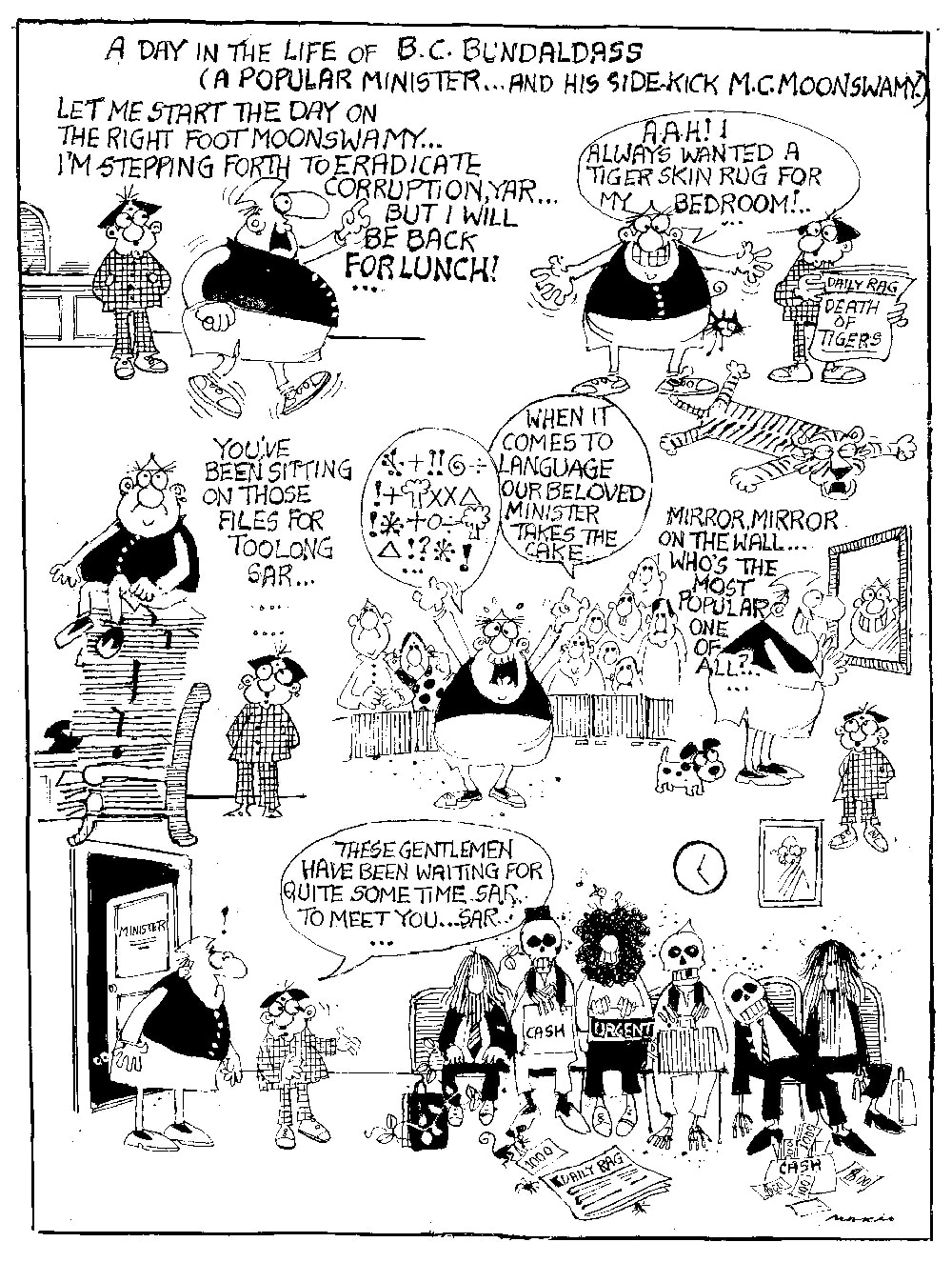
“When our proud Rapaz Rodrigues Raposo and the illustrious Farrusco Santana Dentuça left us after many years of faithful and cheerful companionship ... Mário would shut himself away in the room that would later become his studio and would not eat a single meal,” wrote his sister Fátima in an issue of Revista da Casa de Goa from 2021. His last pet, Happy—named by his grandson Samuel—was devoted to him till the end, and on the day Mário passed, Happy leapt to his side, whimpering in grief.
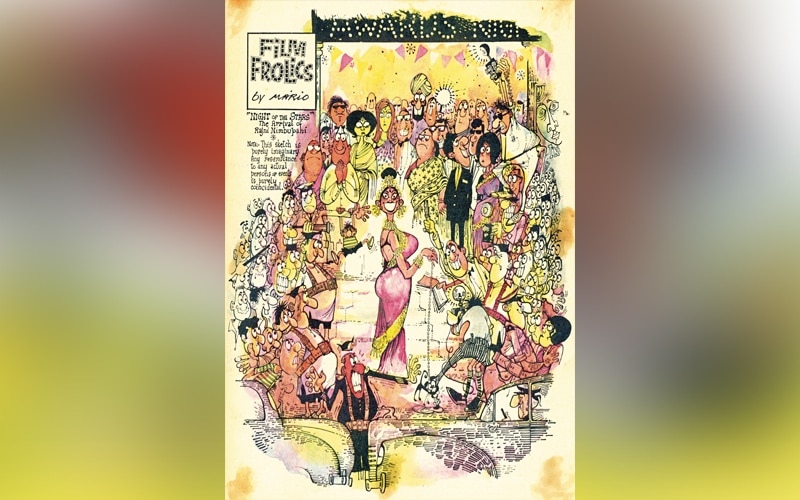 Rajni Nimbupani in an Illustrated Weekly cartoon. Artwork: Courtesy of Mario Gallery; Gerard da Cunha
Beyond the Page
After years of intense output, burnout set in, and in 1959, Mário left for his first trip abroad to Portugal, where a year-long Calouste Gulbenkian Foundation grant allowed him to tour the charming country, meet its people, and distill the essence of the Portuguese soul into his drawings. In London, he met fellow cartoonists and even his idol Ronald Searle, who urged him to “Stay on in England, but stop copying me!” The city proved a turning point—he worked for Lilliput and ITV, was featured in Punch, earned well, made friends, and gained the confidence to go it alone.
After having lost his job in India for overstaying abroad, he rejoined the Times Group on his return, and soon after, fell for 24-year-old art enthusiast and air hostess Habiba Hydari, from the nobility of the former princely state of Hyderabad. Mário and Habiba married in November 1963, and had two children, Raul and Rishaad.
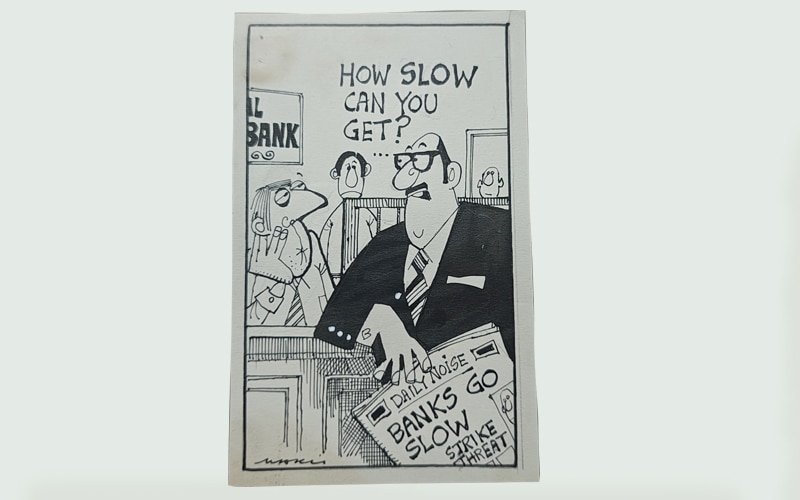
Mário’s career now began to get astonishingly varied. In 1964, he published Goa with Love, an evocative book of caricatures. By the 1970s, his work was in school textbooks, corporate calendars, and trendy magazines. Successive editors of IWI held him in esteem, while humorist Behram ‘Busybee’ Contractor and magazine editor Vinod Mehta were among his closest associates, whose writings were accompanied by Mário’s delightful visuals. MAD magazine featured Mário, who, in turn, wrote Cartoons—American Style in IWI. By then he felt that editorial cartooning limited his freedom and spontaneity, so he joined a fledgling tabloid, Midday, and freelanced for The Afternoon Despatch & Courier. During this phase, he also held over 30 solo exhibitions and refuelled his love for pictorial travelogues.
He soon expanded his creative pursuits to include book illustrations for the works of writers like Dom Moraes and Manohar Malgonkar. Air India used his figures, Goa’s Kala Academy auditorium installed his cardboard cut-outs, and the capital’s municipal market complex and the Central Library exhibited his murals. An inveterate cinephile, Mário was even a creative assistant for The Sea Wolves, a war film shot in Goa; and film director Shyam Benegal produced Trikaal, loosely based on a Miranda family story.
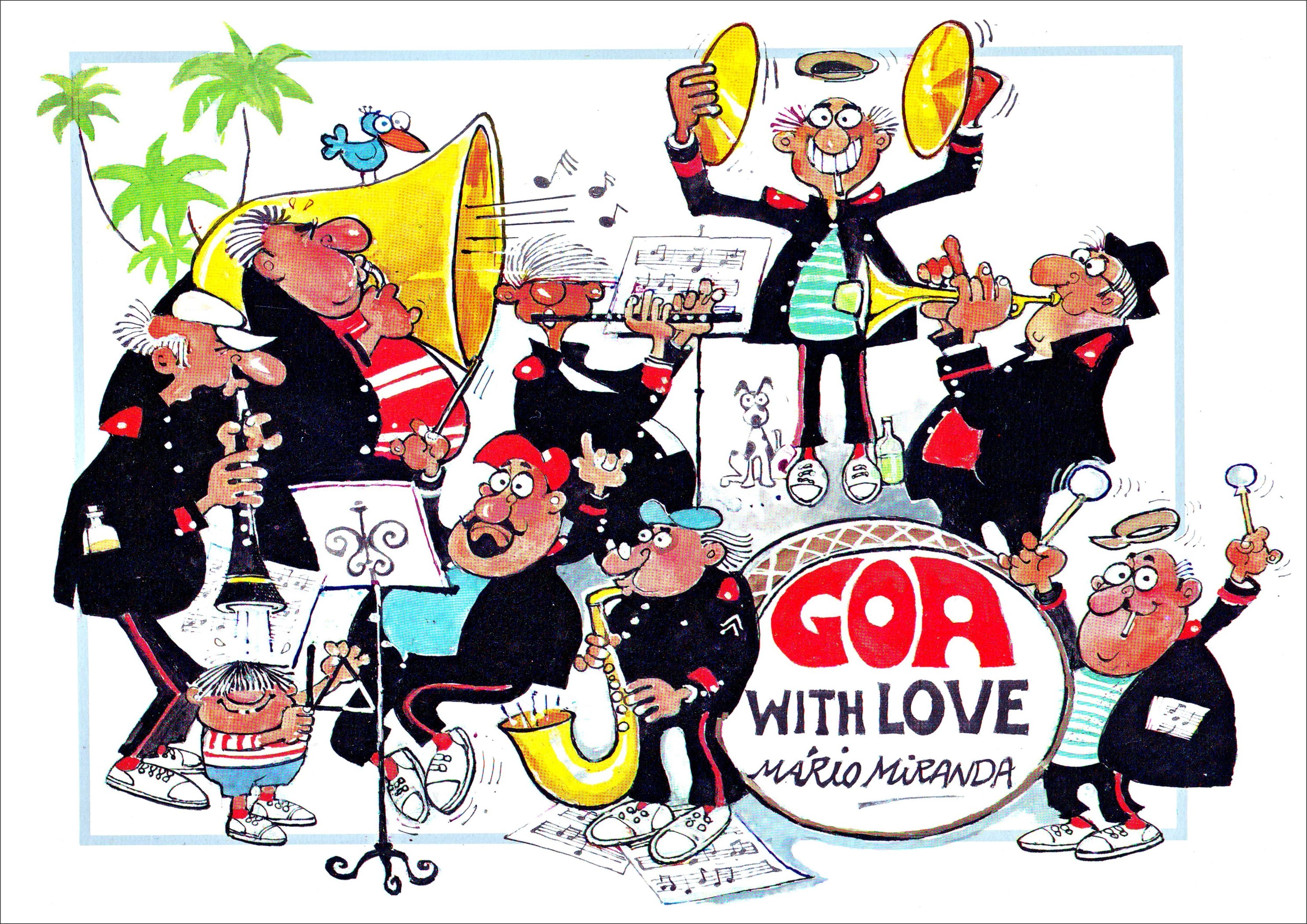 From Goa with Love, a collection of Mario's caricatures. Artwork: Courtesy of Mario Gallery; Gerard da Cunha
Homecoming—With a Purpose
This marked the beginning of Mário’s journey home. In 1996, the couple gave up their rented apartment at Colaba’s Navy Nagar and returned to their sleepy little village, frozen in time. But Mário was a quintessential Goan with cultural promises to keep. While still cartooning for Mumbai newspapers, he led a number of heritage revival projects as the convenor of the Indian National Trust for Art and Cultural Heritage, Goa: a Christian Art Museum sponsored by the Gulbenkian Foundation, restoration of Goa’s iconic Reis Magos Fort, inspiring fashion designer Wendell Rodricks’ documentation of Goan attire through the Moda Goa project, and getting artist Victor Hugo Gomes to study Goa’s ethnography, which led to the launch of the Goa Chitra Museum.
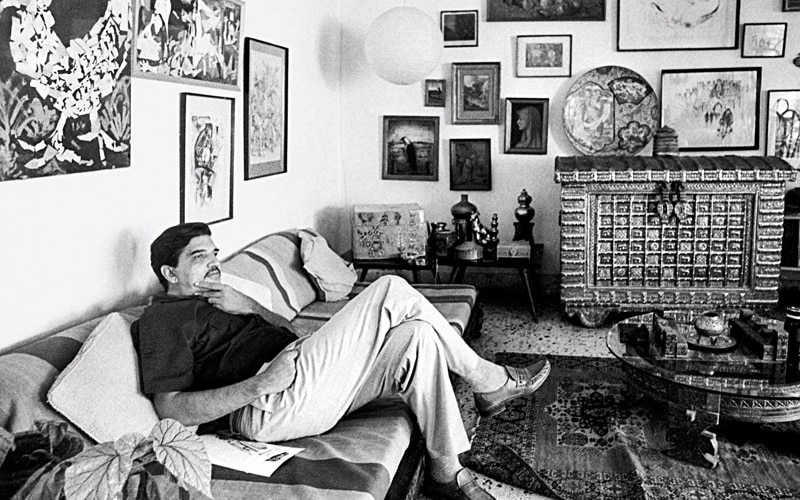 Mario, at home in his Colaba apartment; Photo: Alamy
Mário understood heritage not as nostalgia but as stewardship. “Goa has a different atmosphere from the rest of India,” he once said, hoping enough of the past would survive to preserve its identity. That concern ran through his life. His chronicles of Goa’s charm was partly because he sensed its fragility, and hoped that “some of the heritage of the past remains and gives Goa this identity that I think it needs.”
Mario’s work was abundantly recognized and awarded—the Padma Shri, Padma Bhushan, posthumously the Padma Vibhushan; Goa’s State Cultural Award; Spain’s Cross of the Order of Isabella the Catholic; Portugal’s Order of Prince Henry—but he found little reason to smile when it came to heritage and environmental conservation. This and his inability to get back to his watercolours and the piano were his biggest regrets.
Above All, a Friend
After 1996, one encountered Mário more often at cultural events and parties. He loved music and food and never missed a good gathering, but was almost always found in a corner, quietly observing, smiling gently, speaking little—not so different from his sketches, where he, at times, inserted himself as a discreet figure in sunglasses, a silent witness to life’s pageantry.
Yet, beneath that reserve was tremendous social warmth. He had a vast circle of friends and admirers, and a remarkable generosity. When my father Fernando de Noronha asked if he might glance at his Portuguese memoir, Mário not only read it but readily agreed to illustrate it. My father used the phrase amicus certus in re incerta cernitur (‘a true friend is known in uncertain times’)—Mário embodied it. When my father’s second book was ready, Mário again intended to illustrate it, but Parkinson’s disease had begun to shadow him. The spirit remained willing, the body less so.
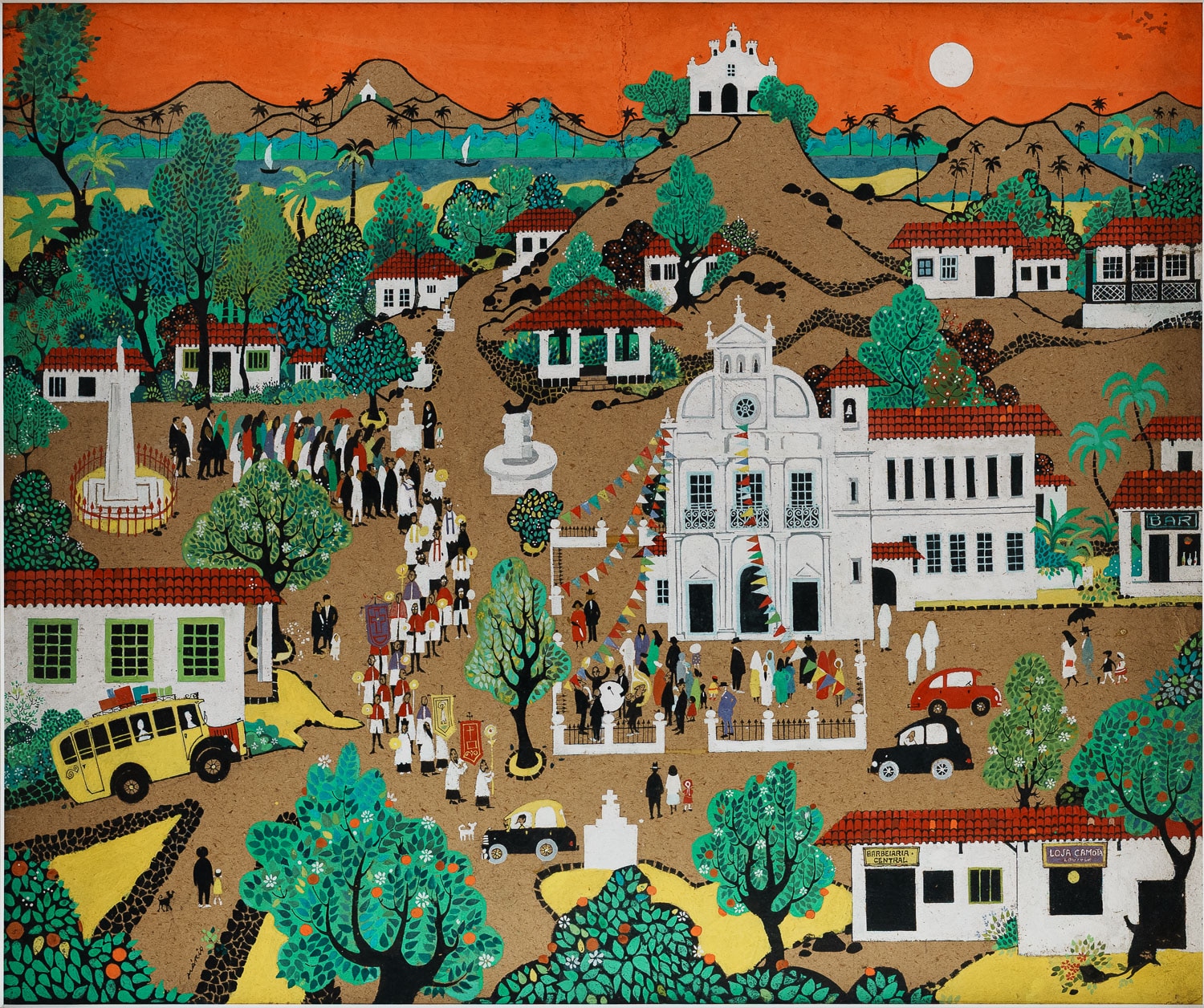 Photo Credit From the personal collection of Shaun Nicholas Lobo
Even after my father passed away in June 2011, whenever we met Mário, he would remember that unfulfilled promise. We scarcely knew that by early December that same year, he too would be gone, passing peacefully in sleep. His ashes were scattered over the Zuari and India mourned the loss of one of its dearest artistic treasures.
Endings seem inadequate when remembering Mário. His legacy persists not merely in museums or murals, but in the crowded bazaar seen as choreography, or in the village gossip, or the puppy perched in the corner of his frame—because love notices such things. Will younger generations, with altered sensibilities, read him differently? Perhaps. Some may question certain period stereotypes. But what endures is the largeness of his gaze—its compassion, irony, and delight. And in saudade: that deep, abiding longing touched with gratitude.