- HOME
- /
- Features
- /
- Classic Reads
- /
A Pretty Good Teacher, For A Cat
Proud and independent, Tiger made contributions to this maturing family that will never be forgotten
 PHOTO: GETTY IMAGES
Gwyn, my youngest daughter, helped Tiger as we drove down the country road to the vet’s on what was to be his last Friday morning. Privately, both of us nursed a forlorn hope. We joked and laughed, trying to ignore the spectre that hovered over the cat sitting quietly in her arms.
At 16, Tiger was old for a cat. In quiet dignity, he let Gwyn pet him, perhaps understanding that this was a special trip. I glanced at the two as I drove, and thought back to the day when Tiger first entered our lives.
He had been a Christmas present to my second son. Brian, at six, wanted something that was his alone, something not handed down—as were his clothes and toys—from his older brother. Sadly, even our dogs had merely tolerated Brian, responding more eagerly to my commands, and those of my wife and older boy.
And so, on Christmas Day 1954, I rose early with my wife to put the tiny kitten a neighbour had given us into the stocking that Brian had carefully tacked to the mantelpiece the night before. The first of my vivid memories involving Tiger is the look of joy on Brian’s face when he saw the kitten’s head poking out of the stocking, and heard the plaintive ‘meow’ that proved his present was alive.
From then on, Tiger’s life was filled with love. Brian lavished care on him, fed him, played with him. For a sometimes rough, sometimes clumsy child, Brian showed a co-ordinated gentleness with Tiger that was amazing. And late at night, when I checked on the children, I would invariably find Tiger on Brian’s bed, stretched out beside him.
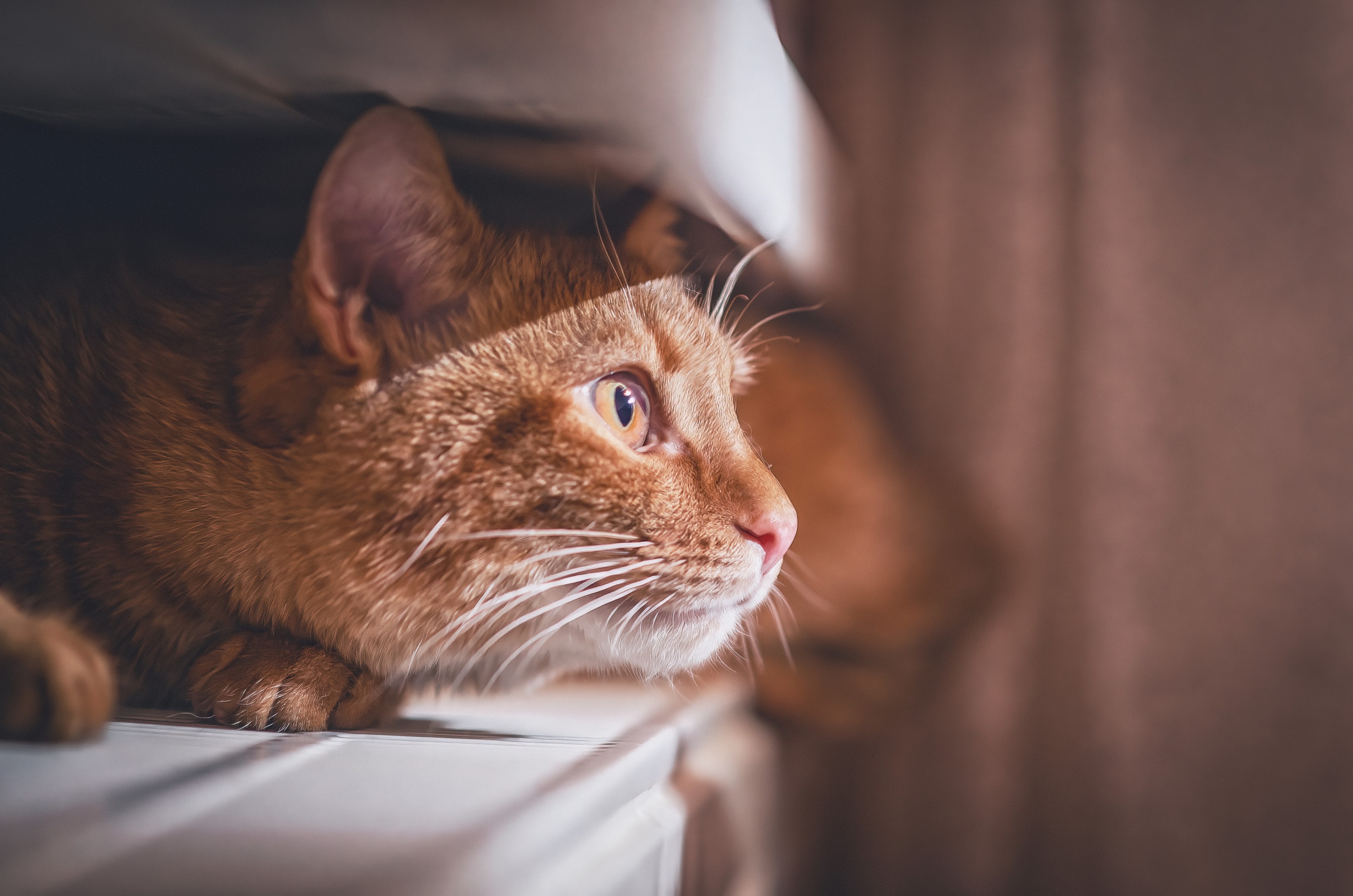
My next clear memory of Tiger is also a happy one, which came after near-tragedy. One evening our next-door neighbour rang the front doorbell. “I’m sorry to have to tell you this,” she said when my wife answered the door, “but when I backed out of the driveway this afternoon, I’m afraid I ran over your cat. I tried to help him, but he jumped up and ran away. I don’t know where he went or how badly he was hurt.”
Four weeks passed with no sign of Tiger. Stoically, Brian tried to hide his fear that his friend had crawled away to die. It was a fear we all shared. And we came to accept his death—all of us except Brian.
Every evening Brian would go to the door and call Tiger’s name. Finally, on the 28th day after the neighbour’s unwelcome announcement, he had an answer. Out from under the front porch came Tiger, his tail high, walking with the pride and majesty he customarily displayed, behaving as if he had never been away. As he approached the door, Brian’s face was transformed with joy. But neither he nor Tiger displayed open affection in front of the family. There was a calm acceptance, an honouring by each of the other’s dignity.
That night, though, when I checked Brian’s room, I saw that his cheeks were wet and a blissful smile was on his face. And his arm encircled his cat, who lay purring quietly beside him.
The years passed. When Tiger was 12 and Brian 18, he fell victim to the communication-gap, identity-crisis syndrome. The tensions were too great. He had to get away. And so he left our home to join others of his generation who were seeking answers to questions for which their parents had no answers—in part because they did not know what the questions were.
Yet, unlike many of his peers, Brian maintained a connection with home. From time to time, at odd hours and without warning, he would appear or call. And always he would ask, “How’s my cat? How’s Tiger?”
And then one night a call came from a phone booth in Washington. “Brian is sick,” an unidentified youth said. “He’s asking for you. You’d better come and get him. He’s at the ‘cave’ on P Street.” It was 4.15 am.
Two hours later, following the educated guess of a policeman, I found the ‘cave’. It turned out to be a slum basement where 20 to 30 teenagers slept in crowded squalor. Brian was there. He had pneumonia.
“Hello Father,” he mumbled. “I blew it again, didn’t I? How’s Tiger?”
We brought him home to recover. But Brian could not stay at home, not with all those unanswered questions: Who am I? Why am I here? Where am I going?
The next call, from Philadelphia, came at a more reasonable hour. It was 6.15pm and we were just starting dinner.
“Father, can I come home?” Brian asked. “I’ve been robbed. Of everything. My clothes, my wallet, my guitar, even my poetry.”
There was a catch in his voice. This, I think, was the final blow in a series of hard knocks which persuaded Brian that there are serpents in the flower children’s Garden of Eden.
“Of course you can,” I said. The conversation ended on a familiar note: “Tell Tiger I’ll be home tomorrow.”
So, once again, Brian came home. But again he left. This time it was for good, leaving us his cat while he began to find some answers to adulthood. Today, married, he visits from time to time. He is making his own life with his new wife—without Tiger.
After Brian’s initial departure, Gwyn, age 10, assumed responsibility for Tiger’s care. Small and slightly scatterbrained, she was passionately in love with the animal world, and refused to watch movies or television programmes in which animals might get hurt.
Gwyn was miserable in school, but we did not know it then, for in some ways she was harder to communicate with than Brian. For her, as for Brian, Tiger became the companion to whom she could pour out her heart and on whom she could lavish her love without fear of rejection or ridicule. And she profited from the discipline of maintaining a regular feeding schedule for Tiger and cleaning out his sandbox.
Late in the summer before Tiger’s 16th year began, Gwyn became increasingly concerned with his health. He was slowing down noticeably, and his hearing and eyesight were failing. One night, Gwyn came to me with the inevitable question: “Father, what if Tiger dies? What am I going to do?” And with that question came the tears.
Tiger was stretched out on the floor, his ears pricked, his eyes looking at Gwyn. Then he turned and looked at me, as if to say, “Well, old man, how do you handle this one?”
“Gwyn,” I began, “everyone must die. And when someone dies, those who love him weep and mourn his death. But when we weep at the death of someone we love, or at the realization that death will soon take him away, aren’t we weeping at our own loss?
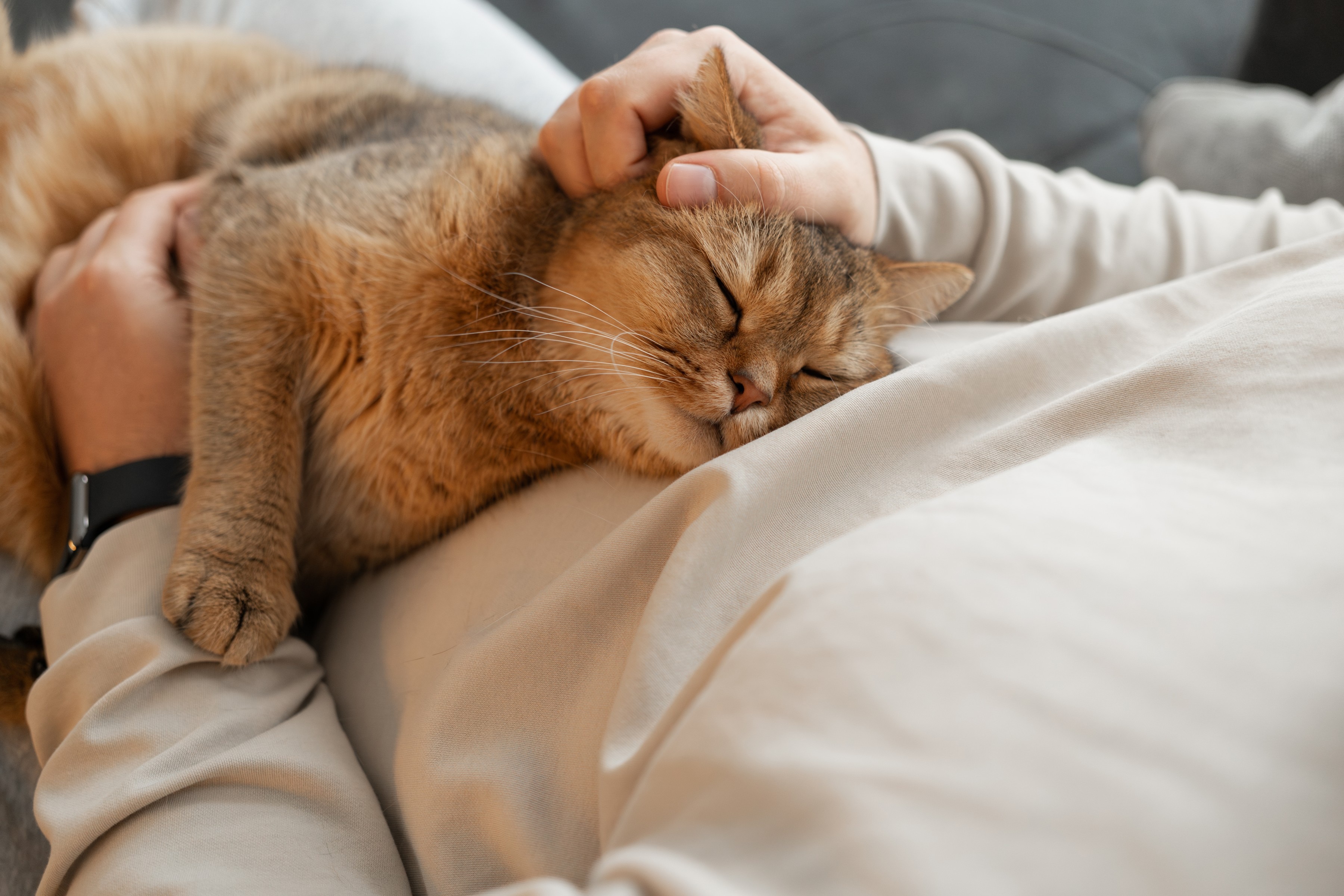
“Think about it. Do you pity Tiger because he is going to die, or do you feel sorry for yourself because you are going to lose him? Tiger has had a long life—longer than most cats. He has been loved and cared for. If he could tell you how he wants to be remembered, I think he would say that he wants you to recall the happy times, the joy and comfort that he brought you, the good lessons that you have learnt from him. I think he would want you to remember him with smiles.
“Tiger is going to die, Gwyn. Not tomorrow, maybe, but soon. He will get sick and be in pain. Then you will have to decide: will Tiger be kept alive, even if he is suffering, just so you can delay losing him for a few days? Or will you ask the vet to end his suffering?”
This one time, Gwyn sat quietly listening to me and not bouncing as she usually did. And Tiger, as I ended my speech, put his head down, closed his eyes and drifted off to sleep.When we reached the vet, Gwyn had to carry Tiger inside. For several days he had been unable to keep his food down. He had lost control of his body functions. The flesh had evaporated from his frame leaving his ribs showing, his hips sharply prominent.
At the vet, the doctor examined Tiger for long, grave moments. “Well, Gwyn,” he said finally. “I can keep him here for a few days, feed him on a liquid diet, try to build him up—but I can’t make any guarantees. His nerves are breaking down. He can’t control himself. It’s senility—old age.”
Gwyn searched the doctor’s carefully neutral face. “I don’t want him to suffer,” she said. “I want what’s best for him.”
She picked Tiger up from the examination table and held him tightly to her breast, his head on her shoulder. Her eyes grew moist. Tiger was completely quiet in her arms, as if awaiting her decision.
“I want you to put him to sleep,” said Gwyn. Her voice broke, and tears spilled down her cheeks. She put Tiger back on the table. Then she turned to me and smiled through her tears.
I said nothing. I couldn’t. Instead, I put my arm around her shoulders and squeezed.
Again she smiled at me through the tears, a tremulous smile that told me she was satisfied with her decision. At the door we paused and turned for a last look. Tiger was sitting quietly on the examination table. He looked at us, eyes bright, ears perked. Though weak from hunger, he sat up tall and calmly watched us go through the door.
Gwyn and I got into the car. I put my head down onto the steering wheel and sobbed—the first time I had cried in years. Gwyn sobbed, too. But when I could look at her, she was smiling once again, a glowing look through the tears now drying on her cheeks.
Later that day, after I had called Brian, I wept again. Could I not, I asked myself, accept the advice I had given Gwyn? Did Tiger’s loss mean so much?
Then the thought came: my tears were not tears of sadness. They represented a number of emotions: I was proud of Gwyn and the courage and the firmness of her decision; I was grateful to Tiger for the contributions he had made in maintaining our communication with Brian, and to Gwyn’s maturing; I was satisfied with myself as a father who had been able to impart to his youngest child an insight to help her through an emotional crisis.
And, finally, I was filled with awe of a creature who had been a pretty good teacher, for a cat.
First published in Reader's Digest March 1971