Unexpected, Unfiltered, Unforgettable: Why Cringe Creators Are Winning Online
Offbeat, unfiltered, and utterly addictive—India’s so-called cringe creators are rewriting what it means to be a digital star
 Taher Shah went from Karachi to worldwide fame; tiara, velvet robes, angel wings and all.
It’s another day of scrolling when you begin to notice a startling pattern. Every few swipes throw out an oddball gem: an elderly man in a neon vest dancing with unfiltered Bollywood intensity to a heartbreak song; a 20-something rapping an auto-tuned anthem about selfies; a bedroom crooner spitting motivational lyrics in grammatically wobbly English. The videos make you squirm—but they’re also hypnotic, hilarious, and strangely heartfelt—a winning combination that is striking gold with audiences who can’t get enough.
You’d think the algorithm would push slick, curated content. Instead, lo-fi, low-budget kitsch has a place on your feed right next to glossy fashion tutorials and travel vlogs. The people once dismissed as ‘cringe’ are now calling the shots, getting brand deals, government appointments, and respect from industries that should pretend they don’t exist.
A quick scan of the stats proves the point: follower counts and views reach into the hundreds of thousands; comments flood in from Brazil, Germany, New Zealand; clips are remixed by creators in Tanzania; copycat reels emerge from China; likes, reposts and shout-outs are shared by global icons like Maroon 5, Snoop Dogg and Bruno Mars.
How did this happen? How did awkward become addictive?
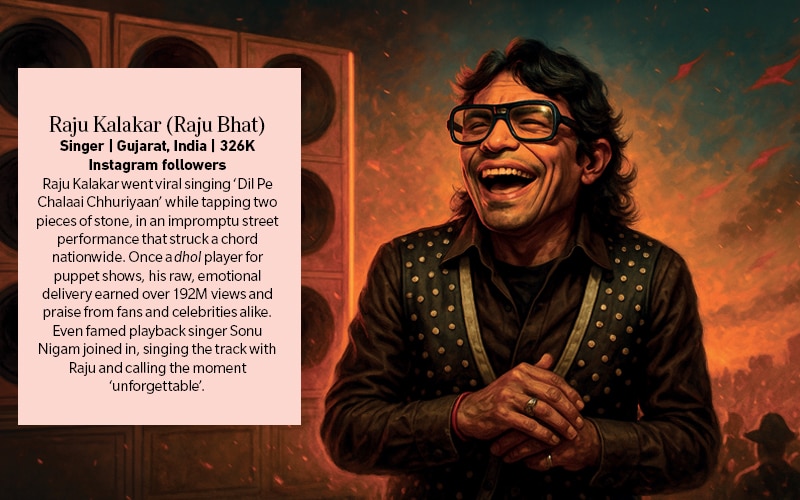 Once a dhol player for puppet shows, Raju Kalakar's raw, emotional vocal stylings earned him millions of views and praise from fans and celebrities alike.
As Jason Manners, a festival promoter who champions the Shillong Cherry Blossom Festival, puts it: “There’s an underdog appeal to rooting for someone who doesn’t fit the mould but shows up with confidence and heart.” Take Vennu Mallesh’s 2012 viral hit, ‘It’s My Life What Ever I Wanna Do’, which exploded on YouTube, auto-tuned to the teeth and brimming with unrestrained bravado. Critics called it “mind-numbingly cringeworthy,” but Vennu didn’t flinch. He kept making music, and a loyal fan-base followed.
For the audience, this feels refreshing, a break from the doomscroll that leaves us drained and dispirited on one end, and the polished aspirational content that leaves us feeling ‘not good enough’ on the other.
Much of this can also be explained by social psychologist Leon Festinger’s Social Comparison Theory. Humans have a natural drive to assess themselves, but instead of looking inward, we compare ourselves to others to figure out where we stand, especially when we’re unsure of our own worth.
When people initially encounter ‘cringe’ content, they’re often engaging in downward social comparison: looking at someone who seems less refined to feel better about themselves. It’s the online version of thinking, At least I’m not that person.
At its core, this is rooted in judgment, reflecting cultural and class superiority. It feeds on collective mockery through humiliation, but this isn’t entirely new. In many cultures, including in India, teasing and ribbing have long served as social rituals—a way to belong, if you can take the jokes.
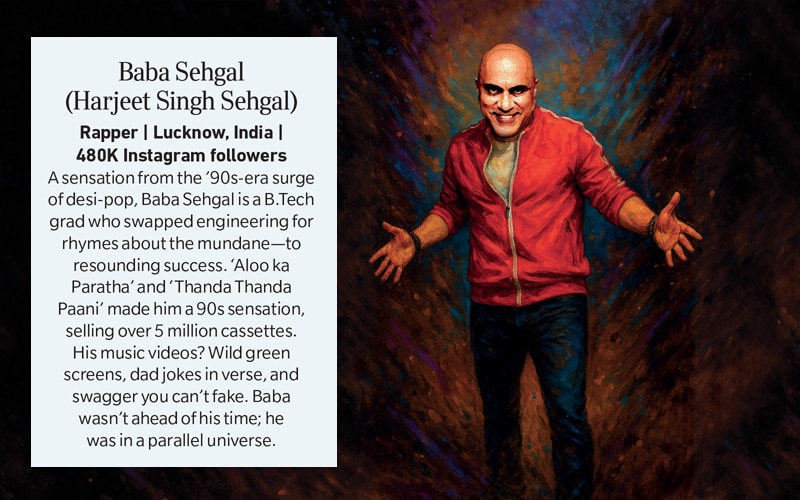 A sensation from the ’90s-era surge of desi-pop, Baba Sehgal is a B.Tech grad who swapped engineering for rhymes about the mundane to resounding success.
Years before reels and remixes, Baba Sehgal was already rapping about aloo ka parantha and thanda thanda paani with straight-faced swagger. India’s first rapper turned green-screen chaos and Hinglish wordplay into mass culture. Thanda Thanda Paani sold in the millions. Under one of his videos, a comment still reads: “You need an IQ level of 1000 to understand his songs.” A joke, sure, but also a hint at how we’ve always processed the gloriously ridiculous: laugh, share, remember.
Actor Amol Parashar frames it as storytelling in its own right. “There will always be some people who are genuinely curious and committed to trying out new things,” he says. “Honesty and intent always draw a positive reaction.” The intent is important. Even with cringe there is the kind that repels and the kind that magnetizes. Exploitative cringe seeks attention through manufactured controversy. Good cringe emerges from genuine passion and unfiltered joy.
That is what makes Darshan Magdum’s videos so appealing. Singing in front of a bright lime-green chroma screen, he performs covers as if headlining a concert, off-key or not. “Put 10 singers in a room, and nine will obsess over pitch and pronunciation,” says educator Adity Choudhury. “But there’s always one who sings like there’s no tomorrow, completely unbothered by how they’re perceived. That’s Darshan. That’s Raku.”
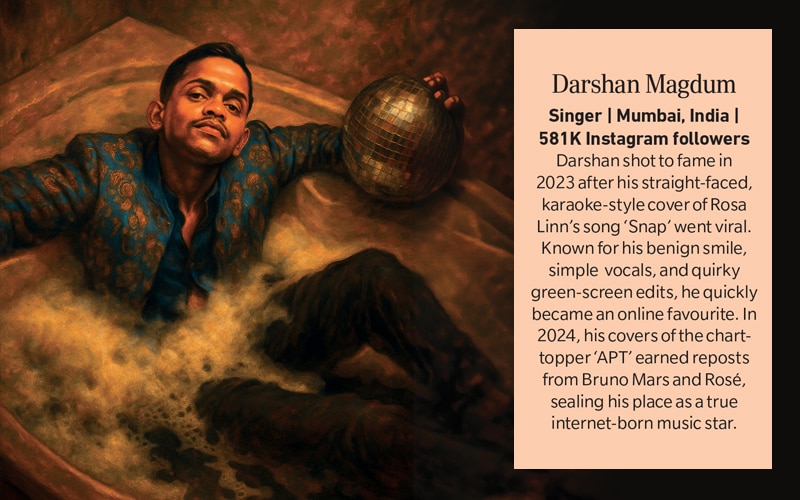 Darshan shot to fame in 2023 after his straight-faced, karaoke-style cover of Rosa Linn’s song ‘Snap’ went viral.
Rajkumar Thakuria aka Raku Da, a 70-year-old from Assam, also carries this artless quality. His music videos, with rudimentary transitions and disco flair, go viral across borders. “Raku Da to me is avant-garde,” says Assam-based actor and musician Arghadeep Baruah. Veteran actor Adil Hussain sees something deeply human in Raku Da’s work. “It’s honest, sincere, and probably childish. But there’s a childlike quality in how he presents it...I see him as someone deeply vulnerable.”
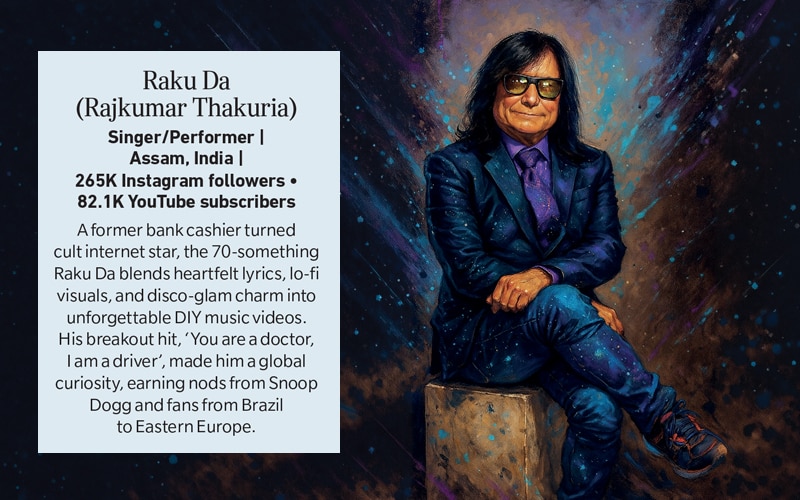 A former bank cashier turned cult internet star, the 70-something Raku Da blends heartfelt lyrics, lo-fi visuals, and disco-glam charm into unforgettable DIY music videos.
These creators come off as callow and unpractised, but Choudhury argues it’s more calculated than we think. “They seem to lack social intelligence, but in truth, they’re incredibly self-aware. They know exactly what sells.” The most successful ‘cringe’ creators don’t just endure love and hate, they leverage it. They might seem backward, anti-woke, or politically incorrect, but it’s rarely ignorance. Their pride in their creativity and genuine desire to entertain, earns them unexpected affection.
In Reading, UK, Bhim Niroula, a former banker from Nepal sings ‘Sunday Morning Love You’ with an accent thick with the charm of someone who’s never tried to sound Western. The digitally morphed background in his music video shifts from Mayan pyramids to Times Square while the song’s old-school catchiness earworms its way on to 7.8 million views on YouTube.
He and Raku both carry the same unshakeable belief that their voice deserves to be heard. Neither seems particularly interested in irony. When Niroula walked on to the stage of Britain’s Got Talent in 2020, judges and audiences alike laughed, and then cheered and applauded. It wasn’t the song they responded to. It was his decision to try.
“Raw content, especially the kind that doesn’t shy away from discomfort or vulnerability, reminds us we’re all human in the end,” says Nikita Engheepi, co-founder of Namaste Hallyu and a pioneer of K-pop concerts in India. “It’s not about looking perfect anymore, but about feeling seen.”
The internet rewards this mix of chaos and charisma. Raju Kalakar taps out a rhythm using flat stones like castanets in a heartbreak number that garners over a million views. Dhinchak Pooja oozes main-character energy as she sing-talks about selfies, parties and youthful abandon—off-key, off-beat but always unapologetically herself.
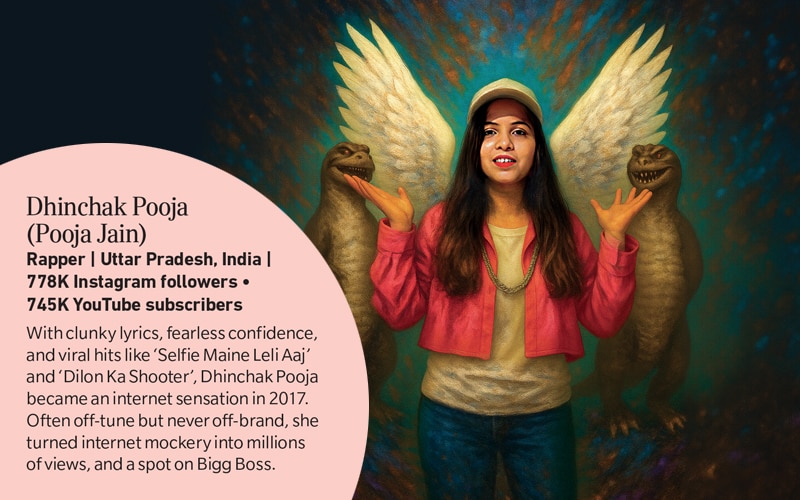 With clunky lyrics, fearless confidence, and viral hits like ‘Selfie Maine Leli Aaj’ and ‘Dilon Ka Shooter’, Dhinchak Pooja became an internet sensation in 2017.
And then there are performers who don’t sing or dance at all, yet somehow command the screen. Jasmeen Kaur’s Instagram videos were meant to sell salwaar suits, but the effect was closer to a one-woman show. Her improvised descriptions: “laddoo peela”, “baingani purple”, “mouse colour”—and the viral refrain “just looking like a WOW!” turned salesmanship into spectacle.
Some saw charm, others saw cringe. Either way, eyeballs lingered. Celebrities echoed her lines, remixes looped across timelines, and suddenly a Tilak Nagar shopkeeper became the internet’s most imitated voice and a million followers tuned in for more.
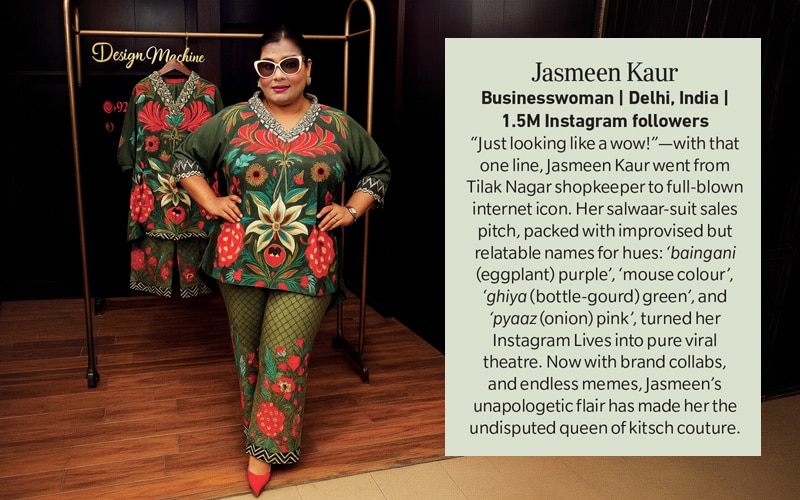 “Just looking like a wow!”—with that one line, Jasmeen Kaur went from Tilak Nagar shopkeeper to full-blown internet icon.
“There’s something powerful about people who know they’re being watched and use that attention like a spotlight, not a trap,” says Sri Lankan media personality and influencer Saasha Karunarathne. “It’s almost like playing chess with public perception.”
In that sense, Taher Shah might be playing an entirely different game. To him, all that matters is his core philosophy: love for humanity and peace on earth; public opinion be damned. The Pakistani performer’s unconventional costumes and signature waist-length hair, primped like he’s mid-shoot for a shampoo ad, first made waves when he released his 2013 music video for ‘Eye to Eye’, with its unwavering, if disconcerting, eye contact with the camera. In ‘Angel’, his purple robe, crown and wand became legendary.
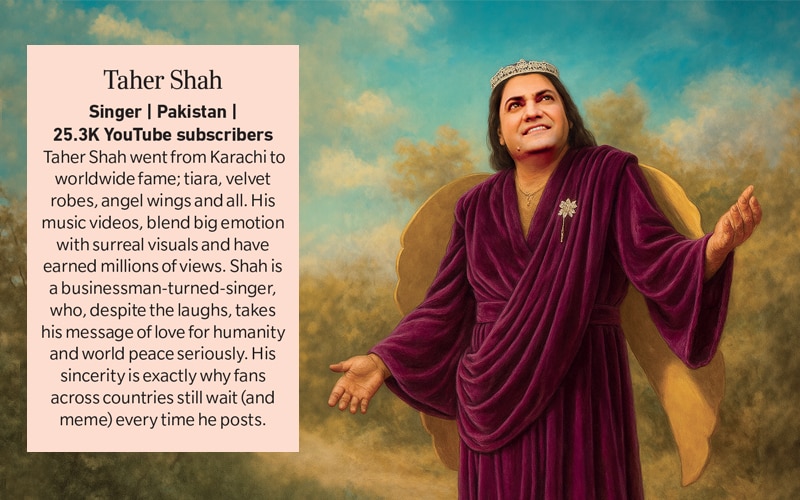 Taher Shah went from Karachi to worldwide fame; tiara, velvet robes, angel wings and all.
The internet turned him into a meme, but Shah didn’t notice. He kept making videos, racking up accolades and records. Whether anyone believed in him wasn’t the point—he did.
In the hyper-curated digital landscape, raw sincerity feels revolutionary and the beautifully weird are no longer fringe curiosities—they’re the face of a new digital reality. Calling such creators ‘cringe’, Hussain adds, is not just unfair—it’s reductive. “I find that to be a disservice, even derogatory. If you don’t like it, don’t watch it. That’s my view.”
So the next time a creator makes you cringe, perhaps the better move is to ask why: Is it about the performance? Or is it the audacious self-belief? Are they ‘cringe’, or are we uncomfortable with their ability to live, create and dance in the rain as freely as they do?
*Editor's Note: All figures are as of the time of publishing (August 2025)