- HOME
- /
- Culturescape
- /
- Studio
- /
The Art of Yayoi Kusama Reflected her Idiosyncratic Relationship with Pumpkins
Several installations and photographs speak to the late artist's love-hate associations around the fruit.
 Yayoi Kusama. Photo: Reuters.
Yayoi Kusama, one of the world’s most acclaimed and top-selling contemporary artists, passed away aged 97 on 14 August 2026. The Japanese artist, easily identified by her neon-red hair and flamboyant personal style, worked mostly with sculptures and installations. But she also had a small corpus of sketches, paintings, photographs and video art.
Kusama had always drawn pumpkins, even as a child in elementary school in Matsumoto, Japan. The family owned a nursery and seed farm where a lot of pumpkins grew. During World War II, when Kusama was a teenager, the family often ate nothing but pumpkins for weeks on end, owing to the war-related food shortages in Japan. Therefore, the adult Kusama had a bit of a love-hate relationship with pumpkins—in interviews she would express her admiration for their unpretentious, bulbous shapes while also pointing out her memories of throwing up after being forced to subsist on them.
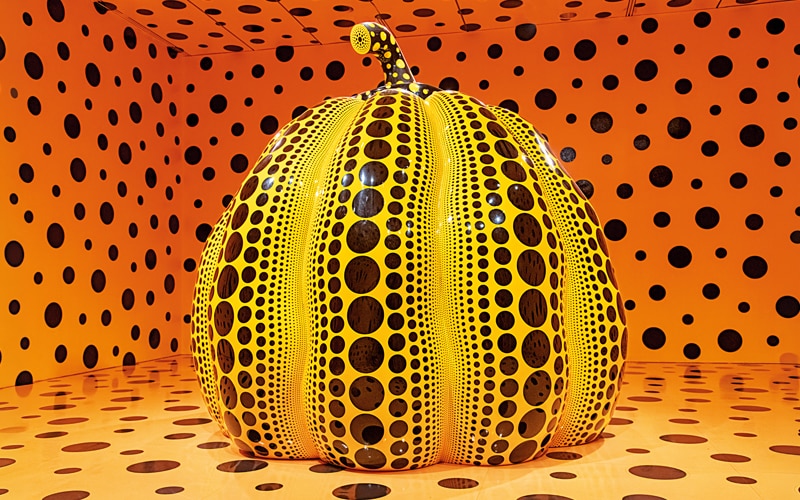 Pumpkin (2016) by Yayoi Kusama. Installation-view photograph, with additional lighting. Photo: Shutterstock
Broadly speaking, Kusama’s work was informed by trauma, hallucinations, her own obsessive-compulsive disorder (OCD) and the idea of art as coping mechanism. In the 1970s, she voluntarily checked herself into a psychiatric hospital in Tokyo, and it became her permanent residence until her death. The OCD tendencies can be observed by the profusion of polka dots, flowers and other ‘infinite patterns’ in her installations.
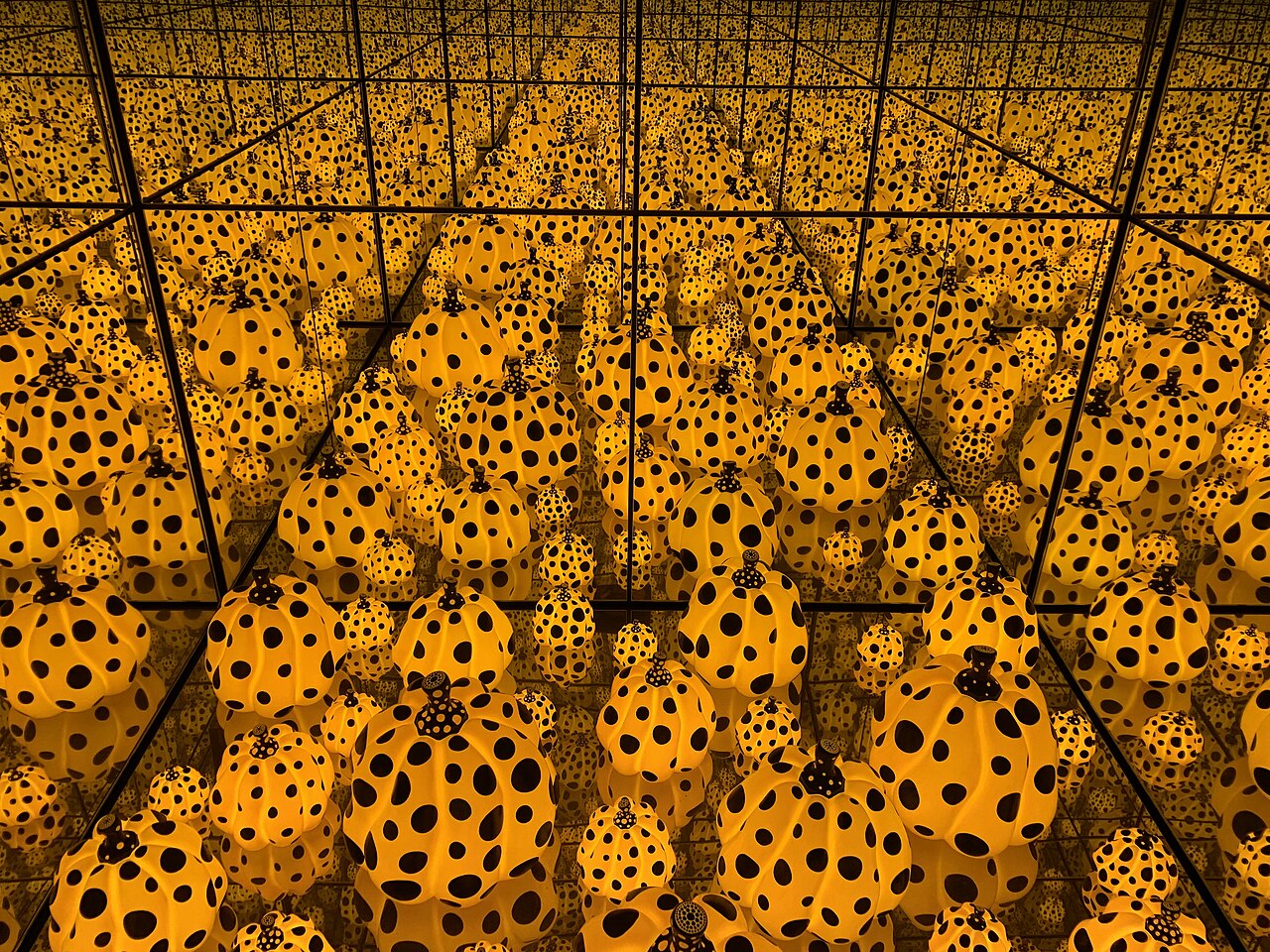 The Spirits of the Pumpkins Descended into the Heavens (2017) by Yayoi Kusama. Photo: Wikimedia Commons
Critics have linked her pumpkin sculptures to her well-documented feelings of fear and loathing towards sexuality. Through their girth and bulbous forms, they represent fertility. And as a child, Kusama’s mother tasked her with spying on her philandering father—the sexual acts she saw left her with an enduring fear of sex and everything associated with it. Her pumpkin sculptures (and by extension, this photograph), therefore, are proof of the transformative power of art. She embodied the human capacity to mine one’s own despair, and her demise has left the art world far poorer.
For more on works of art like these, click here