- HOME
- /
- Health & Wellness
- /
- Fitness
- /
Five Movements to Keep Your Muscles Fit
Why strength training is the key to a longer, more independent life
 Photo: Adobe Stock
One main intervention to slow ageing, reduce disease, increase lifespan and keep you independent till your last decade is strength training. The science today is so strong that longevity researchers worldwide agree on one thing: ‘Muscle mass and strength predict lifespan better than blood tests.’
All good things start at home. You can start strength training at home without fancy equipment. It is particularly empowering because it builds functional strength needed for daily life—lifting groceries, carrying children, climbing stairs and preventing falls later in life.
Master these five movements to stay hale, healthy and independent in your old age.
1. Squat (The Toilet Motion): If you can’t squat, you can’t get off the commode without help when you’re 80 years old. So, this movement is about independence. Sit down on a chair and stand up without using your hands. Repeat ten times. Hold a water bottle to make it harder. To prevent a fall, you need speed. Once you master the form, try to stand up from the chair quickly. This targets the quadriceps.
2. Hinge (The Bucket Motion): This movement is about back safety. This teaches you to pick things up from the floor using your hips and glutes instead of bending your spine, thus preventing low back ache or slipped discs. Gym masters call this the ‘deadlift.’ Stand upright, holding a heavy backpack or bag with both hands. Keep your chest up and your back straight. Now push your hips backward as if you are trying to close a door behind you with your hips. As your hips move back, allow the bag to lower slowly towards your knees while keeping it close to your body. Your knees should bend slightly, but most of the movement comes from the hips. When you feel a stretch in the back of your thighs, drive your hips forward and stand up tall again. This movement mainly targets the glutes, hamstrings and lower back muscles, which together form the body’s ‘posterior chain’ responsible for lifting, climbing and protecting the spine.
3. Carry (The Sherpa Motion): We carry things throughout life. Carrying groceries or your grandchildren is something that you will still be doing when you’re 60. How? The farmer’s walk. Pick up two heavy water bottles or bags, one in each hand. Let your arms hang naturally by your sides with the weights held firmly, but without squeezing excessively. Stand tall with your chest up, shoulders pulled slightly back and your core gently tightened. Walk around your living room for a minute. Do not slouch. If you have already bought that dumbbell, use one in each hand. Start with three kilograms and slowly increase weight every fifteen days. This simple movement trains your grip strength, shoulders, core and posture—the same muscles you use when carrying everyday loads.
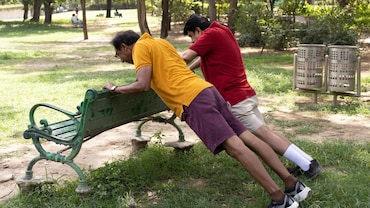
4. Push (The Floor Motion): This movement is about safety. If you fall, can you brace yourself with a hand or push yourself up? The easiest way to master this movement is to do push-ups against a wall. A level up is to do the same leaning over a kitchen counter or a table (make sure it’s stable and won’t tip over). The next level up is on the floor with your knees on the floor. The final level is on the floor with knees and elbows off the floor. This movement targets the chest, triceps and the entire upper body.
5. Pull (The Door Motion): This movement improves your posture. It reverses the ‘computer hunch’ by strengthening the upper back and side muscles. This can be done by buying a resistance band, tying it to a window grill and pulling it toward your chest.
A word of caution: Do not underestimate the role of protein in muscle building. Strength training without protein is like trying to build a house without bricks. Every time you train, your muscles break to rebuild stronger. This rebuilding can happen only if protein is available. If not, the fibres stay broken and take longer to rebuild, resulting in injuries. The daily requirement (as I keep repeating throughout the book) is 60–90 grams per day (more if you’re active and trying to build muscle).
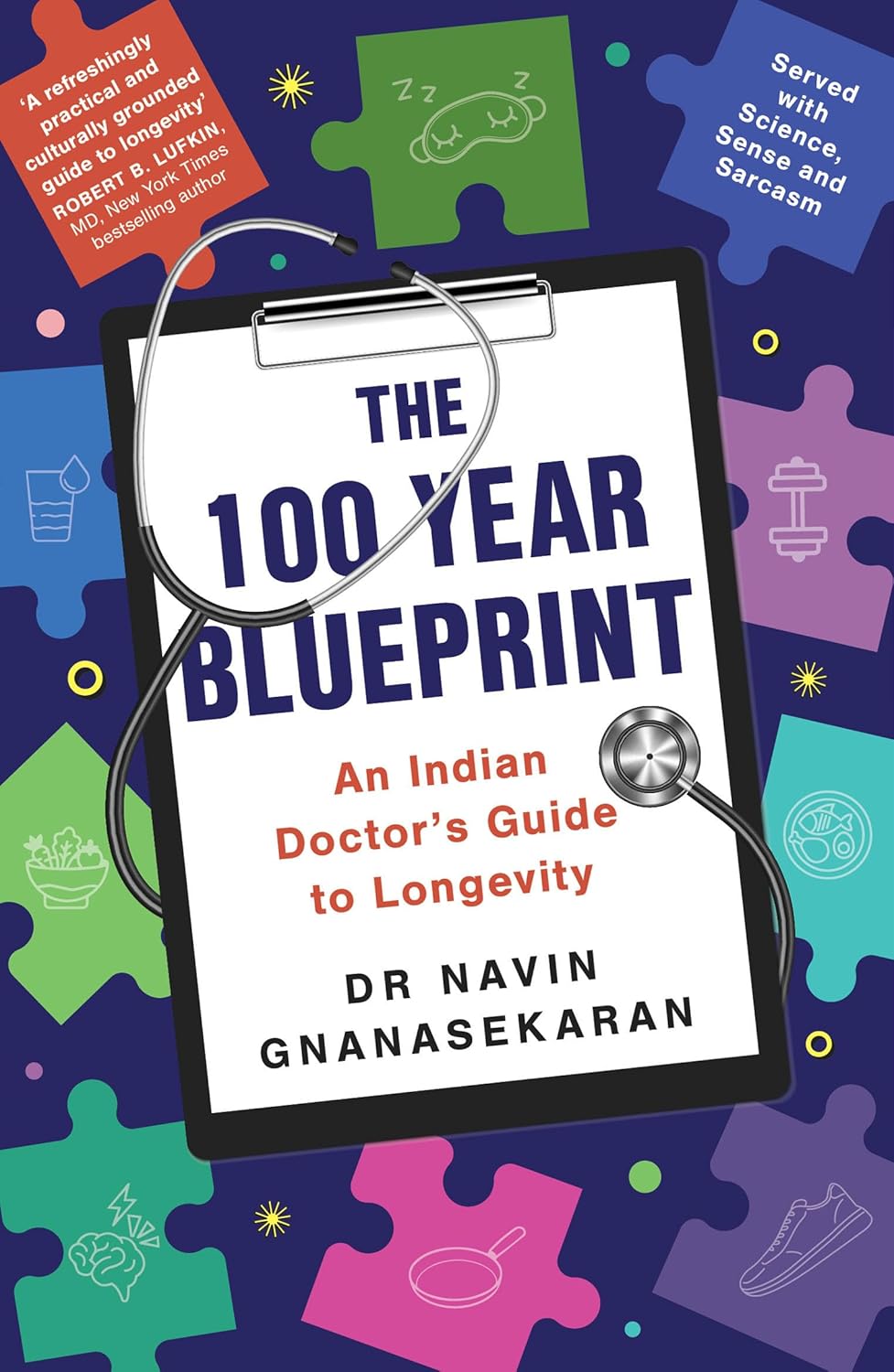
From The 100 Year Blueprint: An Indian Doctor’s Guide to Longevity by Dr. Navin Gnanasekaran (Pan Macmillan, 2026)
For more tips to improve your health, visit here