- HOME
- /
- Cover Story
- /
Extraordinary Indians: Nipun Malhotra's Fight for the Right to be Ordinary
The 38-year-old activist advocates for systemic inclusion of those with disabilities and special needs.
 Nipun Malhotra, who has arthrogryposis, founded the Nipman Foundation in 2012. Photo: Atul Kumar Yadav
It takes a bit of persistence to pin down Nipun Malhotra for an interview. At 38, the Delhi-based disability rights activist and entrepreneur is constantly on the move—working, advocating, persuading. That restlessness comes from a lifelong refusal to live what he calls a “half-life”—a refusal that is now revolutionizing how disability is portrayed on Indian screens.
In July 2024, the Supreme Court of India delivered a landmark verdict on Malhotra’s petition challenging the legitimacy of disability-targeted humour in the 2023 Hindi film Aankh Micholi. The judgment drew a clear line between humour that includes disability with sensitivity, and humour that shrinks a person’s identity to their condition. The latter, termed “disabling humour” by the Court, was found guilty of perpetrating prejudice. Due to Malhotra’s endeavours, film certification authorities are now mandated to assess whether portrayals of disability are derogatory or stereotypical before approving a film.
This legal milestone is just one chapter in a life shaped by steady, often unglamorous, tenacity—and the ripples aren’t felt only among those with special needs. Malhotra has arthrogryposis, a congenital condition that causes joint contractures and underdeveloped muscles, leading to significant mobility challenges and the need for a wheelchair. But Malhotra doesn’t cleave the world between “disabled” and “non-disabled.” Instead, he prefers a more expansive lens. “Beyond a certain age, most people start facing problems with walking, seeing, or hearing—and then they have the same accessibility needs,” he reflects.
His condition, nevertheless, could barely limit the man. Much of Malhotra’s confidence, he says, comes from his family, who never allowed the wheelchair to become his defining feature. That grounding enabled him to excel academically, including studying Economics at St. Stephen’s College, Delhi. Still, the path was far from smooth. He recalls his interview vividly. “The principal told me ‘We don’t really want to have you.’ The economics classroom had been on the first floor for 125 years and couldn’t be shifted for one person.”
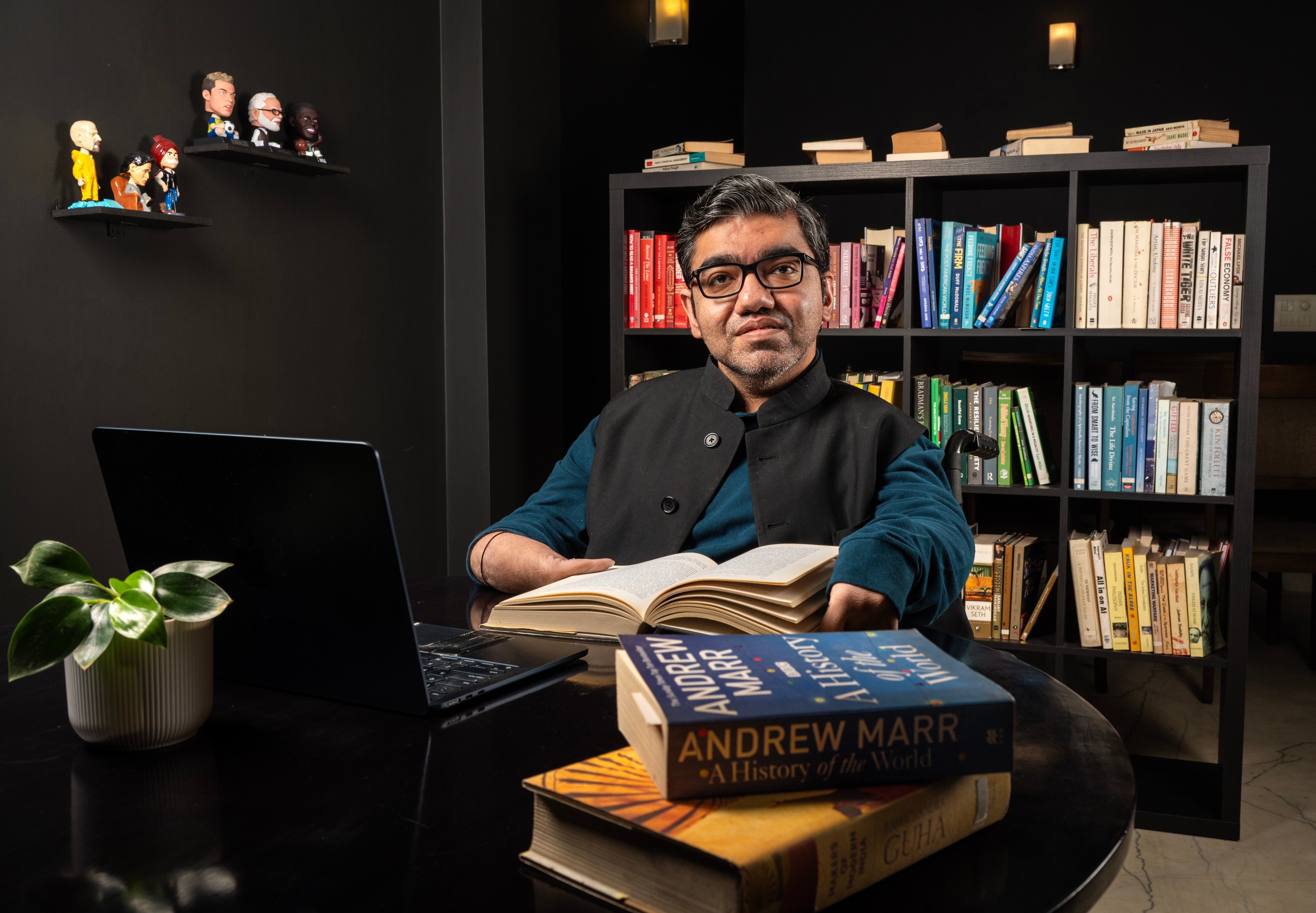 Malhotra, in his New Delhi home. Photo: Atul Kumar Yadav
Malhotra’s response was simple: it wouldn’t be a problem. “I could be carried upstairs.” For four days, his attendant, driver, and classmates lifted his wheelchair up the stairs. Soon after, the economics class moved to the ground floor. “It taught me that persistence matters,” he says. “And that everyone has the right to live a complete life.”
His belief found institutional form in 2012, when he founded the Nipman Foundation to advocate for health, dignity, employment access, and systemic inclusion for persons with disabilities. Their work has ranged from accessibility audits to large-scale sensitization efforts aimed at influencing industry and policy. In 2015, he persuaded Zomato to introduce wheelchair-friendly filters. A year later, he and his mother launched Wheels for Life, a crowdsourcing platform connecting wheelchair donors with recipients across India. In 2025, he received the National Award for Individual Excellence in disability rights. Yet public recognition often comes with an uncomfortable side effect: being flattened into an ‘inspiration’ and denying him the ordinariness others take for granted. Malhotra bristles at that. “You go to a party and people say, ‘Wow, you’re so inspiring!’” he laughs. “I joke that I haven’t come to give a TED Talk—I’ve just come for a drink.”
Today, Malhotra’s vision is larger than any single campaign or court victory. Inclusion, he insists, must be a natural part of a society’s progress, not a special-interest issue. “I talk about the three As: attitude, accessibility, and affordability. Affordability often follows; attitude comes first. Change the mindset, and everything else becomes possible.”
For more stories like these, click here.