What Happened to India's Water Wisdom?
Dying lakes, water-hungry crops and poor policies are pushing India toward a crisis of its own making
 photo: ADOBE STOCK
India does not need to have a water crisis. At least not yet. Those headlines, and lived realities—of floods, droughts, of waking up at two a.m. to run behind a water tanker, of tragic farmer suicides due to failed harvests—are all avoidable.
So why do these events repeat with predicable regularity? Because we have forgotten our water, and have failed to respect it. Allow me to explain.
About 13 years ago, our home in Madurai ran out of water. We get our water from a borewell. After digging more than 500 feet, the well ran dry. Until then, I had not really thought about water—twist the tap, and out it came. But when it ran out and we were forced to buy it for daily needs, water moved to the front and centre. How much was being used? Where? We had no idea.
So I began researching and installed water meters for answers. That knowledge, sharpened by the fear of profligate bills, drove innovations that were affordable but effective—altering water pressure in the taps; using push taps (that release water only when you push a valve), reusing ‘reject’ water, drip irrigation in the garden, and so on. Soon, we were able to stop buying water altogether, and a few years later, when my town suffered its worst drought in 140 years, we were the only house that didn’t.
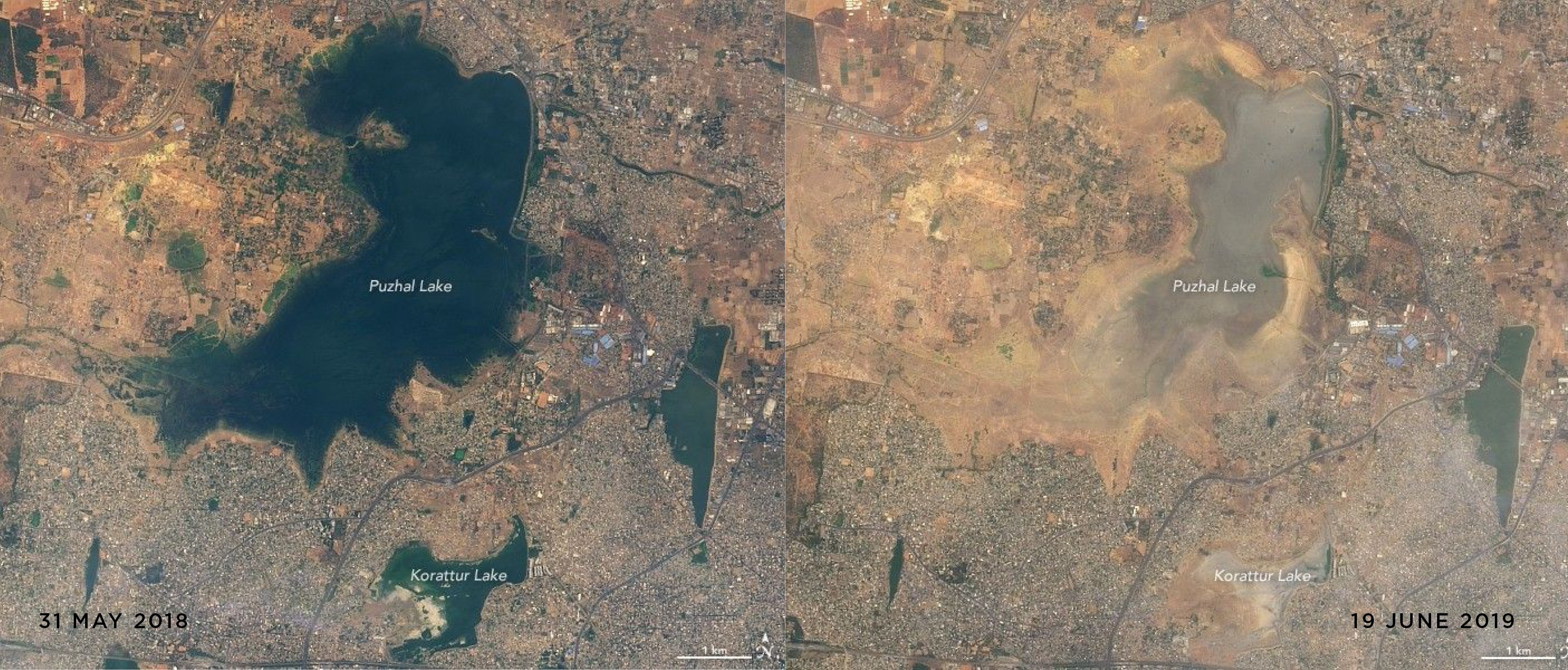 In 2019, drought conditions were so severe in Chennai that its effects were visible from space. These Landsat 8 images documented the condition of Puzhal lake in Tamil Nadu in 2018 (left) and 2019 (right). (Photo: NASA)
In learning about these innovations, I discovered role models of water security: Rajasthan’s Rajendra Singh (the ‘water man’ of India) who led villagers in one of the driest parts of the country to bring rivers back to life; Cape Town, which stared down ‘Day Zero’ and taught me about demand management; startups I’ve invested in that make water management easier; Israel, whose innovations help farmers grow mangoes in the desert; Singapore, which follows Chanakya’s ancient counsels on water, such as progressive pricing for water use beyond basic needs. Each journey to water self-sufficiency is different, sculpted by geography and climate, but they all begin with respect, followed by an understanding of how one’s water is unique.
In the years since, I’ve learnt that India’s water is not ‘scarce’, it is unique. Its rainfall is one of the most seasonal in the world—we get most of it in just 100 hours a year. This means we must manage and store it to utilize it year round. Our ancestors understood this well and so they built thousands of cascading lakes across the length and breadth of the country to store this volatile rain.
My institute has studied a hundred of these lakes, and analyzed what makes them tick. It turns out that community is key: People who will protect them from encroachment, maintain the bunds that keep them secure, ensure they stay trash-free and help desilt the channels that feed them. Healthy lakes accommodate water during intense downpours and can keep groundwater levels 200 feet higher than in its vicinity—a boon during the dry season. But city after city allowed these lakes to vanish. Should we really be surprised when those same cities lurch between drought and flood?
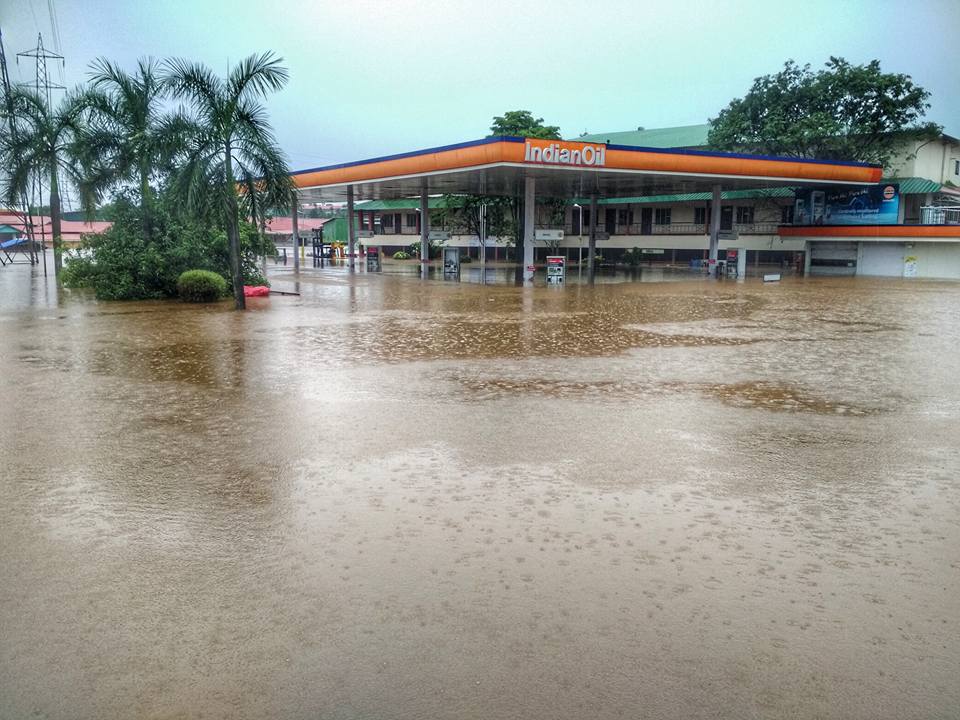 The catastrophic floods in Kerala in 2018 resulted in more than 450 deaths and millions in economic damage
Some parts of India receive just 135 mm of rain a year; others nearly a hundred times as much in a matter of months. What works in one place—in home design, in diet, in water management—will not work in another. Rainfall varies across years too. Speaking with nearly 2,400 families over several years, we saw this clearly. During plentiful years, most families managed fine. But in lean ones—once or twice a decade—women of vulnerable households ran pillar to post trying to source water—another entirely avoidable crisis.
Our ancestors also understood how stories move people, so they conceived of rivers as goddesses—powerful beings that sustained millions and demanded reverence. Lakes came with lore worth celebrating. The rains were welcomed with festivals; the harvest, with gratitude. But over time, we ironed out our glorious diversity, and in doing so, authored our current predicament—one that will only deepen.
Climate change accentuates water contrasts, making wet seasons wetter and dry seasons drier. Unless we stop growing rice and sugarcane where the land can only sustain millet, or stop paving over lakes our ancestors built, we are headed towards a reckoning unlike anything in living memory.
About the author: Mridula Ramesh is the founder of the Sundaram Climate Institute, and the author of The Climate Solution, Watershed, and The Pralaya Prophecy (Hachette India)