- HOME
- /
- Culturescape
- /
- Book Extract
- /
Dressed for Power: Shefalee Vasudev's book 'Stories we Wear' decodes the Hidden Messages in Political Style
India’s leaders use clothes to signal power, perform humility and deny it all.
 PM Narendra Modi being sworn in for the third time on 9 June 2024. Photo Courtesy: PIB
On the evening of 9 June 2024, the forecourt of Rashtrapati Bhavan shimmered in the Delhi sun. The stately residence of the country’s nominal head, situated at one end of Kartavya Path, was lit for a grand swearing-in ceremony. It marked Narendra Modi’s third consecutive term as the prime minister of India, after the Bharatiya Janata Party (BJP) cobbled a majority in the general elections. The corridors of the enduring symbol of post-colonial Lutyens’ Delhi looked radiant in the summer light from above. The occasion itself was charged with political symbolism on the ground.
Modi arrived impeccably turned out—as always—in a white kurta–pyjama paired with a textured, azure-blue bandi. Given its saturated hue and texture, this was no Nehru jacket, despite what India’s costume historians might suggest. It was unmistakably a ‘Modi jacket’—a category unto itself, much like the man who wears it. A vivid blue from the shade card of ‘New India’ the BJP seeks to project. A blue that wants to be seen. Not the measured blue of the former prime minister Manmohan Singh’s pagdis. Nor the muted, grey-blue favoured by Atal Bihari Vajpayee. Politicians from South India are not big on blue anyway.
But this was not just Modi’s moment. It belonged to the winning party and its coalition partners—everyone who walked on to that stage—the elected, the almost-famous, the newly powerful. And thedefeated, who sat among the invited attendees. Each wore an outfit and with it, a message. Some scowled, others flashed big smiles and yet others remained unreadable. Performances all, in the theatre of democracy—Shakespearean in its triumph and tremors. High drama, fate, flaws, betrayal, ambition, the highs and the lows before an eventual downfall, determined not by divine will but by the electorate.
Actor Kangana Ranaut, new to politics, who had won the Mandi seat from Himachal Pradesh, wore a sophisticated cream-and-gold sari, kundan–polki jewellery, hair in a retro low bun, smug victory writon her face. A contrast to the Himachali costumes of her campaign days, charming every mountain goat and aspirant schoolgirl around.
Former minister of women and child development, Smriti Irani, clad in a brick-hued Anavila linen sari, looked visibly rattled, having lost her seat in Amethi. Jyotiraditya Scindia, who was mourning,wore a pink-peach cap—reminiscent of a Moroccan fez with his kurta–pyjama–bandhgala. It was a tribute to his late mother, Madhavi Raje Scindia of Nepal’s royal family, who had passed away just weeksearlier.
Chirag Paswan, president of the Lok Janshakti Party (now India’s food processing minister), wore a black full-sleeved bandhgala, with big gold buttons and fitted black trousers. His all-black outfit offereda flash to his late father Ram Vilas Paswan’s black safari suits, but a small gold earring in one earlobe and the gold buttons spoke another language. Chirag looked like he had stepped off the set of a prestigious biopic to give Ranaut competition in terms of starry ambitions in Indian politics.
The forecourt filled with calibrated looks—victors and vanquished alike. Even the film stars in the audience blended into the spectacle. Around them were top industrialists and the rich and powerful ofIndia, all of them wearing their status on their sleeves. Anupam Kher, the Hindi cinema actor who played the former PM Manmohan Singh in the 2018 film The Accidental Prime Minister and Jayaprakash Narayan in the 2025 film Emergency, had a lost-and-found look about him.
The sole outlier on stage was the minister for external affairs, S. Jaishankar, who was dressed in a white shirt and black trousers. In a tableau dense with political costuming, nothing he wore could be labelled Indian, regional, ethnic, patriotic, nationalistic or symbolically suggestive.
If you scanned the entire visual grid of this national event, one thing became clear. The dress code, especially of the politicians, was not only ‘Indian’ or traditional—it was Indian politics–specific. If it is a category, it is a fascinating one: it is bound by sameness, repetition, even conservatism, and inside it, carefully curated difference.
The most striking visual though was structural: the absence of Muslim leaders in this new cabinet and fewer women than in recent memory. For all its spectacle and people-facing unity, the gatheringlooked diverse but only superficially. At its core, the image was one of exclusion. Absence had a presence.
The Politics of Pretending Not to Dress
It made for sharp live television, punchy social commentary and a flurry of op-eds in both English and regional media. But behind the visual grammar of power lies something far more intricate. Politicaldressing in contemporary India—framed as a display of tradition, modesty and consistency—is meticulous messaging cloaked in strategic denial. Everyone sees the costume, yet everyone pretendsthat it is not part of the script.
This contradiction sits at the heart of India’s political aesthetic. Odd in a country where Mahatma Gandhi gave hand-spun, handwoven cloth the power of resistance besides making khadi a bridge between the elite and the marginalised, between contemplation and labour. Indira Gandhi wielded her saris like a bulwark and a form of diplomacy. Short hair, plain white blouses, rudraksha beads, handlooms—cultivated elitism in the guise of decolonised simplicity.
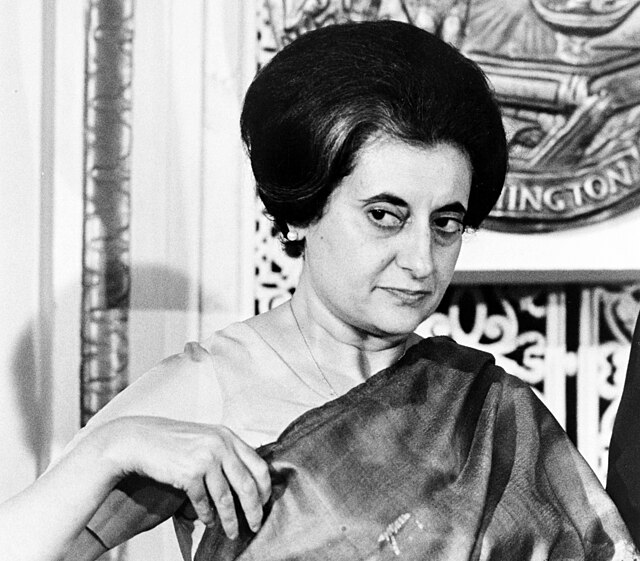 Indira Gandhi wielded her saris like a bulwark and a form of diplomacy.
She cut a ruthless figure; even a pallu-covered head couldn’t veil it. Narendra Modi, on the other hand, has elevated personal style into national narrative—his garments selected with the same precision as his policies. He projects a visual mandate, dressing to reflect the India he aims to mould: tech-savvy, lit with economic aspiration, with renamed roads, reclaiming pride in nationhood. His governmentalso leans towards a Hindu rashtra where some parts of history are redacted from school textbooks, where climate change rarely features on the political agenda, where dissent can be stifled.
While Modi’s image is routinely credited for boosting khadi sales and reviving pride in Made-in-India textiles, the prime minister is no Gandhian in dress or ideology.
Like Modi, most Indian politicians publicly disavow the role of clothing and the visual cues embedded in their appearance—as if shaping a political persona were somehow beneath the gravitas ofgovernance. Perhaps this denial is a part of their communication, a gesture of solidarity with the ‘common man’ who has other issues to face and fight before fussing about clothes.
And yet, political dressing in India speaks louder than ever—especially during elections, when its volume rises in colour, choreography and coded aggression. The 2024 general elections drenched India inparty pigments: saffron, white, green and a spectrum of regionally significant costumes that marched across rallies and stages. BJP’s orange bandis flapped like wall hangings, omnipresent. At roadshows, from Tripura to Chennai, orange painted cars were dressed in marigolds while netas, karyakartas, drummers, dancers and cheerleaders wore party colours, creating a cacophony with saffron.
Like the visit of Bollywood’s ‘Dream Girl’ Hema Malini, who represents BJP from Mathura in the Lok Sabha, to a wheat field in Uttar Pradesh. Dressed in an orange printed sari, she stood in the fieldholding wheat stalks in her arms as bewildered, ghunghat-clad female farmhands looked at the camera as props in her photo-op.
Today, party allegiance is worn over personal expression, particularly among younger BJP politicians. Bansuri Swaraj continues her mother Sushma Swaraj’s way of wearing traditional saris, but wearsthe BJP body language over them, sometimes with orange stoles stamped with the lotus, the party symbol. She has publicly declared that ‘Sangh values run through my veins’, sometimes talking about the bansuri of Lord Krishna.
When Goddeti Madhavi became the youngest MP from Andhra Pradesh in 2019, she took oath in an orange Kanjeevaram with a broad gold border—no reminder needed which party she represented. That’swhat Singhbhum’s Geeta Koda did using a narrative visual cue in the form of a sari. When she crossed over from the Jai Bharat Samanta Party to the BJP last year, her white sari had maroon lotuses printed all over.
There are a few personal distinctions in how leaders wear their traditional garb—but genuine individual style remains elusive among contemporary Indian politicians. They seem unsure about experimentation fearing that could cost them their reputation.
Especially when compared to leaders of the past: Pandit Nehru’s bandhgalas rewrote costume history; Rajkumari Amrit Kaur’s saris with embroidered borders, always draped with the pallu covering herhead, became her signature. Janata Party’s Pramila Dandavate wore handlooms from Maharashtra, Ikats from Odisha, a gold-and-black beaded string around her neck, with short salt-and-pepper hair. Even a later leader like J. Jayalalithaa, a film-star-turned politician—now a growing category among aspirant political candidates—designed her wardrobe as calculated control. She evolved from Tamil Nadu’s Kanjeevarams, sparkling diamonds on her ears and gold chains around her neck to coordinated crêpe saris and cape-like shawls. These bespoke co-ords doubled up as her medical and political mask, giving her the appearance of control, not softness.
The late litigator and cabinet minister, Arun Jaitley, who loved to host lavish parties at his New Delhi residence, and treat groups of his friends and followers to morning chai and samosas at Lodhi Gardens,was an equally keen collector of Kashmiri Kani shawls. He would wear them with pride with his Rolex watches, Montblanc pens and white kurta–pyjamas. In private gatherings, Jaitley would talk fondly about his drapes and the fine fabrics of his tailored garments. Not about his watches.
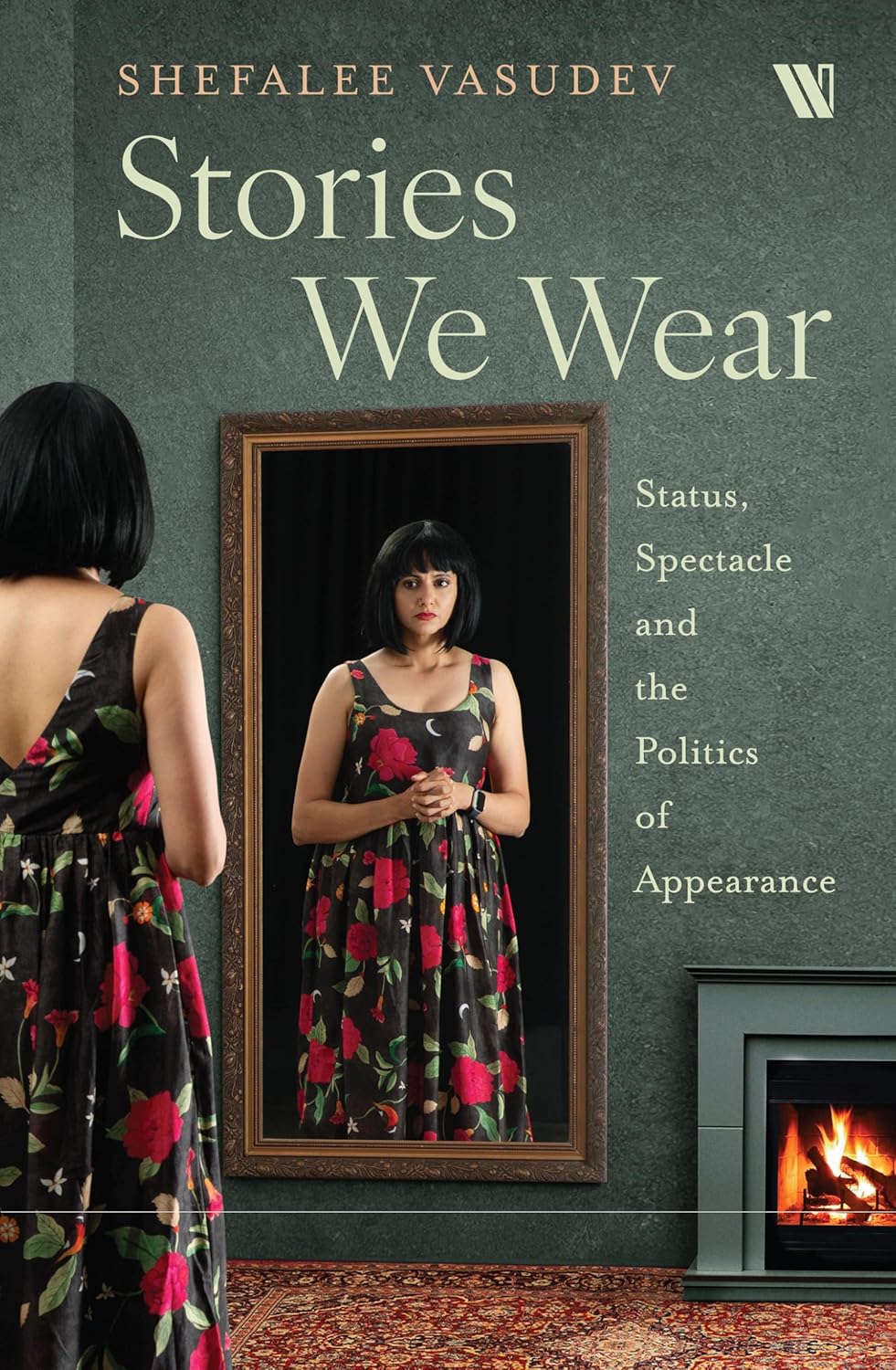
From the book Stories We Wear: Status, Spectacle and the Politics of Appearance by Shefalee Vasudev, published by Westland. © Shefalee Vasudev 2026. Reproduced with Permissions.
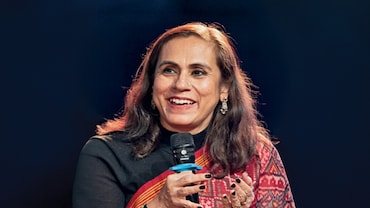
About the author: Shefalee Vasudev is a cultural non-fiction writer and editor who has been working at the intersection of fashion, identity, and public life in contemporary India for the past three decades.
For more like these, click here.