- HOME
- /
- Culturescape
- /
Interview: Mridula Ramesh on Using Fiction to Spread Environmental Awareness
In her latest book The Pralaya Prophecy, author and climate-tech investor Mridula Ramesh uses the power of fiction to deepen environmental awareness and spark action
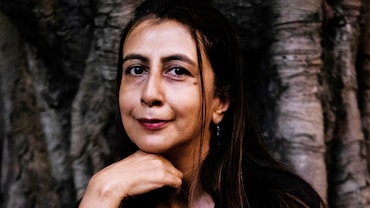
 Author Mridula Ramesh (right) with publisher Swati Chopra, at the 2026 Jaipur Literature Festival. Photo: Rachna Kalra
Ancient prophecy meets climate thriller in Mridula Ramesh’s The Pralaya Prophecy, a novel that turns environmental crisis into a deeply human adventure. In conversation with Reader’s Digest India, she reflects on why fiction can reach where data cannot, how hope survives in dark times, and why rumination itself can be a catalyst for change.
Reader's Digest India: When did the idea for The Pralaya Prophecy first take shape for you?
Mridula Ramesh: I first began writing the book in late 2014, but then set it aside. I returned to it in 2024, when it became clear to me that we need far more people to care about the environment—and that a good thriller with climate at its heart could do that.
Why did the ancient concept of ‘pralaya’—a cosmic-level dissolution—feel like the right metaphor for today’s environmental anxieties?
Because, in a very real sense, the threat we face is existential. The idea of pralaya captures that importance. Also, many of the concepts embedded in that tradition—especially the idea of balance—resonated deeply with the ecological crisis we are living through today.
You’ve written extensively about climate change in non-fiction. What made you turn to storytelling to explore these themes? Do you think fiction can reach people emotionally in ways reports cannot?
Climate non-fiction often ends up preaching to the choir. And as the mother of two teenagers, I’ve learned that very little changes with preaching. So I wanted to write a story set in very Indian landscapes, where the good guys are trying to outrun the bad guys while trying to solve this earth-saving secret which is (oh, by the way) about climate. Fiction can slip past the intellectual defences that reports and policy papers can trigger. It makes people live the stakes of climate change in a way that facts alone cannot.
At the heart of the novel is a father trying to protect his daughter amid unfolding catastrophe. Why did you choose a deeply personal family story to anchor such a global crisis?
At the heart of The Pralaya Prophecy is a coming-of-age story—though not in the usual way. It is not the daughter who comes of age, but the father. Rajan begins as flawed and dependent, and is transformed by love into someone capable of courage, vulnerability, and wisdom under extraordinary pressure.
Many climate stories lean heavily into dystopia. Did you consciously try to balance warning with hope?
I work in climate; I’m fully aware of how dire the situation is. But I do think that an unrelenting dystopian message makes people shut down. If we are doomed anyway, why act? In my work, and in my own life, I have seen action change outcomes. That matters. We may not control the opening chapters, but we can still help rewrite the ending.
Through your work at the Sundaram Climate Institute, you engage closely with climate solutions. Did real-world insights influence the story?
Of course. Whether it be how to keep forests safe, or farmers secure in a drought. Some are entities that I have written about or invested in. For example, in one scene, where the heroes are passing through a landscape hit hard by heat and drought, they see the aftermath of farmer suicides. But one village stands apart, the solutions there are ones I have seen and invested in, available today.
The novel plays with the tension between prophecy and choice. Are we locked into a dire future—or do we still have time to change course?
We do. Climate has changed in the past, perhaps not as fast as it is doing now. And with the knowledge that we have, we can certainly make a difference. Look at how fast renewables are growing in India—no one would have predicted that 10 years ago. It’s a matter of incentives—of choice. Incentives drive collective choice, and collective choice scripts our destiny.
What kind of reader response would feel most meaningful to you—alarm, reflection, or action?
Reflection. This is a work of fiction. If I can get the reader to even think of the climate, and keep it in the back of their mind as they move on with their lives, perhaps motivated to read a little bit, I would count that a success.
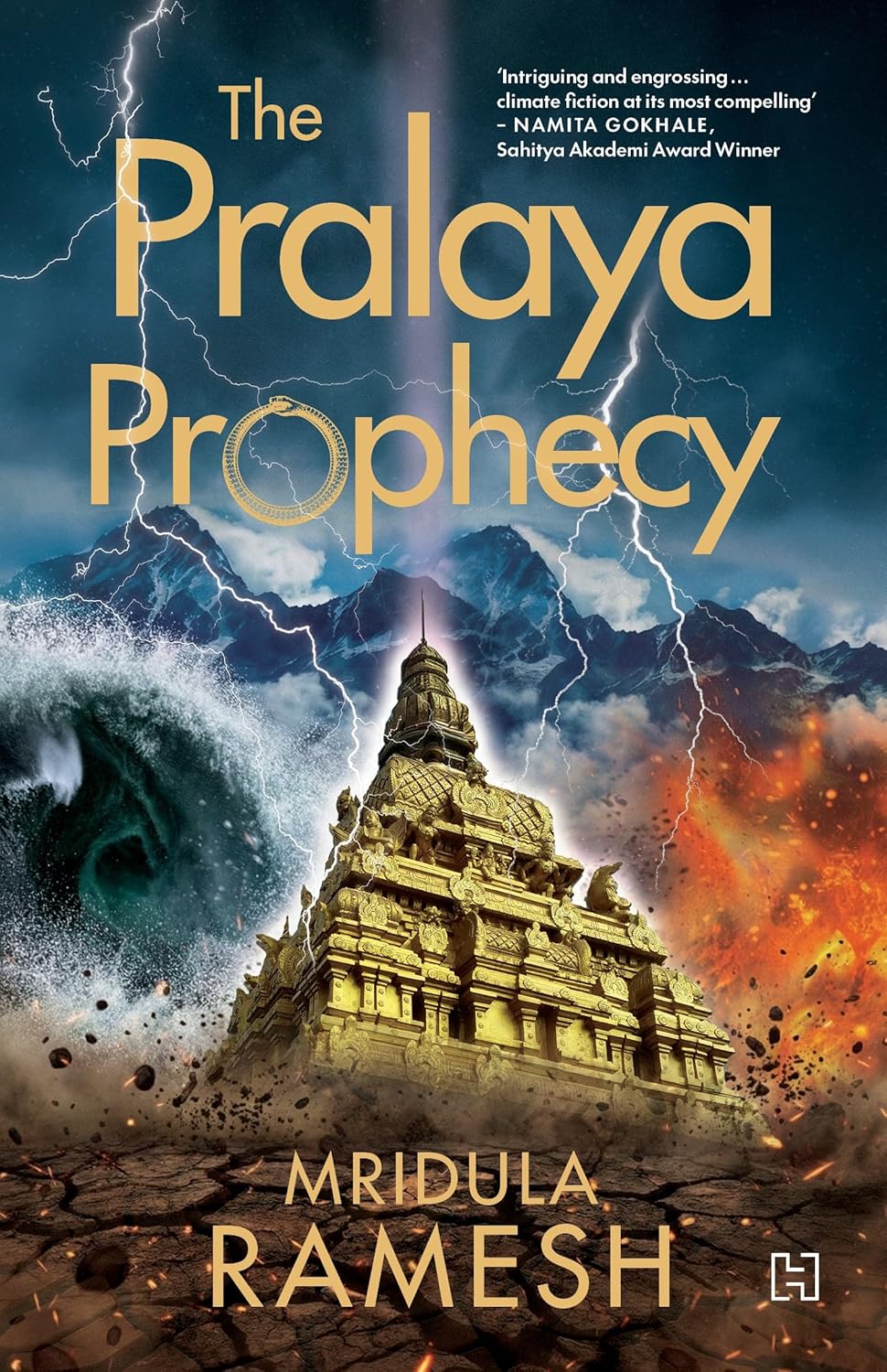
The Pralaya Prophecy by Mridula Ramesh. Published by Hachette India.
For more stories like these, click here