- HOME
- /
- Conversations
- /
Who Is Healthcare Really Serving? In conversation with author Ameer Shahul on the Growing Financialisation of Medicine
In this conversation with Reader's Digest India, environmentalist and public policy expert Ameer Shahul, author of The Silent Syndicate: How Big Finance Is Destroying India’s Healthcare, examines how big finance is reshaping the patient’s journey, the growing divide in access to care, and why some of India’s existing healthcare institutions offer a compelling blueprint for change.
 adobe stock
You began your career in journalism, went on to work in corporate leadership and public policy, and have now written three books examining the consequences of institutional power. What has moving between these worlds taught you about how power operates—and what each world tends not to see about itself?
Moving between journalism, corporate leadership and public policy has given me three different perspectives on power. Journalism taught me to question authority and look beyond the official versions. Corporate life taught me how institutions function from within, how profit-driven decisions are made, how incentives shape behaviour and how organisations protect their turfs. Public policy helped me understand how these decisions translate into consequences for society.
One thing I have learnt is that power rarely announces itself. It operates through systems, contracts, financial arrangements, institutional relationships and, very often, information asymmetry.
Journalists sometimes underestimate the complexity of running institutions. Corporations can become so absorbed in performance metrics and shareholder expectations that they lose sight of their wider social responsibilities. Governments can mistake administrative control for public accountability.
What connects my three books is an interest in the gap between what powerful institutions claim to do and what their actions mean for ordinary people. Whether it is environmental destruction, vaccination as a public health tool, or protecting healthcare of average citizen I am interested in who exercises power, who benefits from it and who bears the consequences.
Your earlier books examined corporate pollution in Kodaikanal and the history of vaccination in India. With The Silent Syndicate, you turn to the financial architecture of healthcare. How has your understanding of corporate accountability changed as you have moved from one to the next?
My understanding has evolved from examining individual corporate actions to questioning the systems within which corporations operate. In Heavy Metal, I explored mercury contamination in Kodaikanal and the consequences of corporate negligence. It demonstrated how corporate decisions can leave behind environmental and human costs long after commercial interests have moved on.
Vaccine Nation offered a different perspective. It explored how scientific institutions, public investment, entrepreneurship and political leadership helped build India's vaccine and immunisation capabilities. It reinforced my belief that private enterprise can make extraordinary contributions when its capabilities serve a larger public purpose.
With The Silent Syndicate, I examine something more structural: the financialisation of healthcare. The concern is not necessarily the misconduct of an individual corporation or corporations but how ownership structures, investment horizons and financial incentives influence an entire healthcare ecosystem.
A hospital can comply with regulations and still operate within the financial architecture that creates incentives not in patient interests. I have therefore moved from asking whether a corporation has acted responsibly to asking whether the system is designed to deliver responsible outcomes.
What was the most surprising discovery during your research for The Silent Syndicate—something that made you stop and think, ‘I had no idea it worked this way’?
What surprised me most was the extent to which financialisation had moved beyond hospitals. I initially approached the subject with a focus on corporate hospital chains and private equity ownership. As I followed the money, I realised that the transformation extended across diagnostics, medical devices, pharmaceuticals, pharmacies, insurance and digital health.
These are not isolated businesses. They are interconnected parts of the same healthcare matrix. A patient may enter the matrix through a diagnostic centre, be referred to a hospital, receive treatment involving expensive devices and medicines, make payments through an insurer and leave behind valuable health data. Each stage represents an economic opportunity for different commercial interests.
The realisation was that we were not simply witnessing the growth of corporate hospitals. We were witnessing the workings of a much larger syndicate, with its command centres in New York, Brussels and Singapore, and financial interests extending across virtually every stage of the patient's healthcare journey.
Healthcare needs investment to build hospitals, develop medicines and expand access. How do we distinguish investment that strengthens healthcare from investment that puts profits ahead of patients?
I have never argued that healthcare should be insulated from capital. India needs enormous investment to expand hospital capacity, develop medical technologies, strengthen diagnostics and improve access to medicines. Private enterprise has an important role to play.
The distinction lies in what the investment achieves. Is capital being used to build new hospitals, recruit doctors and nurses, improve technology and expand services into underserved regions? Or is it primarily being deployed to acquire existing assets, consolidate market positions and exit with handsome gains in short durations? Neither acquisition nor profit-making is inherently objectionable. But their public-interest implications are.
We must also examine what happens after the investment. Are patients getting better access and more affordable treatment as a consequence of an investment? Are clinical decisions protected from inappropriate commercial influence? Are employees benefiting from improved working conditions?

A key argument in the book is that financial ownership can change the culture of healthcare, influencing everything from hospital pricing to the way doctors work. Yet establishing that ownership changes behaviour is different from proving that it causes higher costs or worse patient outcomes. What evidence would you consider conclusive, and where do you think the case still needs to be made?
This is an important distinction, and I would not conflate correlation with causation. The fact that a hospital is owned by a private equity fund does not automatically establish that its prices are higher, its clinical standards poorer or its patients experience worse outcomes. We need rigorous longitudinal studies comparing hospitals before and after changes in ownership, ideally against comparable hospitals that did not undergo such changes.
There are ongoing and completed studies with parameters like treatment prices, insurance claims, out-of-pocket expenditure, staffing levels, doctor compensation structures, diagnostic and procedural intensity, readmissions, complications and mortality. We should also examine changes in referral arrangements, procurement practices and clinical autonomy. The research must also account for differences in hospital size, location, specialities and patient profiles. Otherwise, we risk attributing outcomes to ownership when other factors may be responsible.
I believe there is a compelling case for investigating how financial ownership changes institutional incentives and governance. However, the strength of evidence varies across markets and outcomes. We need considerably more India-specific, publicly accessible data to establish causal relationships.
My argument is not that every financial investor produces worse healthcare. It is that ownership structures can change incentives, and those incentives deserve the same scrutiny as clinical practices.
The book follows money across hospitals, diagnostics, medical devices, pharmaceuticals and insurance. Which of these sectors do you think has the greatest potential to shape the future of Indian healthcare over the next decade—and why might its influence be more consequential than the others?
If I had to identify one sector with the greatest system-wide influence, I would choose health insurance. Hospitals deliver treatment, pharma companies supply medicines and diagnostics influence clinical decisions. But insurance increasingly determines who pays, how much gets paid, which hospitals are empanelled, what procedures are reimbursed and, indirectly, which business models become financially viable.
As India's insurance penetration expands, insurers and the wider insurance ecosystem will acquire greater influence over healthcare delivery. Insurance can be a powerful instrument of financial protection, particularly for families facing catastrophic medical expenditure. It can also become a mechanism through which commercial considerations influence access to treatment and provider behaviour.
I would not underestimate diagnostics or pharmaceuticals. But insurance has the potential to influence the entire healthcare chain, from the time a patient enters a hospital to the final settlement of the bill.

You raise concerns about medical data becoming a commercial asset, with patients having limited visibility into how their information is used. As artificial intelligence becomes more embedded in diagnosis, drug development and personalised medicine, could the same data economy you warn against also deliver major public-health benefits? What kind of ownership and consent framework would allow innovation without compromising patient rights?
I do believe that properly governed health data can transform disease surveillance, epidemiological research, drug discovery, early diagnosis and personalised medicine. Artificial intelligence could help identify disease patterns that conventional systems might miss and make healthcare more accessible. But my concern is not with the use of such data but with who controls it, who benefits from it and whether patients have a meaningful say in how their data is used.
There is a fundamental difference between using anonymised health information for public-health research and converting identifiable patient information into a commercial resource without adequate transparency or consent.
We need informed, purpose-specific consent, strict limitations on secondary commercial use, robust anonymisation and cybersecurity standards. We also need independent oversight and meaningful penalties for misuse. We should also distinguish individual rights over personal health information from collective stewardship of population-level health data. The latter can generate enormous social value and should not be enclosed within private commercial silos.
The future of medicine may be driven by data, but the ownership and use of that data must never be separated from the rights of the people who generate it.
You have spent a considerable amount of time following the money trail in healthcare. Has this made you more suspicious of the business side of everyday life? Do you now find yourself looking twice at a hospital bill, a health insurance policy or even a pharmacy receipt?
I would say it has made me more questioning rather than more suspicious. There is a difference.
Researching The Silent Syndicate has made me particularly conscious of the information asymmetry in healthcare. When I buy a product, I compare prices, examine alternatives and decide whether I want it. When I enter a hospital, I am often in a completely different position. I may be anxious, unwell or dealing with an emergency. I depend on the expertise of doctors and the integrity of the institution.
I cannot independently assess whether every investigation, procedure or medication is necessary. That creates an extraordinary imbalance of information and bargaining power. So yes, I probably look more closely at hospital bills and insurance policies now. I pay attention to exclusions, co-payments, room-rent restrictions and the difference between what an insurance policy promises and what it actually covers.
After spending so much time examining what is wrong with India's healthcare system, where do you still find reasons for optimism? Is there a person, institution or development that gives you hope?
I find considerable hope in India's trust-run, charitable and mission hospitals, as well as its public tertiary-care institutions. They demonstrate that high-quality healthcare need not be driven primarily by commercial considerations.
Institutions such as Christian Medical College (CMC), Vellore; the Cancer Institute (WIA), Adyar; Aravind Eye Care System; Baptist Hospital, Bangalore: and scores of missionary-run hospitals across the country have built remarkable reputation by combining clinical excellence with commitment to serving people across income groups. Similarly, public institutions such as AIIMS, New Delhi, NIMHANS in Bengaluru, JIPMER in Puducherry, PGIMER Chandigarh, SGPGIMS Lucknow and Lok Nayak Hospital in Delhi demonstrate the immense value of publicly supported tertiary healthcare.
These institutions are not without their challenges, but they represent models worth learning from. They demonstrate what sustained institutional commitment, public investment, professional integrity and a patient-first philosophy can achieve.
I believe these are precisely the kinds of institutions on which the government should build India's healthcare future. Rather than allowing public healthcare capacity to diminish while private capital fills the vacuum, we should strengthen existing public hospitals, and encourage more charitable and not-for-profit healthcare institutions.
Ultimately, my optimism comes from the fact that India already has working examples of what equitable healthcare can look like. We don't have to invent the model. We need the political will to strengthen it, replicate it and make it accessible to far more people.

If you weren't writing about healthcare, what subject or issue would you be tempted to investigate next? Is there a story you have been wanting to pursue for years?
I have a laundry list of subjects I would like to explore, but the one that increasingly occupies my time now is water.
We tend to think of water as a natural resource, a basic human right and an essential element of ecological survival. But increasingly, it is becoming a commercial asset. From groundwater extraction to urban water supply, an enormous business ecosystem is being built around something very fundamental to life.
I am also fascinated by the wider Blue Economy and its contradictions. We speak of the ocean as the next frontier of economic opportunity, even as it faces ecological collapse, overexploitation, and increasing commercial capture.
Whether I am writing about mercury pollution, vaccines, healthcare, water or the oceans, I keep returning to one question: When something essential to human survival becomes an instrument of commercial power, who safeguards the public interest?
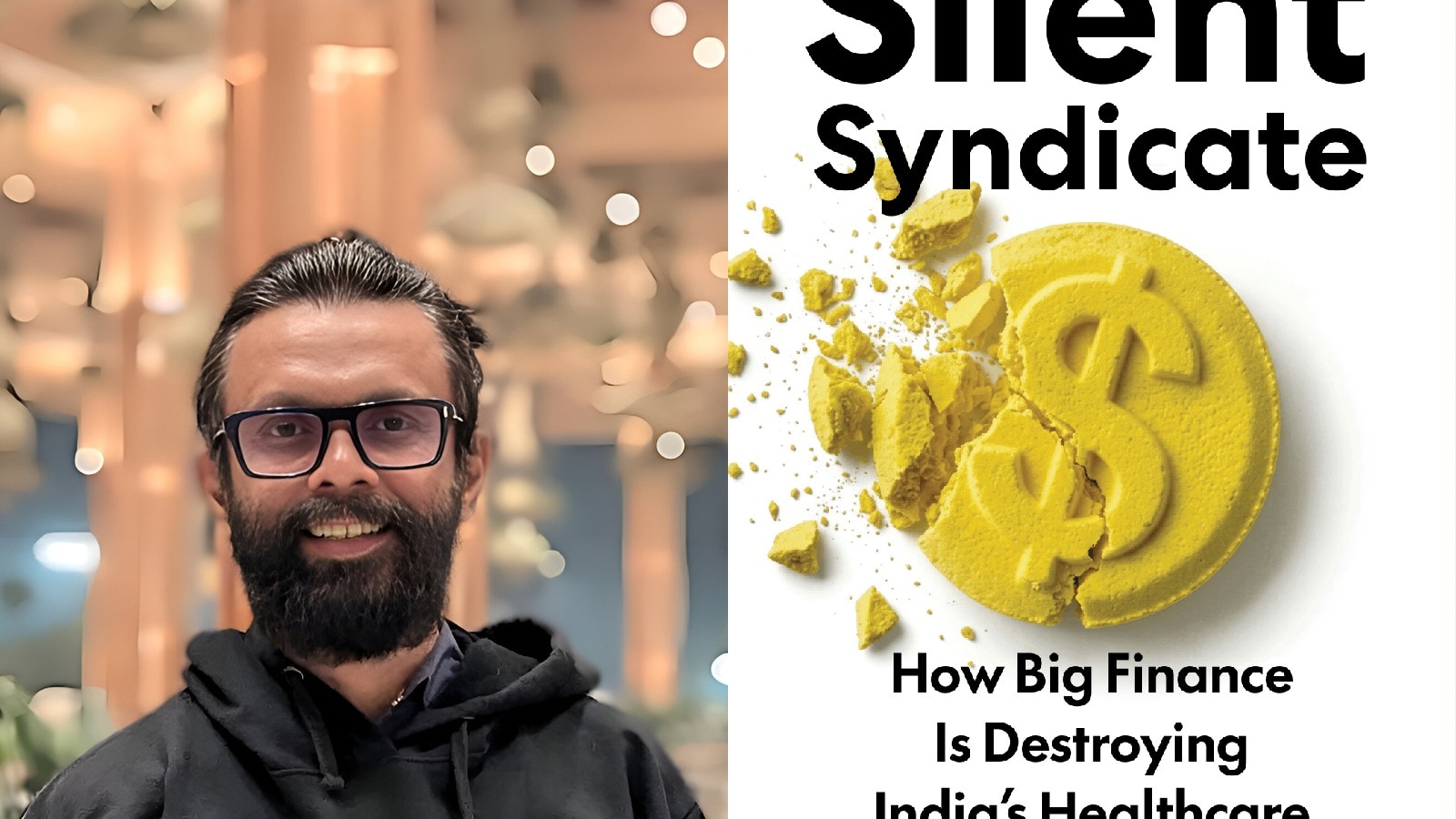
About the author: Ameer Shahul is an award-winning author, environmentalist, and public policy expert based in India whose work explores the critical intersections of health, environment, and technology. His debut book, Heavy Metal: How a Global Corporation Poisoned Kodaikanal (Pan Macmillan India, 2023), won the Green Literature Festival Book of the Year Award in 2024 and was longlisted for the Tata Literature Live! Best Nonfiction First Book in 2023. His second book, Vaccine Nation: How Immunization Shaped India (Pan Macmillan India, 2025), was shortlisted for the Atta Galatta-Bangalore Literature Festival Book Prize.