- HOME
- /
- Better Living
- /
- Mind
- /
Paying Attention to Adult ADHD
New awareness and diagnostic tools are helping more of us understand how our brains work
 Illustration by Dan Page
Growing up, Suzanne Smith (not her real name) always thought she was dyslexic or had some sort of learning disorder. The Baltimore, Maryland–based artist says she daydreamed during class and doodled on her work, eventually falling behind. She was clumsy, often breaking things or making a mess. Throughout her childhood, she was called quirky and eccentric—traits that people would attribute to her creative personality.
“I found different ways to cope and just accepted that this is me,” she says. But eventually, “it got to the point where I was really not functioning well, and my relationship with my husband was taking a hit.” Smith describes herself as “disorganized” and says she finds it hard to focus, making everyday household tasks like cooking and cleaning very challenging for her.
“It is an unfair division of labour, and that was resulting in resentment,” she says.
Smith began doing some research online and reached out to the University of Maryland Psychology Clinic, which offers sliding-fee scale mental health evaluations. After undergoing an assessment there in August 2024, she was diagnosed with attention-deficit/hyperactivity disorder (ADHD) at the age of 54. She’s now part of a growing number of people who have been diagnosed with ADHD as adults.
A 2023 report found that roughly three out of every 100 adults globally live with ADHD. In the US, over half of the people with the condition received their diagnosis in adulthood. ADHD diagnoses among adults have been rising over the last two decades, but in 2020, when many of us were spending more time online, the number of adults seeking treatment sharply increased.
What happened, say experts, is that millions of adults whose symptoms had been missed or misdiagnosed in childhood were suddenly seeing themselves represented in TikTok videos, Facebook memes and Instagram ads.
“Adults with undiagnosed ADHD are more likely to have relationship problems, less likely to achieve the same academic and employment levels, and more likely to use substances,” says Lenard Adler, MD, professor of psychiatry and director of the adult ADHD programme at New York University’s Grossman School of Medicine. “Missing this diagnosis and not treating ADHD has serious consequences, both for individuals and for society.”
And those bearing the burden of a missed diagnosis are overwhelmingly women and marginalized groups.
“Growing up, I was told regularly that I had an attitude problem,” says Laura Gallant, a Toronto-based website developer who struggled throughout school and was eventually diagnosed with ADHD in 2021 at the age of 34.
“It wasn’t an attitude problem. I’m just a woman with ADHD,” she says.
The good news is that millions of people, mostly women, who once slipped through the cracks are finally getting the help they need. A 2023 study from Epic Research, an organization that analyzes medical record data, found that the number of women newly diagnosed with ADHD nearly doubled from 2020 to 2022.
What Is ADHD?
ADHD is a developmental disorder that begins in childhood and comes in three types: inattentive, hyperactive/impulsive and combined. Symptoms of the inattentive type include poor listening skills, avoidance of tasks that require concentration, and being easily sidetracked. Symptoms of the hyperactive/impulsive type include restlessness, an inability to wait your turn, and being overly talkative. People can be diagnosed with one type; most have a combination of symptoms of both types.
Until recently, ADHD was largely considered a childhood disorder most often associated with boys who couldn’t sit still in class, but experts now know that symptoms don’t just go away as we grow up.
“The most recent data shows that about 90 per cent of children with ADHD still have some form of it as adults,” says Margaret Sibley, PhD, a licensed clinical psychologist at the Seattle Children’s Hospital and a professor of psychiatry and behavioural sciences at the University of Washington School of Medicine. “It’s not something that most people grow out of.”
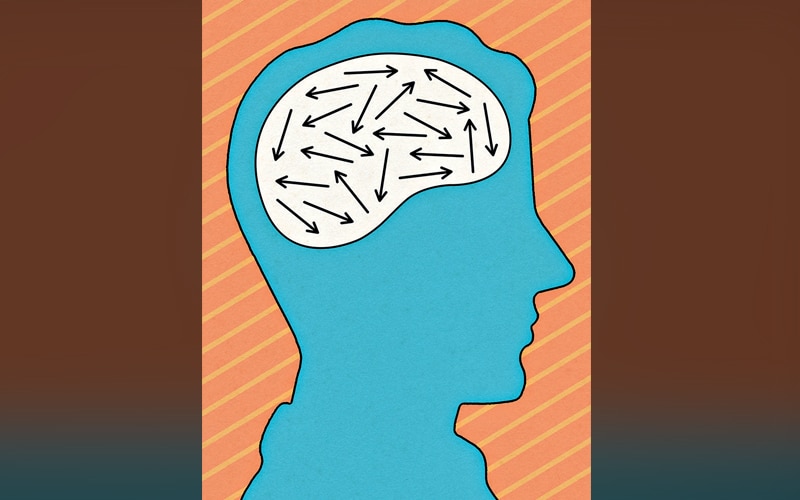 Illustration by Dan Page
Neuroscientists believe that brains with ADHD have lower levels of dopamine and norepinephrine, two key neurotransmitters that support executive function—the set of skills we rely on to manage our emotions, thoughts and actions. Imaging studies on ADHD brains have also found disruptions in the neural networks. These groups of nerve cells (neurons) form networks that send signals throughout the brain, but in an ADHD brain, these networks are disrupted, making it difficult for messages to pass through.
Basically, an ADHD brain is wired differently than a neurotypical brain. There’s a genetic component as well. Someone with ADHD often has a family history of the disorder, explains Sibley.
Diagnosis involves a thorough assessment from a professional, which can include interviews with the patient and parents or other family members. There needs to be some level of impairment, in that symptoms are interfering with the person’s ability to function. And, because ADHD is a developmental disorder, symptoms must trace back to childhood, specifically before the age of 12. In adults, that means clinicians have to work to establish what the person was like as a child, says Sibley, which can be challenging if the person is older.
Treatment options include cognitive behavioural therapy, a type of talk-based psychotherapy that helps people understand and change their thought and behaviour patterns, and medications.
Stimulant medications, such as Adderall and Ritalin, work by increasing levels of dopamine and norepinephrine in the brain, which in turn helps improve the ability to stay focused. Non-stimulant medications also work by increasing levels of norepinephrine and have fewer side effects, but may take longer to start working than stimulants.
Boys vs. Girls
ADHD affects both genders equally, but boys have historically been diagnosed at three to four times the rate of girls, says Joshua Langberg, PhD, a licensed clinical psychologist, professor of psychology and director of the Rutgers Center for Youth Social Emotional Wellness.
“We now know that this difference is probably due to an identification issue and not an actual biological or inheritability issue,” he says. That’s because boys tend to exhibit more hyperactive symptoms, such as being unable to sit still, talking out and being disruptive.
Girls, on the other hand, are generally more inattentive, making their symptoms easier to miss.
“You might see someone who is quiet, distracted or in their own thoughts, and in a classroom with 25 to 30 students, that’s not really a problem,” explains Langberg.
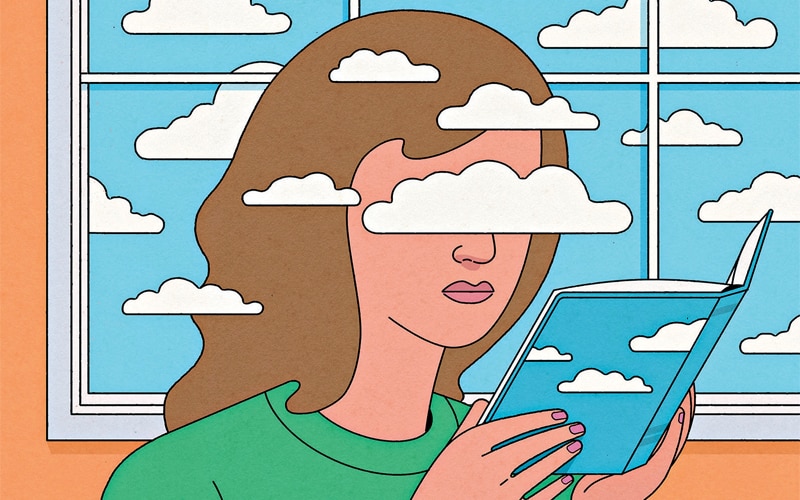 Illustration by Dan Page
Lindsay Crockford and her brother both have ADHD, but their experience with the disorder couldn’t be more different. Crockford’s brother was diagnosed decades ago, at the age of eight, while she was not diagnosed until last year, at the age of 32.
“In my brother, it’s very obvious. He’s very hyperactive, while I’m more inattentive,” says Crockford. As a child, Crockford says she felt discouraged when it came to school, and she just couldn’t sit down to focus and study when she needed to. Once she entered the workforce, she found herself losing chunks of time, not meeting deadlines and daydreaming a lot at work.
Today, Crockford, who lives in Seattle, is feeling more confident since she now knows what works for her and how to best manage her day. But the diagnosis also brought up feelings of disappointment.
“I thought about all the projects I had started and never followed through on. If only I knew how my brain worked, I could have accomplished more,” she says.
It’s not uncommon for people who have gone undiagnosed to have feelings of shame or low self-esteem, says Judith Joseph, MD, a board-certified psychiatrist and author of High Functioning: Overcome Hidden Depression and Reclaim Your Joy. “When you go your entire life without getting the support that you need, it creates a lot of stress,” she says.
Online Influence
All this new attention is largely a positive thing, but the influx of user-generated ADHD content online is also thought to have created a broader definition of the disorder than what is medically accepted. Essentially, people began equating being distracted and unable to concentrate with ADHD, when diagnosis isn’t nearly that simple.
“The messaging that was coming through a lot of people’s social media at that time—a time when stress was high, a lot of structure and support had been taken away, and people weren’t feeling their best—was this idea that the explanation for that could be undiagnosed ADHD,” says Sibley. The ads were relatable—after all, who doesn’t have trouble focusing these days?
Between 2021 and 2023, #ADHD on TikTok grew from two billion to more than 20 billion. Around the same time, Google searches for “ADHD” and “focus with ADHD” surged. During that period, the United States experienced a shortage of several ADHD medications, including Adderall and Vyvanse.
At the onset of the COVID-19 pandemic, people were unable to see their doctors in person, so telehealth companies stepped in to fill that gap. At the same time, the government suspended a prior requirement that a practitioner have at least one in-person medical evaluation with a patient before issuing them a prescription.
Some telehealth companies weren’t as thorough as they should have been in their diagnostic assessments, says Sibley, explaining that a quick checklist isn’t enough to make an ADHD diagnosis. At least two telehealth companies have been investigated for their actions in the last few years. In June of last year, two executives at Done, a California-based telehealth company, were indicted on health-care fraud charges that included prescribing ADHD medications, particularly Adderall, to patients when not medically necessary.
“There are no shortcuts in making a diagnosis in adult ADHD,” says Dr. Adler. “Screeners can identify someone who is at risk, but that doesn’t confirm a diagnosis. Nothing replaces taking a comprehensive developmental history and looking back at their childhood, be that done on telemedicine or in person.”
Both Sibley and Dr. Adler are part of a task force created by the American Professional Society of ADHD and Related Disorders (APSARD) to develop new guidelines for the diagnosis and treatment of ADHD in adults. The new guidelines are expected to be released in mid-to-late 2025. The hope is that these guidelines establish consistency in how health-care providers around the country approach diagnosis and treatment, ensuring patients receive an accurate diagnosis and the best treatment to improve their quality of life.
Coping with ADHD
Ensuring that you or someone you love is accurately assessed for ADHD starts with talking to a trusted medical professional about your concerns.
“A good provider will treat it as if it’s a collaboration with you. They won’t just tell you what you have; they’ll have a two-way conversation with you about what’s been going on,” says Sibley.
Your doctor will work with you to find the right treatment, which could be a combination of medication and cognitive behavioural therapy, as well as sleep hygiene and good nutrition, says Dr. Joseph, explaining that sleep and nutrition are often overlooked in ADHD treatment. Both will support brain health, which may in turn improve your executive functioning, making it easier to manage symptoms. Aim for at least eight hours of sleep and try to eat plenty of foods rich in Omega-3 fatty acids, such as fish and nuts, as well as micronutrients like zinc, iron and vitamin D.
Establishing a routine has been an important tool for Crockford. Her psychiatrist recommended cognitive behavioural therapy as well as some organizational techniques to help her set a schedule that works for her. After keeping a daily record of how she was spending her time, Crockford says she was able to see when she experienced periods of “ADHD paralysis”—the times when she was most overwhelmed, procrastinating and simply unable to focus. That knowledge has allowed her to be more proactive in planning her days.
“I realized it tends to happen around the same time of day, so I ensure that everything important I need to do falls within my productive hours,” she says.
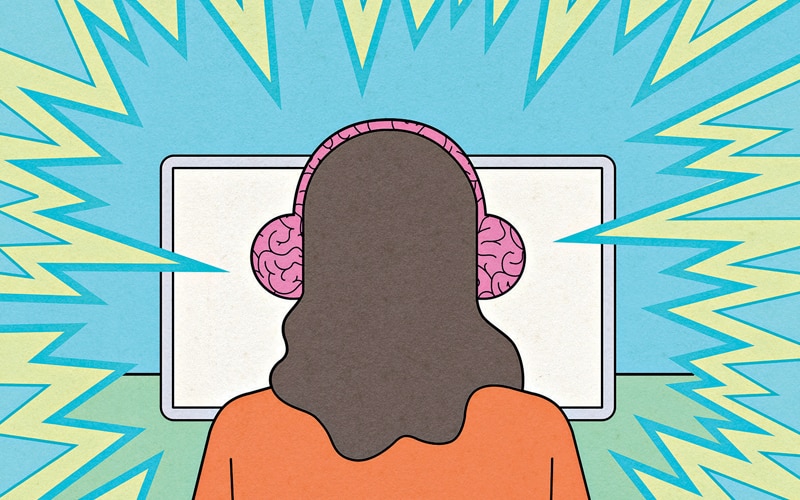 Illustration by Dan Page
Crockford is also more aware of the types of work environments that she performs best in. Open-concept floor plans make it even more difficult for her to focus, so she’ll use noise-canceling headphones and try to avoid distractions as best she can.
Dr. Joseph is hopeful that, in the future, workplaces will become more accommodating for people with ADHD. She notes that these accommodations exist for children and students but virtually disappear once a person becomes an adult—a time when they’re taking on more responsibilities and need that support more than ever.
“People in general are now more aware of these differences in thinking and behaviours that are not neurotypical,” says Dr. Joseph. “Because of that and the stories that are shared on social media, it has humanized the differences in individuals, and we’re moving toward a more accepting environment.”
Since getting her ADHD diagnosis, Smith is also feeling hopeful about the future. “I’m willing to do whatever needs to happen,” she says. “I’m 54, but that does not mean I’m too old. I want a new life. I’m ready.”
For more stories like these, click here.